
Charting London’s Lost Recording Studios
At the height of the vinyl era, London's recording studios were some of the most sought-after acoustic spaces on Earth. While landmark rooms like Abbey Road survive, a vast network of creative sanctuaries has been completely lost to time and redevelopment. This page tracks my work to track down, and tell the stories of those Lost London Recording Studios.
At the height of the vinyl era, London's recording studios were the some of the most sought-after acoustic spaces in the world.
An ever-growing international roster of artists converged on the capital to track their latest efforts. Yet, while iconic landmarks like Abbey Road and Regent Sounds survive, a vast network of legendary spaces has been entirely lost to time, redevelopment, and the shifting sands of the music industry.
As the Vinyl Historian, my work is driven by a fascination with the unique alchemy of these lost spaces. What were the exact elements that contributed to the making of a great record?
The choice of a studio was never accidental. Sometimes it was dictated by strict record label direction, as was the case with the legendary Pye Studios near Marble Arch. Sometimes it was a pursuit of a specific sonic signature, a legendary mixing desk, or a masterful house producer—a standard exemplified by Sound Techniques on the King's Road. Other times, it was simply the desire to seek the 'magic' of previous band success.
To map London’s lost recording landscape is to realise that these creative hubs ranged vastly in scale, structure, and philosophy. Over the course of this project, I plan to categorise and explore these spaces through three distinct groups:
The Major Label & 'House' Studios: Corporate powerhouses like Decca, Pye, and Island Records' famous Basing Street Studios.
The Independent Pioneers: Boutique operations where tech and talent merged, from the legendary Olympic Studios in Barnes where the Eagles recorded their first three albums, to Mayfair Studios on South Molton Street, where Cream cut their earliest tracks.
The Band-Owned Sanctuaries: Private spaces built as successful artists sought autonomy, including Pink Floyd’s Britannia Row, The Kinks’ Konk Studios, and The Who’s Ramport Studios in Battersea.
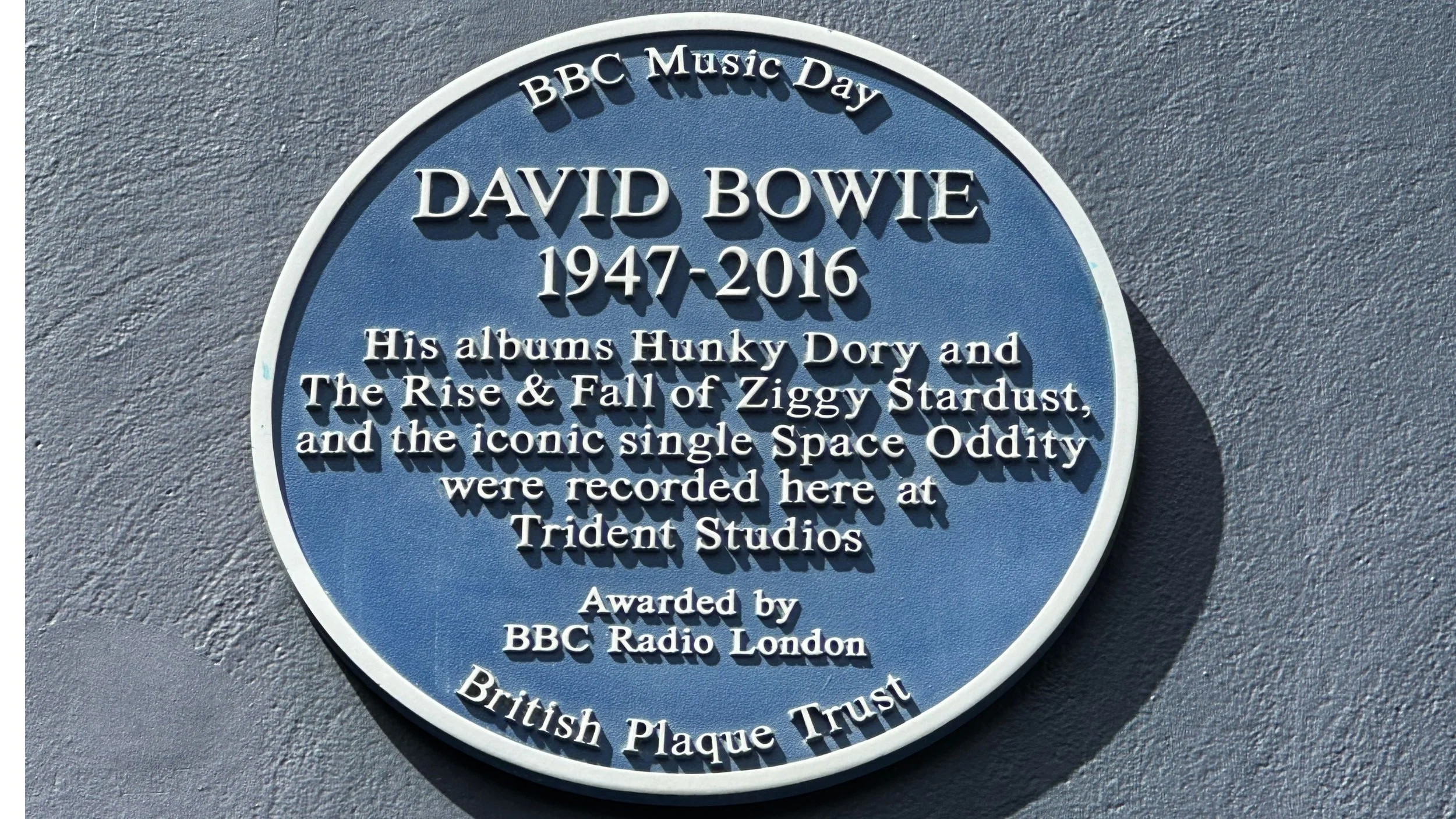
Even a glimpse into this world reveals a staggering density of history. You find seismic musical moments occurring everywhere from a makeshift space above an Islington pub,where Elvis Costello tracked his first demos, to the absolute state-of-the-art facilities of Trident Studios, the birthplace of classic albums by David Bowie, Lou Reed, Queen, and Carly Simon.
I’ll also be charting the changes in name and location, asking “are they the same studio?” For example, George Martin’s AIR Studio is no longer at Oxford Circus, but in North London. Has it retained the same ‘magic’ ? But what if the studio location stays the same, but the name changes? What changed when Philips became Phonogram then Paul Weller’s Solid Bond Studio?
My focus across this series is not on dense electronic schematics or purely technical blueprints. Plenty of excellent books cover the gear. Instead, this project is about the culture, the intersections of talent, and the human stories intertwined within these rooms during a golden age of audio tracking. I keep coming back to the single word, ‘Alchemy’.
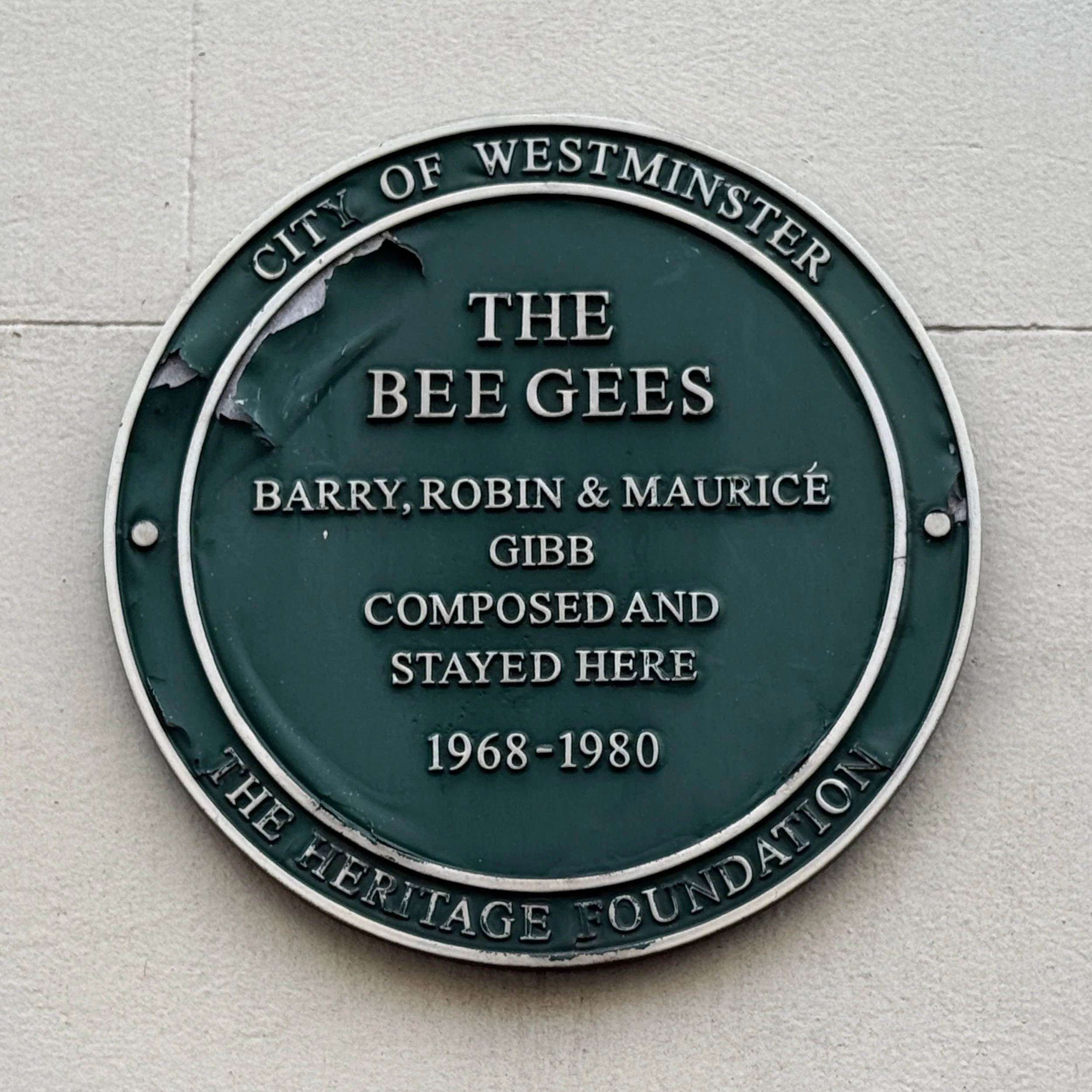
A plaque in London’s Mayfair, dedicated to the Bee Gees who recorded here
Of all the research projects undertaken at The Vinyl Historian, documenting London’s lost recording studios is the most addictive. Every liner note, every conversation or magazine ad unlocks yet another lost London studio. This page serves as the living archive for that journey.
Through archival research, conversations and chance discoveries I hope to chart the lost London Recording Studios and tell some of the stories that need to be shared. Follow the journey with my newsletter, where I will share future updates and other stories of the vinyl era.
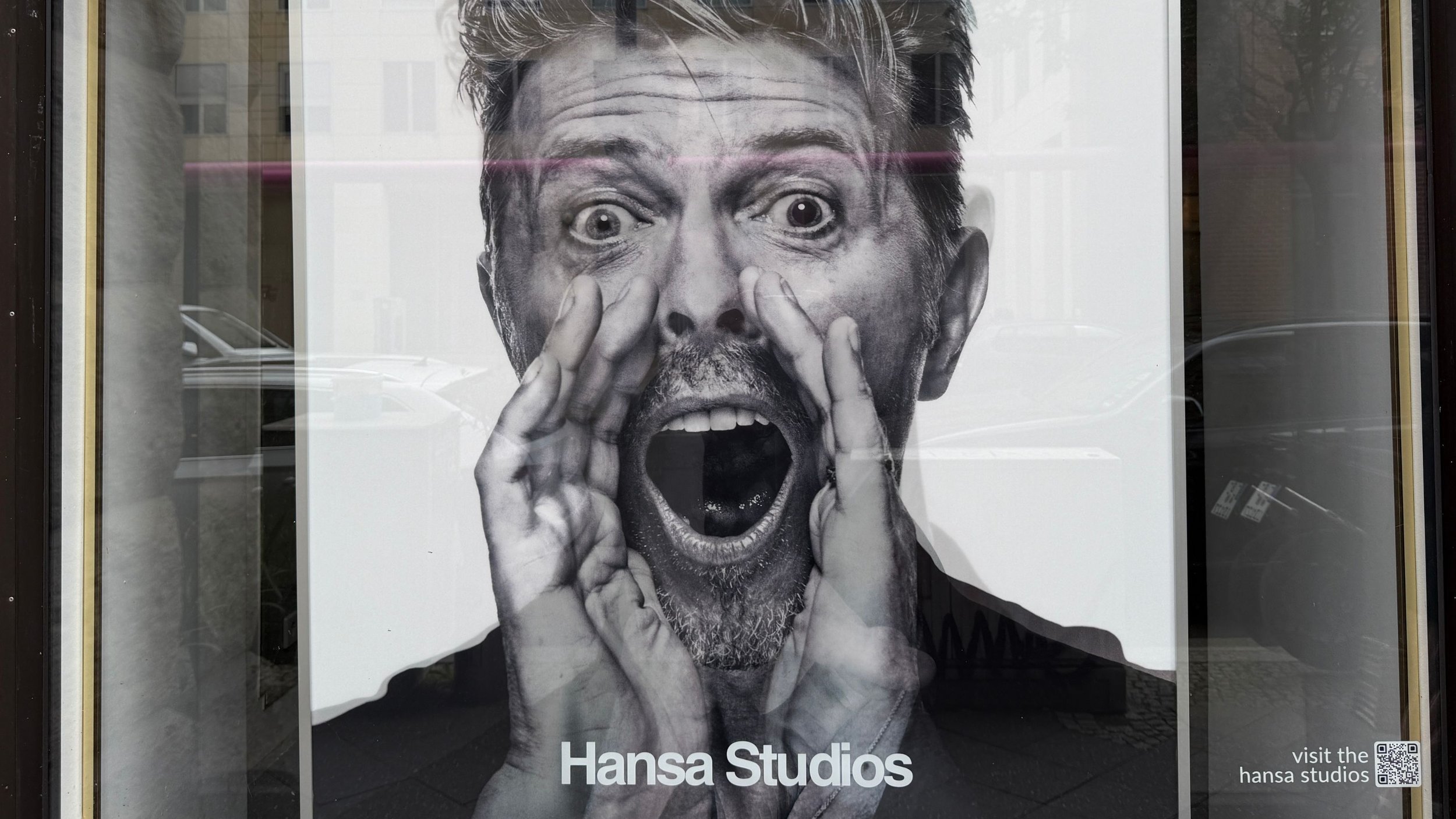
A short history of Hansa Studios
A short history of Hansa Studios in Berlin, the legendary recording space linked to David Bowie, Iggy Pop, Depeche Mode, Marillion and U2.
On a street just south of Potsdamer Platz stood one of the most famous recording studios in Europe. Hansa Studios became closely associated with David Bowie and Berlin’s late Cold War mythology, but its story reaches further than one artist or one era. For years, musicians came here to capture something of the city itself in their work.
Hansa Studios opened in 1972 under the guidance of German producer and engineer Uwe Nettelbeck. At a time when Berlin was still a divided city, the studio developed a character that few others could match. Its location, so close to the Berlin Wall, gave it a sense of tension and atmosphere that fed directly into the records made there.
Bowie in Berlin
The studio is now inseparable from David Bowie’s Berlin years. Bowie spent time in the city with Iggy Pop, and Hansa became part of the wider creative world that produced some of his most important late 1970s work. While part of Bowie’s Berlin Trilogy also reached beyond Germany, including sessions at Château d’Hérouville in France, Hansa helped define the sound and image of that period. Low and “Heroes” are the albums most closely tied to the studio, created with Brian Eno and Tony Visconti as Bowie pushed further away from conventional rock structures.
“Heroes” gave Hansa one of its most enduring legends. The line about standing by the wall seemed to collapse the distance between the studio and the divided city outside. Visconti later spoke of a kiss taking place near the wall, a detail that only added to the mythology around the song and the building where it was recorded.
Hansa’s reputation did not end with Bowie. In the years that followed, the studio drew artists who wanted a darker, more dramatic sound. Iggy Pop recorded there, and the 1980s brought in bands such as Depeche Mode, Siouxsie and the Banshees, Killing Joke and Marillion. Depeche Mode used Berlin and Hansa as part of their move into a tougher, more industrial style, recording albums including Construction Time Again, Some Great Reward and Black Celebration. Martin Gore later said they knew about Hansa because of Bowie, which says a great deal about the studio’s pull by that point.
Marillion also recorded at Hansa during a key moment in their rise, with Misplaced Childhood becoming one of the defining British rock albums of the mid-1980s. Like so many artists before them, they were drawn not only by the studio’s facilities, but by the idea of Berlin itself.
When the Berlin Wall fell in 1989, the meaning of Hansa shifted again. It was no longer simply a studio near the wall, but a place forever linked to a divided city and to the records made in its shadow. That setting had already given Hansa its place in rock history.
Achtung Baby, U2 recording in Berlin
U2 arrived in Berlin soon afterwards, at a time when both the band and the city were in transition. The group had lost some of its earlier momentum and were searching for a new direction. Their sessions at Hansa fed into Achtung Baby, the album that restored their sense of purpose and opened the door to a bolder, more adventurous phase.
That is why Hansa still holds such a powerful place in music history. It was a recording studio, but it was also a location charged with politics, geography and mood. Bowie, Iggy, Depeche Mode, Marillion and U2 all found something there that would have been difficult to recreate anywhere else. Even now, Hansa remains one of those rare studio names that carries its own story.
Super Bear Studios: the South of France studio where rock’s biggest names recorded
High in the hills above Nice, Super Bear Studios became a private working base for major artists including Pink Floyd, Kate Bush and Queen during the late vinyl era.
High in the hills above Nice, far from the routine of London studio life, Super Bear Studios became one of the most distinctive recording addresses of the late vinyl era. Opened in 1978 in a former restaurant at Berre-les-Alpes, it offered something many major artists wanted by the end of the decade: privacy, time, and enough distance from Britain to work without interruption. Owned and run by British composer Damon Metrebian and a small group of fellow expatriates, Super Bear was part studio, part retreat, and for a few short years it became a working base for some of rock’s biggest names.
By the late 1970s, major albums were taking longer to make. Budgets were growing, arrangements were becoming more layered, and sessions could stretch on for weeks. A residential studio changed the pace of that work. Artists could stay on site or nearby, work late, return the next morning and keep the shape of a record intact. Super Bear was never a public institution in the mould of Abbey Road. Its appeal came from privacy and concentration. Musicians could settle in and get on with the album.
Notable albums recorded at Super Bear Studios
- Wet Dream by Richard Wright, 1978
- David Gilmour by David Gilmour, 1978
- Lionheart by Kate Bush, 1978
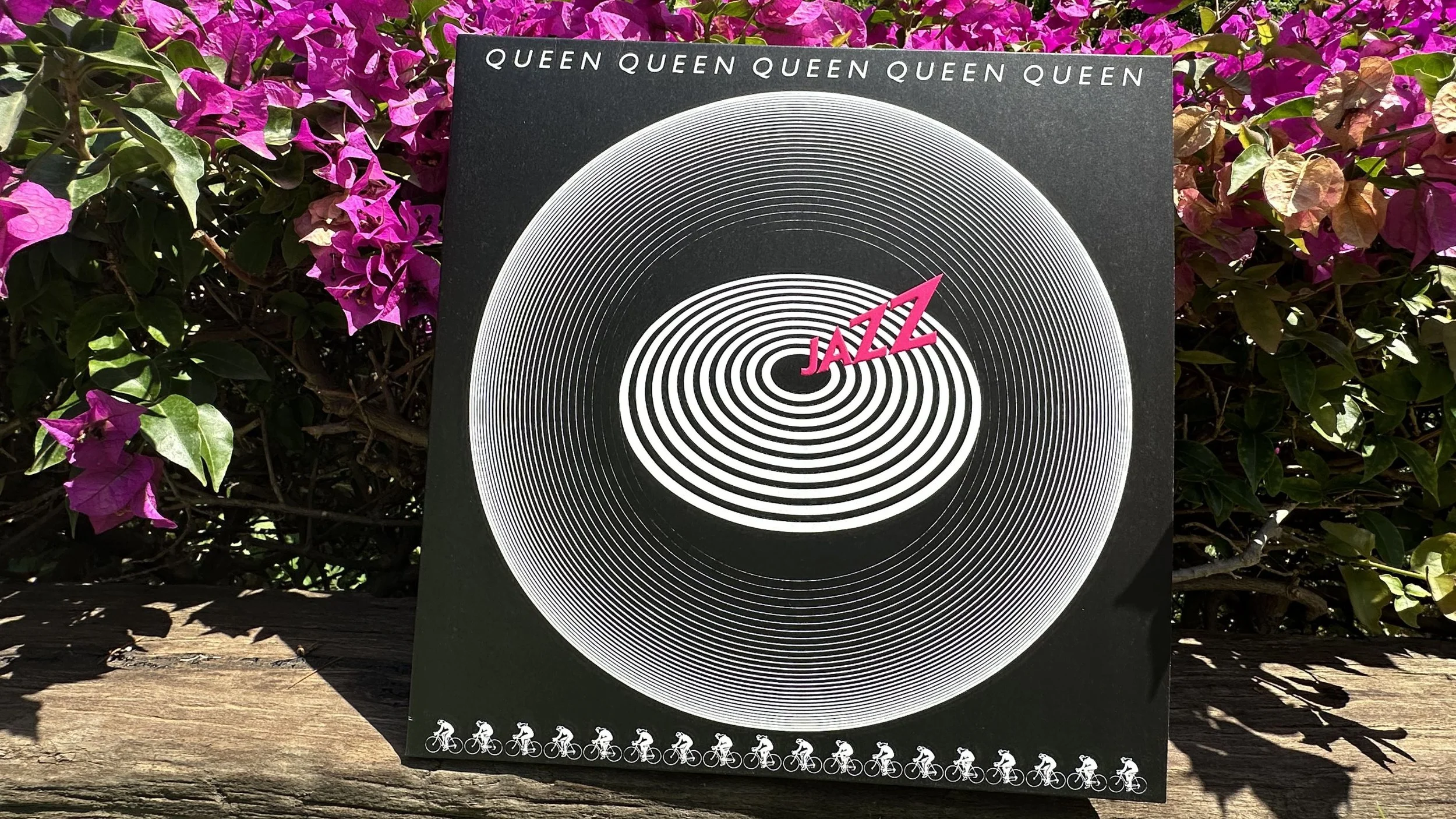
- Jazz by Queen, 1978
- Eve by The Alan Parsons Project, 1979
- 21 at 33 by Elton John, 1980
- Common One by Van Morrison, 1980
- Stop and Smell the Roses by Ringo Starr, 1981
For a relatively short stretch, that formula attracted an extraordinary list of artists. Kate Bush recorded Lionheart there in 1978. Queen used the studio while making Jazz that same year. Richard Wright recorded Wet Dream there, and David Gilmour also used Super Bear for his 1978 solo debut. Elton John recorded there around the turn of the decade, with both 21 at 33 and The Fox tied to the studio. Van Morrison worked there on Common One, and The Alan Parsons Project recorded Eve there too. By the turn of the 1980s, Super Bear had become a trusted hideaway for artists who could have worked almost anywhere.
Pink Floyd are the group most closely associated with the studio, and with good reason. Super Bear sits in the Floyd story at a crucial moment. Richard Wright and David Gilmour had both worked there on solo projects in 1978, and when the band began laying the groundwork for The Wall, Super Bear became one of the places where that vast project began to take shape.
Nick Mason’s Inside Out gives the clearest sense of the studio in use. Set high in the Alpes-Maritimes, about half an hour from Nice, Super Bear came with a tennis court, a pool and enough space for the band to live and work at close quarters. Mason and Wright stayed at the studio itself, while Roger Waters and David Gilmour rented villas nearby. Bob Ezrin based himself at the Negresco in Nice. Sessions were broken up by tennis and occasional trips down to the coast, though the drive was long enough to stop too much drifting. It suited a record as large, tense and demanding as The Wall.
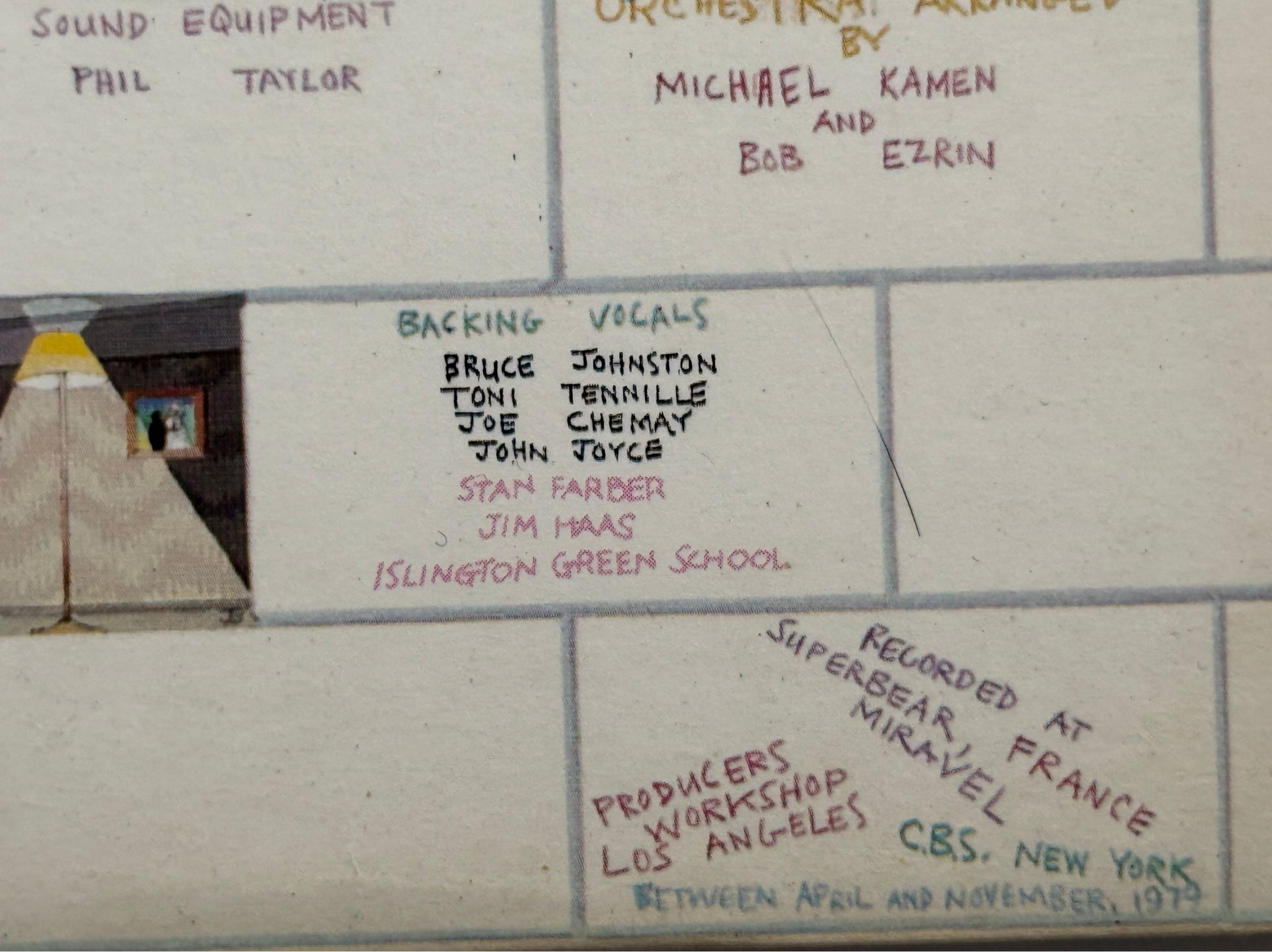
Super Bear Credits in the Wall album liner notes
Kate Bush gives the studio a different place in the story. Lionheart, released in 1978, belongs to the early burst of work that established her as one of the most original British artists of her generation. Queen’s Jazz, also released in 1978, points in another direction. Both albums came from artists already thinking on a large scale, and both fit the kind of concentrated working environment Super Bear offered. The same secluded studio in the hills above Nice sits behind very different records, linking Bush’s imaginative art-pop with Queen’s late-70s confidence.
The studio also has a Beatles connection. In July 1980, Ringo Starr began sessions there for the album then titled Can’t Fight Lightning. Soon after meeting Barbara Bach on the set of Caveman, Starr crossed paths with Paul and Linda McCartney during the Cannes Film Festival and asked McCartney to play on and possibly produce his next record. Sessions began at Super Bear on 11 July 1980 and ran until 21 July. During that time McCartney worked on ‘Private Property’ and ‘Attention’, both his own songs, along with a cover of ‘Sure to Fall’ and the title track ‘You Can’t Fight Lightning’. Recording later moved to Los Angeles, and the album eventually emerged in 1981 as Stop and Smell the Roses, but those sessions add Paul and Ringo to the studio’s history.
Super Bear belonged to a wider late-70s shift, when artists increasingly looked beyond traditional city studios and towards places where recording could become the centre of daily life. It offered that in a particularly attractive form: close enough to Nice for practicality, but far enough into the hills to feel removed from the usual music-business circuit. Artists could concentrate, live alongside the work, and keep a project moving without the stop-start pattern of a city booking diary.
Its lifespan as a recording studio was short. Most accounts place its main years between 1978 and 1986, and in July 1986 a forest fire destroyed the building during renovation work. The property was later rebuilt and took on other lives, but its chapter as a recording studio was over. That brevity is part of what makes Super Bear memorable now. It did not last long enough to become ordinary. Instead, it belongs to a specific moment in music history, when artists making ambitious records found a temporary refuge in the hills above Nice.
For a few years, Super Bear Studios was exactly the kind of place major artists were looking for. Not a famous city address or a studio tourists queued to see, but a working refuge where musicians could live, record and keep the outside world at arm’s length. That was enough to secure its place in the story of rock recording.
AIR Studios Montserrat: George Martin’s Caribbean Recording Paradise
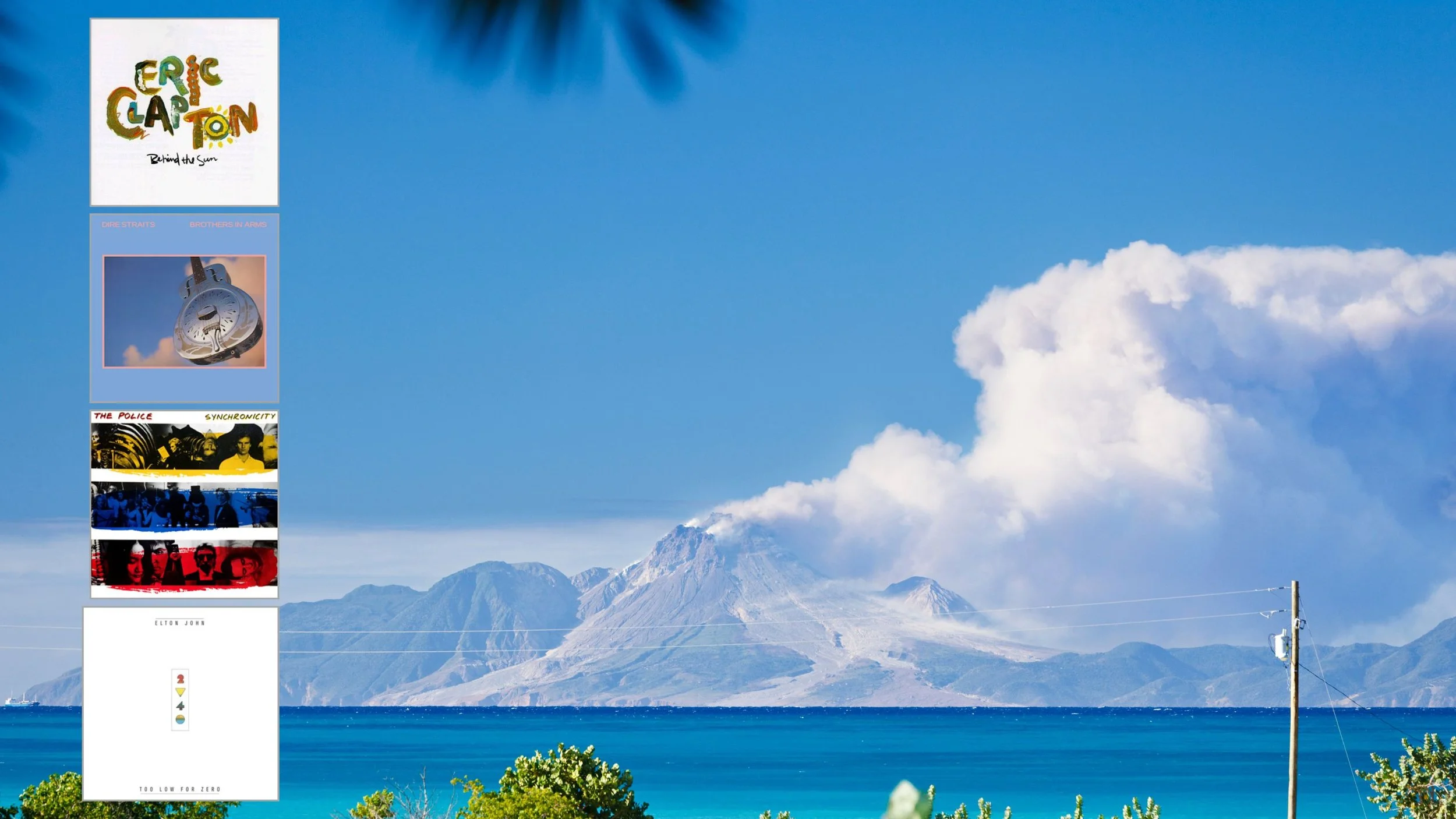
High in the Caribbean hills of Montserrat, George Martin created a residential recording studio that briefly became one of the most remarkable destinations in music. AIR Studios Montserrat hosted classic albums by The Police, Dire Straits, Elton John, Paul McCartney and Eric Clapton, proving that for a few extraordinary years, this remote island studio had a magic all of its own.
High in the hills of Montserrat, a small volcanic island in the eastern Caribbean, once stood one of the most remarkable recording studios of the vinyl era. For a brief period in the 1980s, AIR Studios Montserrat became a creative sanctuary where some of the biggest artists in the world escaped the pressures of city studios and made landmark albums.
The studio was the vision of George Martin, already famous for his work with The Beatles. After founding AIR (Associated Independent Recordings) Studios in London, Martin began thinking about a different kind of recording environment — somewhere far from the industry’s noise, where musicians could focus entirely on the music.
Montserrat turned out to be the perfect location.
“The studio was in the most beautiful location, high in the hills overlooking the azure waters of the Caribbean to the west. Working into the night, we’d often take a short break at last light, sitting by the pool with a beer, watching the giant sun sinking over the horizon.”
A Studio in the Caribbean
Montserrat lies in the Lesser Antilles, roughly midway between Puerto Rico and Trinidad. Small, green and volcanic, the island was known more for quiet beaches and hillside villages than for music recording.
When George Martin visited in the late 1970s, he was struck by the island’s atmosphere. It offered privacy, beauty and distance from the distractions of London, Los Angeles or New York. Artists could travel there, settle in, and work without the usual interruptions of the music business.
In 1979, Martin opened AIR Studios Montserrat.
The concept was simple but unusual at the time: a residential recording studio. Musicians would live on the island while they recorded, often staying for weeks at a time. Days were spent in the studio; evenings might involve dinner by the sea or a drink under the Caribbean stars. The environment encouraged long creative stretches and a sense of isolation that many artists found liberating.
The Rise of the Remote Studio
George Martin’s idea wasn’t entirely without precedent. By the 1970s, a number of major artists had already discovered the creative benefits of recording far from the music industry’s usual centres.
Wings had travelled to Kingston, Jamaica to record much of Band on the Run in 1973, escaping London for the looser atmosphere of the Caribbean. Around the same time, The Rolling Stones had turned a rented villa in the south of France into a temporary recording base while making Exile on Main St..
What George Martin did with AIR Studios Montserrat was take that emerging idea and formalise it. Instead of adapting villas or borrowed studios, he created a purpose-built residential recording studio designed specifically for artists who wanted to step away from the noise of the music business and focus entirely on making an album.
When the Formula Worked
For some artists, the Montserrat environment proved incredibly productive.
The Police recorded there more than once, including sessions that produced their final studio album, Synchronicity in 1983. The band arrived with internal tensions already simmering, but the isolation of the island created the conditions for one last burst of creativity, resulting in one of the defining albums of the decade.
The studio also reunited Paul McCartney with George Martin. McCartney recorded much of Tug of War (1982) there, including the global hit Ebony and Ivory. The sessions marked the first time McCartney and Martin had worked closely together since Martin’s orchestral arrangement for Live and Let Die in 1973 — a collaboration that quietly reconnected two of the most important figures in the Beatles story.
Other major albums soon followed. Dire Straits recorded large parts of Brothers in Arms there, while Elton John worked on Too Low for Zero. Eric Clapton also recorded sessions with Phil Collins for Behind the Sun here.
Yet the same tropical setting that inspired some artists proved distracting for others.
Duran Duran arrived during sessions for Seven and the Ragged Tiger. According to band lore, the lure of the Caribbean proved almost too effective. Instead of long hours in the studio, the group often found themselves swimming or enjoying the island life.
Even so, the trip was far from wasted. Two of the album’s biggest singles The Reflex and Union of the Snake, were largely developed during their time on Montserrat.
Key Albums Recorded at AIR Studios Montserrat
Although AIR Studios Montserrat operated for little more than a decade, it produced an extraordinary run of classic albums during the early and mid-1980s. Artists travelled to the Caribbean studio to work in isolation, often staying for weeks at a time, and several of those sessions resulted in records that defined the sound of the decade.
Notable albums recorded at AIR Studios Montserrat include:
Tug of War — Paul McCartney (1982)
Synchronicity — The Police (1983)
Too Low for Zero — Elton John (1983)
Behind the Sun — Eric Clapton (1985)
Brothers in Arms — Dire Straits (1985)
For a studio on a small Caribbean island, the concentration of major releases was remarkable. In a few short years AIR Montserrat hosted sessions that would produce global hits, multi-platinum albums, and some of the most recognisable recordings of the 1980s.
The End of the Studio
AIR Studios Montserrat operated for barely a decade, but the end came suddenly.
In 1989, Hurricane Hugo struck the Caribbean and severely damaged the studio complex. Although the structure itself survived, the island’s infrastructure was badly affected and the studio closed soon after.
A few years later, the Soufrière Hills volcano began erupting, permanently transforming much of Montserrat and effectively ending any possibility of reopening the facility. Click to see some pictures of the studio ruins.
AIR Studios Montserrat existed for only about ten years, yet its impact on popular music was extraordinary. In that short window the studio hosted a stream of major artists and produced a remarkable collection of classic albums.
It’s a reminder that great recordings aren’t just about microphones, mixing desks or studio architecture. Sometimes a particular place — its atmosphere, isolation and timing — creates a kind of creative alchemy.
For AIR Montserrat, that alchemy happened on a small Caribbean island, far from the music industry’s usual centres, where for a brief moment the conditions were perfect for making unforgettable records.
Postscript: Music for Montserrat
The story of AIR Studios Montserrat did not end entirely with the studio’s closure. After the devastating eruptions of the Soufrière Hills in the mid-1990s, George Martin organised a major benefit concert to support the island that had hosted his remarkable recording studio.
Music for Montserrat took place on 15 September 1997 at the Royal Albert Hall in London. The event reunited many of the artists who had recorded at AIR Studios Montserrat over the previous two decades.
The line-up included Paul McCartney, Elton John, Eric Clapton, Sting, Mark Knopfler, Phil Collins and Carl Perkins among others — many of them performing songs that had been written or recorded during their time on the island.
The concert raised around £1.5 million for relief and rebuilding efforts following the volcanic disaster. The funds later helped support the construction of a new cultural centre on Montserrat, which George Martin eventually gifted to the island’s community.
In that sense, the legacy of AIR Studios Montserrat extended far beyond the albums recorded there. The studio had brought musicians to the island — and when Montserrat needed help, many of them returned the favour.
If you’d like to learn more about the remarkable story of AIR Studios Montserrat, we strongly recommend the documentary Under the Volcano, which captures the studio’s history and many of the extraordinary stories from the artists who recorded there.
Sound Techniques A Lost London Recording Studio in the Recording History of Nick Drake
Most people walk past this old dairy on the King's Road in Chelsea not realising it was an important recording studio in the Sixties. Read about the history of Sound Techniques and the bands that recorded here.
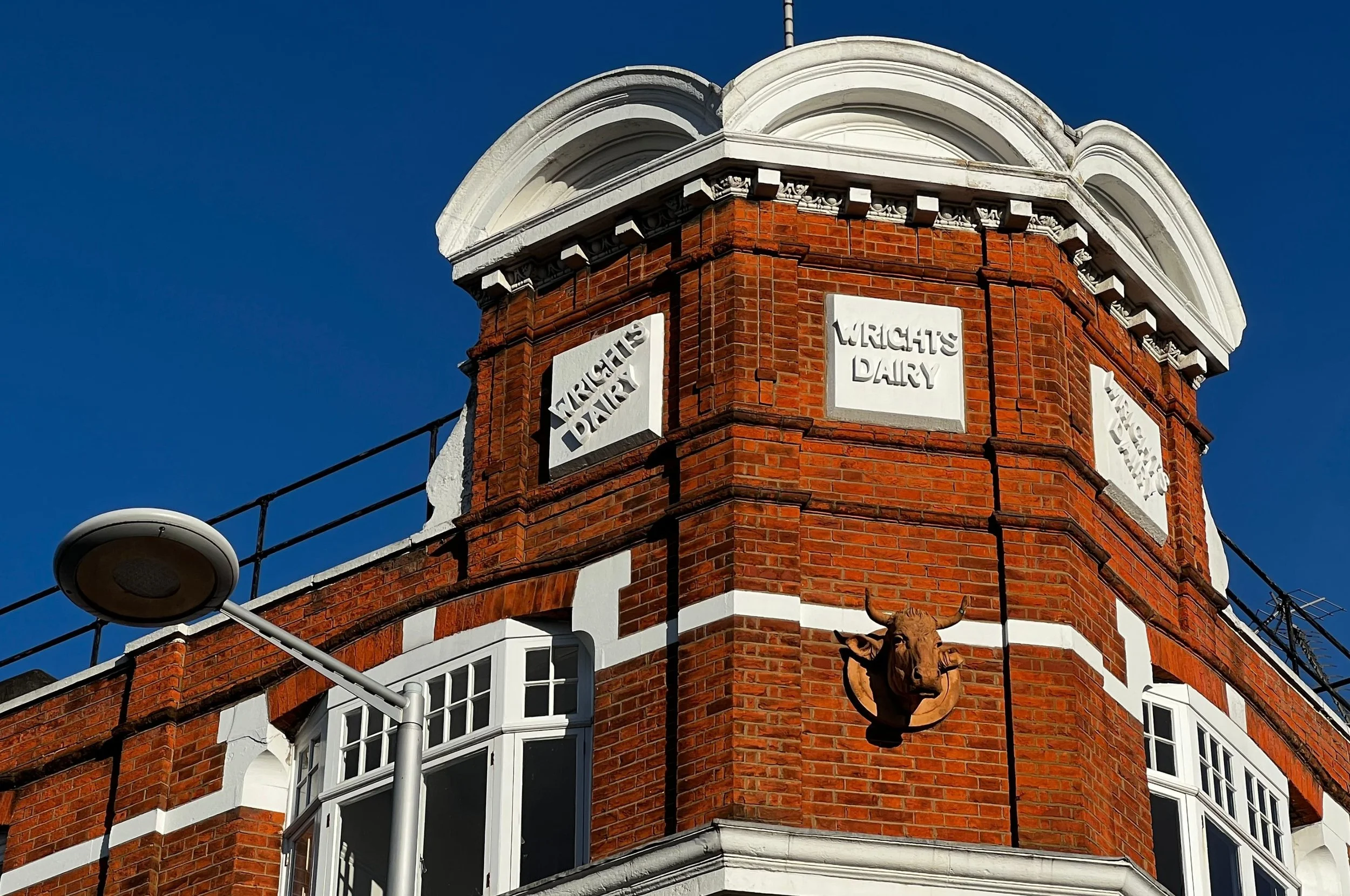
Next time you walk along the King’s Road in London, look up when you reach the corner with Smith Street. Just be careful not to step into traffic. Set into the top of a handsome red brick building is a cow’s head, with the name Wright’s Dairy picked out beneath it.
It looks like a small curiosity, a leftover detail from Chelsea’s commercial past. In fact, this former dairy became one of London’s most quietly influential recording spaces, and one of London’s Lost Recording Studios.
Sound Techniques Recording Studio
Long after milk churns had given way to empty rooms, the building housed Sound Techniques Studio, an independent studio that helped shape British music at the end of the 1960s and into the early 1970s. Tucked just off the King’s Road at 45a Old Church Street, with its entrance around the corner, it was never a glamorous operation. It was practical, modest and unusually effective.
The studio was bought and set up by two sound engineers, Geoff Frost and John Wood. They chose the former dairy for a simple reason. Its slate lined walls provided excellent sound insulation at very little cost, which made it ideal for recording live musicians in close proximity. A few internal walls were removed, a recording space created, and the studio was ready for use.
What followed was a short but remarkable period. Despite lasting for little more than a decade, the studio attracted an extraordinary roll call of artists. Nick Drake recorded much of Bryter Layter here, capturing the intimate, carefully arranged sound that would define his work. Elton John, T-Rex and Pink Floyd all passed through its doors.
Early Pink Floyd Recordings
Pink Floyd’s connection to the studio came early. With Syd Barrett still at the centre of the band, they recorded their first singles, Arnold Layne and See Emily Play, sessions that led directly to a record contract and their debut album, The Piper at the Gates of Dawn.
The studio also became closely associated with the British folk scene. Vashti Bunyan recorded Just Another Diamond Day here, an album that would grow quietly in reputation over time. Fairport Convention recorded Liege & Lief, one of the defining albums of British folk music, within these walls. Producers such as Joe Boyd recognised the way the room handled string arrangements, which only added to its appeal.
Nick Drake Recording Sessions
Nick Drake’s association with Sound Techniques runs deeper than a single album. He recorded large parts of Bryter Layter here, working closely with producer Joe Boyd and engineer John Wood to achieve the carefully balanced sound that defines the record.
There is also strong evidence that sessions for Five Leaves Left took place at Sound Techniques. While Drake recorded across several London studios during this period, John Wood’s close involvement and the studio’s reputation for handling acoustic instruments and strings place it firmly within the album’s recording story. The restrained arrangements and intimate vocal sound that characterise Five Leaves Left sit comfortably alongside other work known to have been recorded in this room.
Sound Techniques became, for a time, Drake’s natural recording home in London. The studio’s modest size, lack of commercial pressure and sympathetic engineers suited an artist who worked best away from spectacle. In a catalogue built on understatement, the King’s Road studio played a quiet but formative role.
For a place with no signage and little sense of ceremony, Sound Techniques became a dependable creative home. Musicians came to work rather than to be seen. That may be why its reputation endures.
The studio eventually closed, but the building remains largely unchanged. The recording rooms are gone, the entrance blocked up, yet the identity of the place still lingers if you know where to look. The cows are still perched above the street, a reminder of what the building once was, and what it quietly became.
The Sound Techniques Film
There is so much more to the Sound Techniques story, and I am excited to see (and read) ‘The Parts You Don’t Hear’ that charts in great depth the true story of this iconic recording studio. I encourage you to visit the website to see the depth and scale of their project with so many wonderful first hand interviews with the people that were there.
Where to find Wright's Dairy
Head down the King's Road from Sloane Square, staying on the left hand side of the road. You will find the distinctive red building on the corner of the King's Road and Smith Street. The original entrance is now blocked up but you can still see the cows perched atop the building. Nearest tube will be Sloane Square on the Circle Line.
Château d’Hérouville: A French Recording Studio Used by Elton John, Bowie, Pink Floyd and the Bee Gees
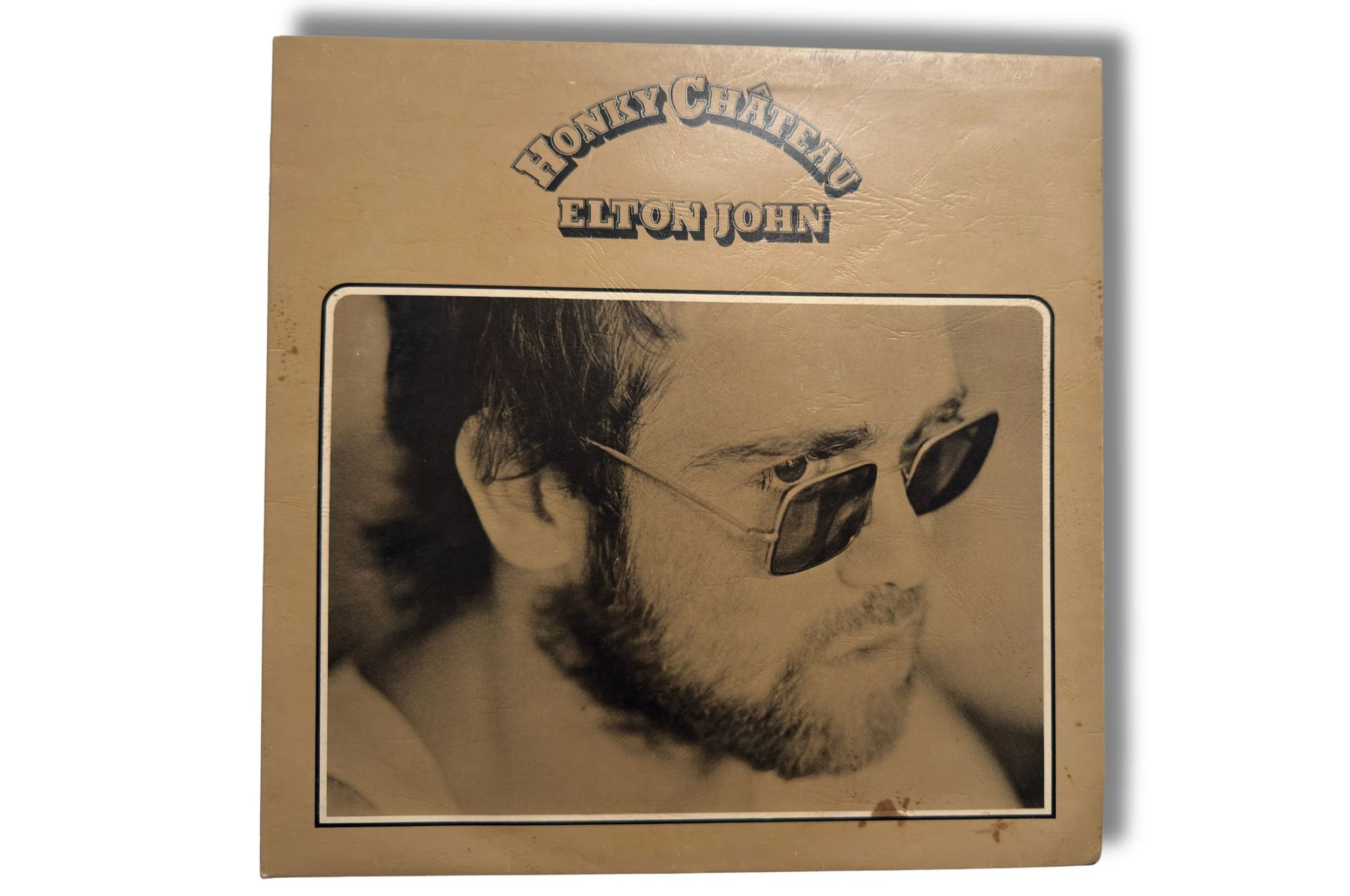
Elton John recorded Honky Château in January 1972 at Château d’Hérouville, a residential studio in a quiet village north of Paris. The French countryside setting offered space, comfort, and focus, and helped spark the breakthrough run that followed, led by “Rocket Man”.
Before Goodbye Yellow Brick Road, before the sold-out stadiums and sequinned spectacles, there was a quiet village just north of Paris. It was here, in the early 1970s, that Elton John found both refuge and inspiration. The result? An album that would mark the beginning of a golden era.
So where did Elton John record Honky Château? The answer lies just north of Paris at the residential studio Château d’Hérouville. Set in the French countryside about an hour from Paris, the château offered artists something rare: space to create without distraction, yet with all the comforts needed to keep a band focused and productive.
By the time of recording in January 1972, Elton was already on the cusp of superstardom. Tumbleweed Connection and Madman Across the Water had established him as a serious artist, but Honky Château was the breakout moment. The album gave us "Rocket Man," a song that would take flight across the world—and the album’s title itself would put this quiet French studio on the map.
There’s a thread of Americana running through this period of Elton’s music. Tumbleweed Connection was overtly American in tone, and Honky Château continued that exploration — blending storytelling, space-age longing, and subtle Southern flavours. That a British artist captured this spirit while recording in a French chateau speaks to the broad appeal of Americana as a sensibility rather than a location.
Château d’Hérouville wasn’t new to music. It had been converted into a recording space in the early '60s, but it wasn’t until the 1970s that it began drawing major acts. The Grateful Dead stopped by in 1971, playing an impromptu gig in the garden. Elton recorded not just Honky Château, but returned for Don't Shoot Me I'm Only the Piano Player and parts of Goodbye Yellow Brick Road.
And Elton wasn’t the only one. Pink Floyd came here to record Obscured by Clouds. David Bowie tracked Pin Ups in 1973, and returned in 1976 for Low — the first of his Berlin Trilogy. Producer Tony Visconti would later claim the château had a "presence" that was hard to ignore. Whether that meant ghosts or just good acoustics, the place clearly had an atmosphere.
Between 1971 and 1985, the studio welcomed a remarkable list of names: Iggy Pop, Cat Stevens, Fleetwood Mac, the Bee Gees, Rick Wakeman, MC5, The Sweet, and Uriah Heep, among others. But as musical fashions changed and large residential studios fell out of favour, the château fell quiet. For a time, it was left to decay.
Today, Château d’Hérouville has been restored and returned to its roots as a recording space. Though you can’t just wander in, it still stands—an elegant reminder of the era when artists left the limelight for a countryside escape, and returned with magic on tape.
Songs & Albums Recorded at Château d’Hérouville
This quiet French château has played host to some iconic albums and tracks. Here’s a selection of the music born behind its doors:
Elton John – Honky Château, Don’t Shoot Me I’m Only the Piano Player, Goodbye Yellow Brick Road
Pink Floyd – Obscured by Clouds
David Bowie – Pin Ups, Low
Iggy Pop – The Idiot
Bee Gees – "How Deep Is Your Love?", "Stayin’ Alive" (Saturday Night Fever soundtrack)
Finding the Château
A short musical pilgrimage from Paris, Château d’Hérouville sits in the village of Hérouville-en-Vexin, just off the D928. It’s not vast, but the village is small enough that you won’t miss it.
Address:
4-6 Rue Georges Duhamel, 95300 Hérouville-en-Vexin, France
While it remains a private property, fans can still pass by and reflect on the music born behind those walls.
This is just one of many stops on the map of rock history—the kind of place that shaped records quietly, while the world turned its attention to the charts. At Wine Travel & Song, we like to think of them as musical pilgrimages: places worth seeking out, even if only from the road.