
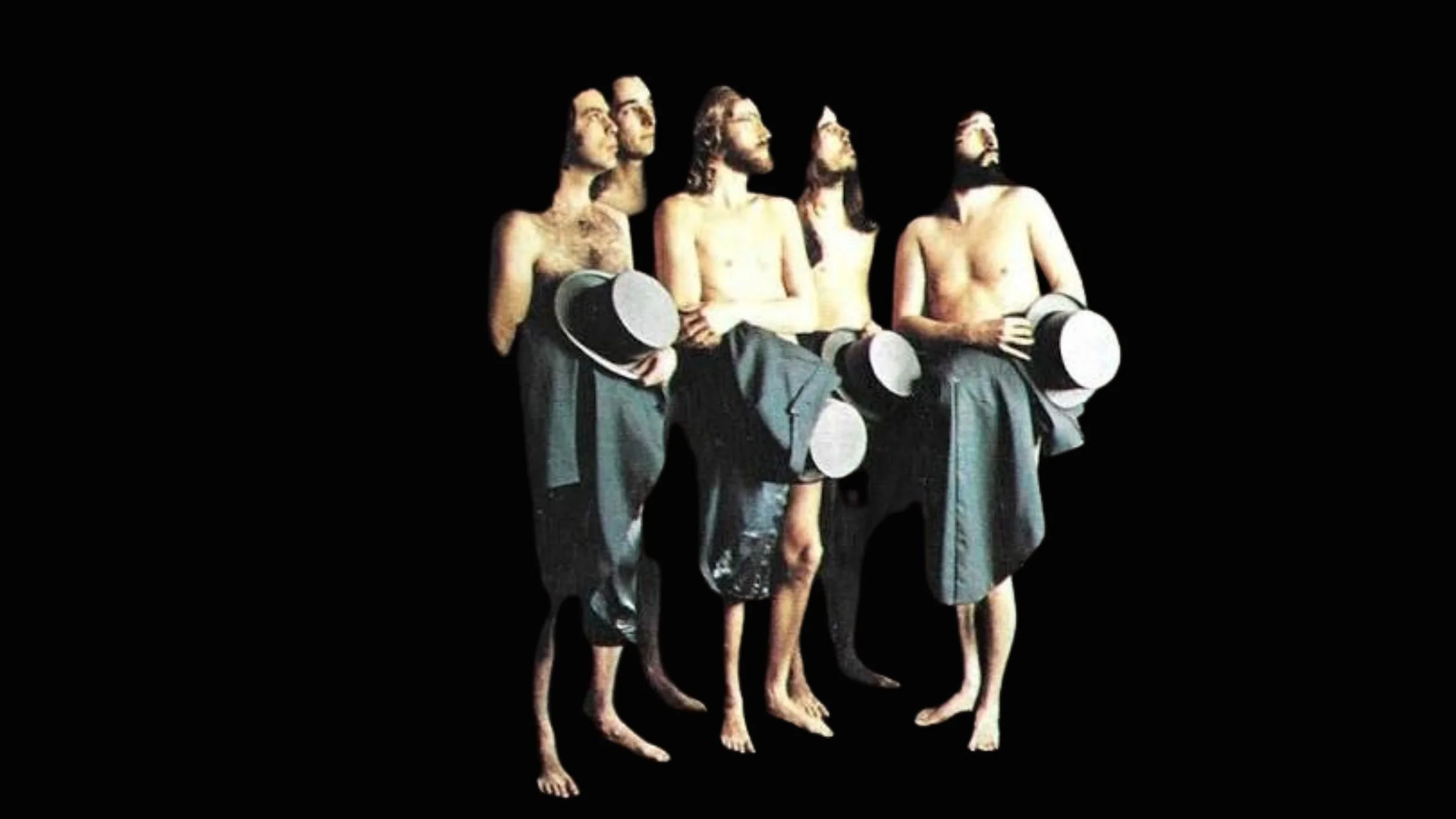
Supertramp Original Band Members and Lineup Evolutions
From their 1969 formation under the name Daddy to global stadium success and later lineup shifts, take a comprehensive look at the musicians who shaped Supertramp’s legendary progressive rock and pop catalogue.
Supertramp are one of the biggest British bands of the classic vinyl era, with worldwide album sales in excess of 60 million. Founded by Roger Hodgson and Rick Davies, the group became celebrated for blending progressive rock and pop styles with classic albums including Crime of the Century and Breakfast in America. They are also one of my favourite bands!
In this article I take a look at Supertramp's lineup transitions, featuring the original band members, birth dates, and current ages of the classic lineup.
Who Were the Original Supertramp Band Members?
Initial Lineup Foundation: Rick Davies, Roger Hodgson, Richard Palmer-James, Robert Millar, Dave Winthrop
Key Albums: Supertramp (1970), Indelibly Stamped (1971)
Formed in London in 1969 under the initial name Daddy, the band came to life when Swindon-born keyboardist Rick Davies secured financial backing from Dutch millionaire Stanley August Miesegaes. Davies recruited vocalist and multi-instrumentalist Roger Hodgson, guitarist and lyricist Richard Palmer-James, and percussionist Robert Millar.
This embryonic line established the band name change to Supertramp in January 1970 and recorded their self-titled debut album. Following stylistic shifts and early departures, the band welcomed saxophonist Dave Winthrop, drummer Kevin Currie, and bassist Frank Farrell for their second album, Indelibly Stamped, before the lineup overhauled once more ahead of their commercial breakthrough.
The Classic ‘Breakfast in America’ Supertramp Lineup
Classic Lineup: Rick Davies, Roger Hodgson, John Helliwell, Bob Siebenberg, Dougie Thomson
Key Albums: Crime of the Century (1974), Crisis? What Crisis? (1975), Even in the Quietest Moments... (1977), Breakfast in America (1979), ...Famous Last Words... (1982)
The ten-year span from 1973 to 1983 defined Supertramp's golden era, blending sophisticated progressive rock arrangements with pristine pop accessibility. The arrival of drummer Bob Siebenberg, saxophonist John Helliwell, and bassist Dougie Thomson locked in the definitive rhythm and woodwind section that propelled the band to international superstardom.
Powered by the contrasting songwriting dynamic between Davies, who handled blues-tinged baritone vocals, and Hodgson, who penned melodic high-tenor pop anthems, this lineup recorded a legendary sequence of albums starting with Crime of the Century and culminating in the global blockbuster Breakfast in America and final collaborative release ...Famous Last Words.... Hodgson's departure in 1983 brought this classic chapter to a close.
How Old Are the Supertramp Band Members Today?
Decades on from their peak arena-filling years, the members of Supertramp's classic lineup span different ages, with founder Rick Davies passing away in late 2025:
Today:
- Rick Davies would be years old today.
- John Helliwell is years old.
- Bob Siebenberg is years old.
- Roger Hodgson is years old.
- Dougie Thomson is years old.
Supertramp Birthdays:
- Rick Davies:
- John Helliwell:
- Bob Siebenberg:
- Roger Hodgson:
- Dougie Thomson:
The Final Lineup and Post-Hodgson Era
Extended and Later Lineup: Rick Davies, John Helliwell, Bob Siebenberg, Mark Hart, Carl Verheyen, Cliff Hugo, Lee Thornburg, Jesse Siebenberg
Key Albums: Brother Where You Bound (1985), Free as a Bird (1987), Some Things Never Change (1997), Slow Motion (2002)
Following Roger Hodgson's exit, Rick Davies assumed full control of the band identity. The post-Hodgson configuration shifted toward a more expansive touring ensemble and a streamlined progressive pop sound.
The 1980s studio efforts featured multi-instrumentalist Mark Hart stepping into prominent roles alongside the lead single "Cannonball" from Brother Where You Bound. When the band returned in the late 1990s and early 2000s for Some Things Never Change and Slow Motion, Davies anchored a polished large-scale lineup featuring guitarist Carl Verheyen, bassist Cliff Hugo, brass player Lee Thornburg, and Jesse Siebenberg. This configuration marked the final chapter of Supertramp's active recording and touring history before their final stage appearances in the early 2010s.
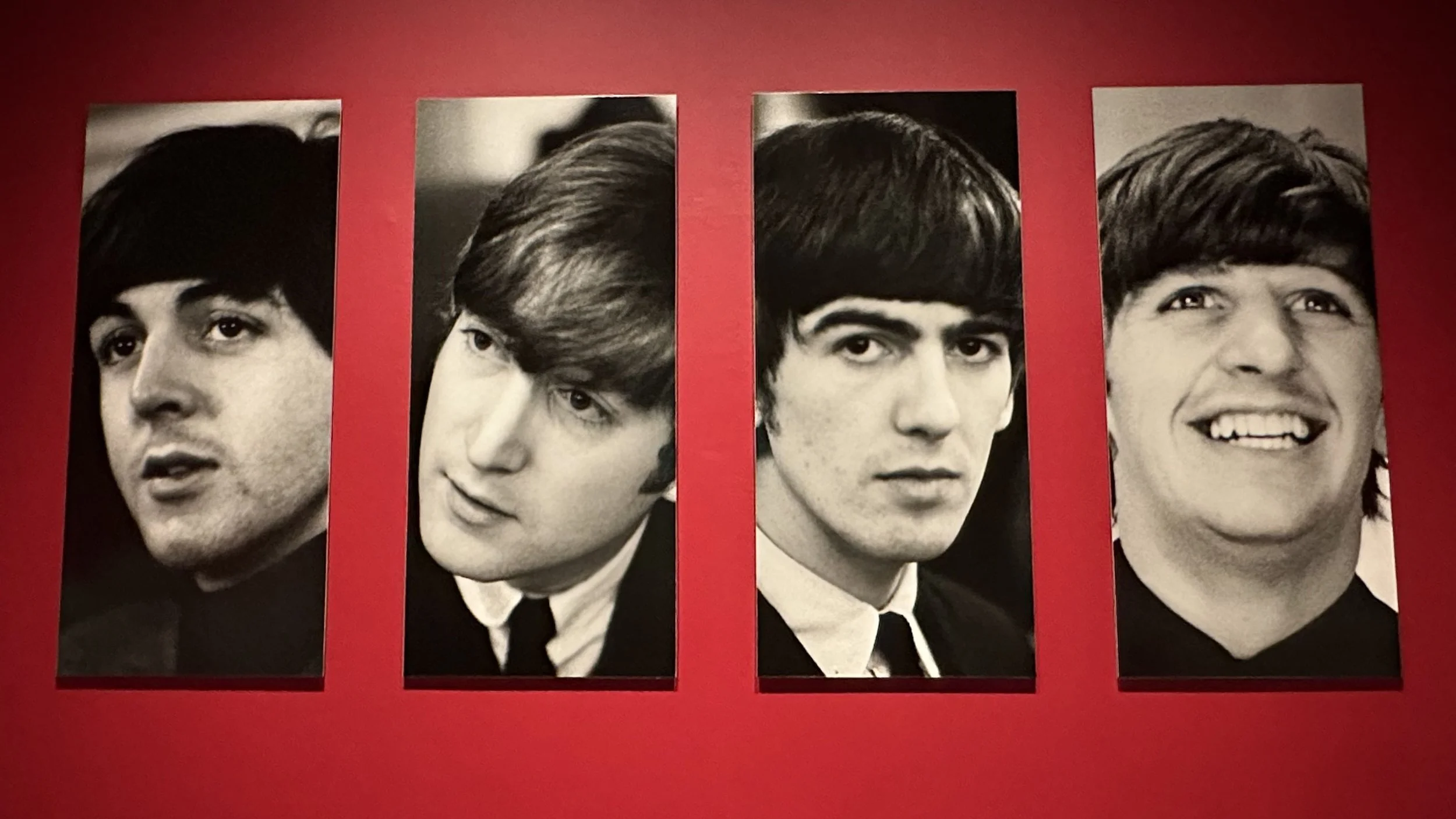
Who Were the Original Beatles Members? The Changing Line-Up That Built the Myth
John, Paul, George, and Ringo conquered the world, but they were not the first to carry the name. Before the polished studio masterclasses of Abbey Road, a raw, bruising five-piece cut their teeth in the sweat-soaked clubs of Hamburg. This is the true story of the original Beatles line-up, the transient players, and the uncompromising decisions that forged a cultural milestone.
The “Fab Four” Beatles were not always the four you naturally assume. John, Paul, George, and Ringo emerged from Liverpool to conquer the world as the Beatles, but they were not the original Beatles line-up.
Before the sleek mop-tops and the global hysteria, there was a raw, bruising five-piece band that tore through the red curtains of the Indra Club and the sweat-soaked nights of the Kaiserkeller in Hamburg. The path to the studio was pitted with discarded line-ups, sudden dismissals, and intense local rivalries.
The original line-up that established the band’s professional foundation—long before they ever stepped inside a London studio—consisted of John Lennon, Paul McCartney, George Harrison, Stuart Sutcliffe, and Pete Best.
Yet, simply listing these names misses the practical reality of how this early line-up functioned, and why their collective musicianship ultimately fell short of the standards required to make a professional record.
From the Quarrymen to the Beatles
The road to the Beatles was paved with transient schoolboy hobbyists rather than career musicians. John Lennon’s initial bandmates in his 1956 skiffle group, the Quarrymen—including Pete Shotton on washboard, Eric Griffiths on guitar, Len Garry on tea-chest bass, and Colin Hanton on drums—quickly drifted away as acoustic skiffle gave way to electrified rock and roll.
Paul McCartney joined in July 1957 after seeing the band perform at a garden fête behind St Peter’s Church in Woolton, before introducing George Harrison in early 1958. As the other school friends dropped out to pursue stable apprenticeships, John, Paul, and George became a nomadic trio of guitarists.
Operating without a permanent drummer or bassist, they performed under various names, including Johnny and the Moondogs and The Silver Beetles. The group was highly fluid; they briefly enlisted temporary players like bassist Chas Newby for a couple of weeks. In January 1960, John’s art-school friend Stuart Sutcliffe was persuaded to buy a bass guitar and join the group, bringing an artistic, bohemian aesthetic that would define their early look.
The Beatles in Hamburg
In August 1960, the band secured a residency in Hamburg, Germany, but they desperately needed a permanent drummer to fulfil the contract. They recruited Pete Best, the son of Casbah Coffee Club owner Mona Best, just days before departure. The line-up that boarded the transport to Hamburg consisted of John Lennon, Paul McCartney, George Harrison, Stuart Sutcliffe, and Pete Best.
Playing gruelling, eight-hour sets at the Indra Club and the Kaiserkeller, the five-piece hardened their live sound. It was during these residencies that they met German art students Klaus Voormann and Astrid Kirchherr. Astrid, who was Klaus’s girlfriend at the time, became their primary photographer and helped style their hair into the iconic mop-top cuts. Klaus and his later wife, Anita, would remain lifelong friends and collaborators within the Beatles’ inner circle, setting up a deeper creative alliance that would bear fruit throughout the decade.
The Beatles on Record
When the band returned to Liverpool, Stuart Sutcliffe chose to remain in Hamburg with Astrid to focus on his painting. He tragically died of a brain haemorrhage in April 1962. His departure forced Paul McCartney to reluctantly move to bass guitar, establishing the core quartet of John, Paul, George, and Pete Best.
In June 1962, manager Brian Epstein secured a commercial audition with producer George Martin at Abbey Road Studios in London. While Martin saw immense potential in the group’s vocals and original material, he found Pete Best’s drumming technique completely inadequate for professional recording standards.
The core trio made the swift executive decision to replace Best. On 16 August 1962, Epstein dismissed Best at his NEMS office. The band immediately recruited Ringo Starr, the highly respected drummer from local rivals Rory Storm and the Hurricanes. Just days later, in September 1962, this newly finalised line-up walked back into Abbey Road Studios to record their 1962 debut single, “Love Me Do”.
Beatles Members: Line-Up Timeline and Studio Tenures
| Name | Role | Tenure (Active Years) |
|---|---|---|
| John Lennon | Rhythm Guitar / Vocals | 1960–1969 |
| Paul McCartney | Bass / Keyboards / Vocals | 1960–1970 |
| George Harrison | Lead Guitar / Vocals | 1960–1970 |
| Stuart Sutcliffe | Bass Guitar | 1960–1961 |
| Pete Best | Drums | 1960–1962 |
| Ringo Starr | Drums / Vocals | 1962–1970 |
| Jimmie Nicol | Drums (Tour Stand-In) | 1964 |
Jimmie Nicol: The Ten-Day Beatle
His inclusion in the band’s historical roster often puzzles casual listeners, but for ten whirlwind days in June 1964, London session drummer Jimmie Nicol was a genuine Beatle.
On the eve of a massive, career-defining world tour across Australasia, Ringo Starr collapsed with acute tonsillitis. Facing devastating cancellation fees and a public relations disaster, manager Brian Epstein made the executive decision to find a temporary substitute rather than cancel the dates. He drafted Nicol, who was quickly suited in Ringo’s stage clothes and given a rapid mop-top haircut.
Nicol played eight historic shows across Denmark, the Netherlands, Hong Kong, and Australia. He lived at the absolute eye of the Beatlemania hurricane, only to be abruptly handed a suitcase, a gold watch, and a flight home the moment Ringo recovered in Melbourne. Nicol vanished back into session anonymity, leaving behind a brief, surreal legacy that permanently cements his place in the band's timeline.
How Old Were the Beatles When They Recorded “Love Me Do”?
When the group entered Abbey Road Studios in September 1962 to record their debut single, they were remarkably young to be carrying the weight of a major label signing:
Ringo Starr: 22 years old (born July 1940)
John Lennon: 21 years old (born October 1940)
Paul McCartney: 20 years old (born June 1942)
George Harrison: 19 years old (born February 1943)
How Old Were the Beatles When They Split?
By the time Paul McCartney publicly announced the dissolution of the band in April 1970, the group had redefined popular culture. Yet, none of the members had even reached their 30th birthday:
Ringo Starr: 29 years old
John Lennon: 29 years old
Paul McCartney: 27 years old
George Harrison: 27 years old
How Old Are the Beatles Members Now?
While the music they pressed into lacquer remains entirely timeless, the years continue to stretch on. Here is how old each Beatle is, or would be today:
The Beatles Ages Today:
- Paul McCartney is years old.
- Ringo Starr is years old.
- John Lennon would be years old today.
- George Harrison would be years old today.
- Pete Best is years old.
- Stuart Sutcliffe would be years old today.
- Jimmie Nicol is years old.
Beatles Birthdays:
- Paul McCartney:
- Ringo Starr:
- John Lennon:
- George Harrison:
- Pete Best:
- Stuart Sutcliffe:
- Jimmie Nicol:
Over the decades, several individuals have claimed or been awarded the unofficial title of the “fifth Beatle”. While business figures like manager Brian Epstein or publicist Derek Taylor are often mentioned, the musical title belongs to the rare contributors who actually joined them on record.
The most notable of these was American keyboard player Billy Preston. In January 1969, during the fractured, tense rehearsals for the Get Back project, George Harrison walked out of the band and returned with Preston to defuse the personal tensions. Preston’s soulful electric piano playing completely transformed the sessions, earning him a rare co-performer credit on the label of the 1969 single “Get Back”, which read: “The Beatles with Billy Preston”.
Preston’s performances are captured permanently on the physical vinyl sequencing of the Let It Be (1970) album, anchoring the driving rhythm of Side B, Track 5. Preston also holds the unique distinction of bridging the two great rival rock camps of the era, later recording and touring extensively as an essential session player for the Rolling Stones.
The Legacy of the Original Beatles Line-Up
The shifting line-ups of the band remind us that the road to musical immortality is rarely a straight line. From the raw, skiffle-driven energy of the schoolboy Quarrymen to the polished studio genius of their final years, the evolution was complex, competitive, and brilliant. When you drop the needle onto the spinning grooves of Abbey Road (1969) today, you are listening to a historical miracle—forged in the clubs of Liverpool, refined in the studio, and captured forever on wax.
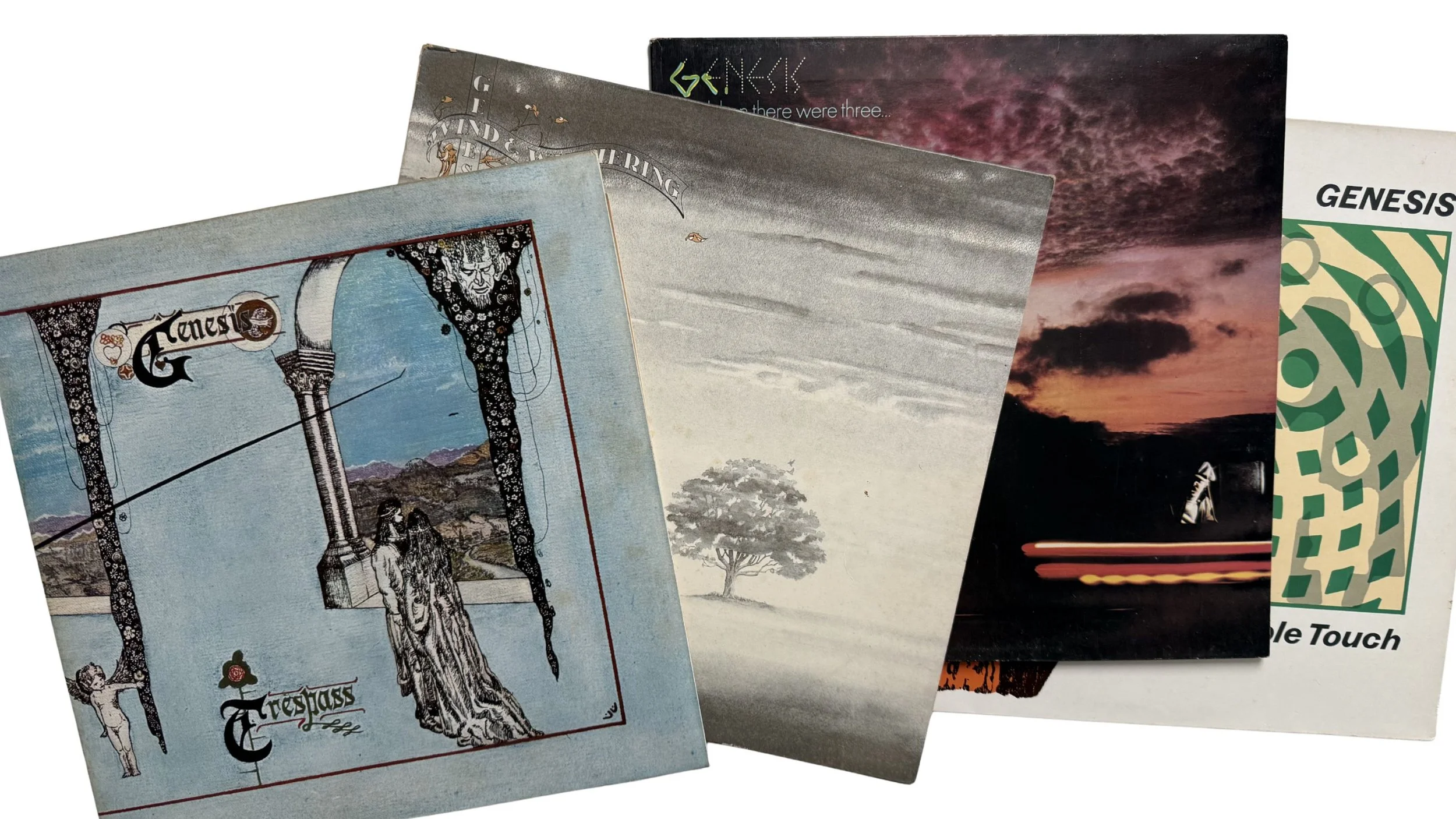
Genesis Band Members: A Complete Guide to Rock’s Greatest Evolution
Few bands have straddled both the vinyl and the CD eras as creatively, and as successfully, as Genesis. From Trespass to Invisible Touch and beyond, the Vinyl Historian breaks down the changing lineup and band members that influenced their sound and success.
Few bands have straddled both the vinyl and the CD eras as creatively, and as successfully, as Genesis. What started as a theatrical five-piece straight out of school evolved into the undisputed giants of 'prog' with The Lamb Lies Down on Broadway, before gradually slimming down to a core three-piece that rocked global stadiums well into the early nineties. This is the story of Genesis, their changing sound, and the line-up of musicians who drove it.
Who Were the Original Genesis Band Members?
When Genesis officially formed at Charterhouse School in 1967, the group emerged from the merger of two schoolboy bands: Anon and Garden Wall. The original Genesis band members who recorded their earliest demos were:
Peter Gabriel (Lead Vocals, Flute)
Tony Banks (Keyboards)
Mike Rutherford (Bass, Guitar)
Anthony "Ant" Phillips (Lead Guitar)
Chris Stewart (Drums)
While Tony Banks and Mike Rutherford would go on to be the only constant members across the band's entire fifty-five-year history, it was the delicate 12-string guitar weaves of Phillips and the raw vocal power of Gabriel that built the group's foundational progressive sound.
Decades on from those early art-school sessions, the individual journeys of these foundational musicians remain a major point of interest for rock historians. To see how the timeline stacks up today, here is a breakdown of the original line-up’s ages alongside their official birthdays:
Today:
- Peter Gabriel is years old.
- Tony Banks is years old.
- Mike Rutherford is years old.
- Anthony Phillips is years old.
- Chris Stewart is years old.
Genesis Birthdays:
- Peter Gabriel:
- Tony Banks:
- Mike Rutherford:
- Anthony Phillips:
- Chris Stewart:
Phil Collins was born on . He is years old today.
Was Peter Gabriel the Leader of Genesis?
To the public in the early seventies, the answer seemed obvious. Gabriel’s outlandish stage costumes—from fluorescent bat wings to a giant fox head—made him the natural leader and the focal point of the music press.
Yet behind the scenes, Genesis was never a dictatorship. It was a fiercely democratic, often stubborn collective of young songwriters. While Gabriel brought the theatricality, Tony Banks and Mike Rutherford held immense sway over the musical direction. Gabriel was the messenger on stage, but the songwriting machinery belonged to them all.
The Drum Throne: Finding the Heartbeat of Genesis
While Phil Collins eventually became the definitive heartbeat of Genesis, he was actually the fourth man to sit behind the drum kit. Peter Gabriel played drums in his earliest pre-Genesis school bands and occasionally handled live percussion, but he was never the official studio drummer.
The early years of the band were marked by a revolving door of drummers. Original drummer Chris Stewart left in 1968, replaced by John Silver, who played on the debut album. By 1969, John Mayhew took over the stool, bringing a heavier style to the second Genesis album, "Trespass" (1970).
None of these early drummers could fully unlock the group's increasingly complex, shifting time signatures. They needed someone who could make those intricate, heavy arrangements swing. In August 1970, a young Phil Collins walked into an audition, sat down at the kit, and instantly changed everything.
Early Genesis History: The Charterhouse School Connection and Jonathan King
The journey began in the late 1960s amidst the rolling, affluent hills of Surrey. Inside the gothic, stone-clad corridors of Charterhouse School in Godalming, a group of teenage boys began combining their musical ambitions. They were young, classically trained, and deeply insulated from the London blues boom.
It was here that they caught the attention of Jonathan King, a Charterhouse alumnus who had established himself as a sharp, ambitious pop svengali. King was instantly drawn to their gift for melody and signed the group to their first recording contract. He also gave them their name: Genesis.
Working at Regent Sound Studios on Denmark Street, the band recorded their debut album, From Genesis to Revelation (1969). The early sound of the record was fragile, acoustic, and steeped in pastoral folk-pop, dominated by Banks’ piano and Phillips' delicate 12-string guitar webs. King’s Bee Gees styled post production delivered a saccharine pop styl;ed album that flopped. Their friend and road manager, Richard MacPhail, arranged for them to take up residence in Christmas Cottage—an abandoned weekend retreat inWotton, Surrey belonging to his parents' friends. Working in this isolated sanctuary, the band set about completely reinventing their sonic blueprint, rehearsing for eleven hours a day to write what would become Trespass (1970)—the first true Genesis album.
The Classic Line-Up: From "Trespass" to "The Lamb Lies Down on Broadway"
The pastoral sound of "Trespass" proved to be both a creative breakthrough and a structural breaking point. Overwhelmed by the pressure of touring and battling severe stage fright, founding guitarist Anthony Phillips walked away from the band in July 1970, a departure that almost caused the group to split. Drummer John Mayhew was let go shortly after.
Left as a three-piece, the surviving original members—Peter Gabriel, Tony Banks, and Mike Rutherford—resolved to keep going. Having released just two albums, they immediately rebuilt the line-up, recruiting Phil Collins in August 1970 and Steve Hackett in January 1971. This newly formed five-piece would stay together to record the next four landmark Genesis albums, establishing the band's golden progressive era before Gabriel's departure in 1975.
The Classic Quintet (1971–1975)
The arrival of guitarist Steve Hackett and drummer Phil Collins in the early 1970s established the classic Genesis line-up.
This five-piece was a complex, fragile democracy of songwriters. Peter Gabriel was the theatrical focus, stepping off-stage to don a fox’s head or a red dress, while Tony Banks, Mike Rutherford, and Steve Hackett constructed intricate, dynamic instrumental tapestries behind him. They recorded three masterpieces—"Nursery Cryme" (1971), "Foxtrot" (1972), and "Selling England by the Pound" (1973)—pushing the absolute limits of complex songwriting.
While the double album "The Lamb Lies Down on Broadway" (1974) marked the climax of Gabriel-era theatricality, it also signalled the end of his time with the band. Gabriel felt he had nothing left to achieve within the group's collective structure. Just eighteen months after his exit, Gabriel released his debut solo single, "Solsbury Hill", launching a solo career that would soon rival the commercial heights of his former bandmates.
By 1975, the creative environment had become claustrophobic. The gruelling double-album sessions for "The Lamb Lies Down on Broadway" pushed internal tensions to a breaking point. Gabriel, feeling the strain of the rock machine and wanting to prioritise his young family, announced his departure.
Gabriel’s exit paved the way for his own creative liberation. His very first solo single, the shimmering, acoustic masterpiece "Solsbury Hill," was a direct reflection of leaving the band. It captured the raw vulnerability of stepping off the arena-rock carousel, instantly cementing his status as a visionary solo artist.
The Search for a Voice: Phil Collins Steps Up (1975–1977)
With Gabriel gone, the remaining four members faced a seemingly impossible task: finding a new lead singer. They placed anonymous advertisements in the music press and auditioned around thirty hopefuls at a studio in London. Phil Collins took on the role of vocal coach, singing the guide tracks to show the auditioning vocalists how the melodies should go.
Slowly, the band realised they were looking in the wrong place. The voice they needed was already in the room.
Collins agreed to sing lead for their next album, "A Trick of the Tail" (1976). The album was a major commercial triumph, comfortably outselling "The Lamb Lies Down on Broadway". Collins' warmer, more accessible vocal delivery breathed fresh life into their intricate arrangements.
This transitional four-piece line-up—Banks, Rutherford, Collins, and guitarist Steve Hackett—went on to record "Wind & Wuthering" (1976). It was a lush, romantic progressive album, but behind the scenes, internal chemistry was fracturing again.
Steve Hackett’s Departure (1977)
Steve Hackett’s position in the group had become increasingly difficult. As a solo artist who had already released his debut ("Voyage of the Acolyte") in 1975, he wanted more of his songwriting included on Genesis albums. During the "Wind & Wuthering" sessions, however, his material was frequently voted down by Banks and Rutherford under the band's democratic voting system. When the band rejected his instrumental track "Please Don't Touch" in favour of "Wot Gorilla?", Hackett reached his limit.
Frustrated by the restriction of his classical guitar ideas, Hackett quit the band in 1977 during the mixing of their double live album, "Seconds Out".
And Then There Were Three (1977–1996)
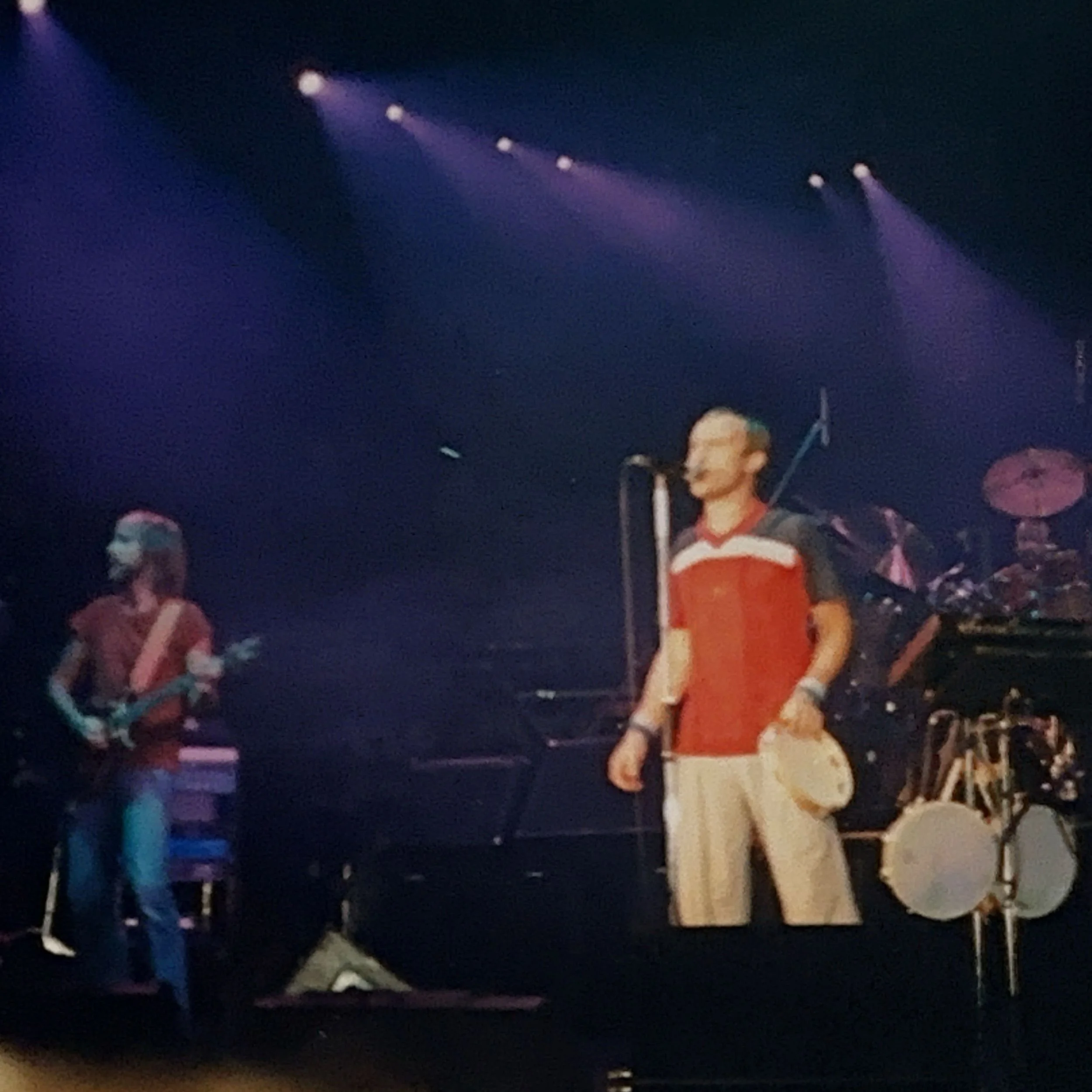
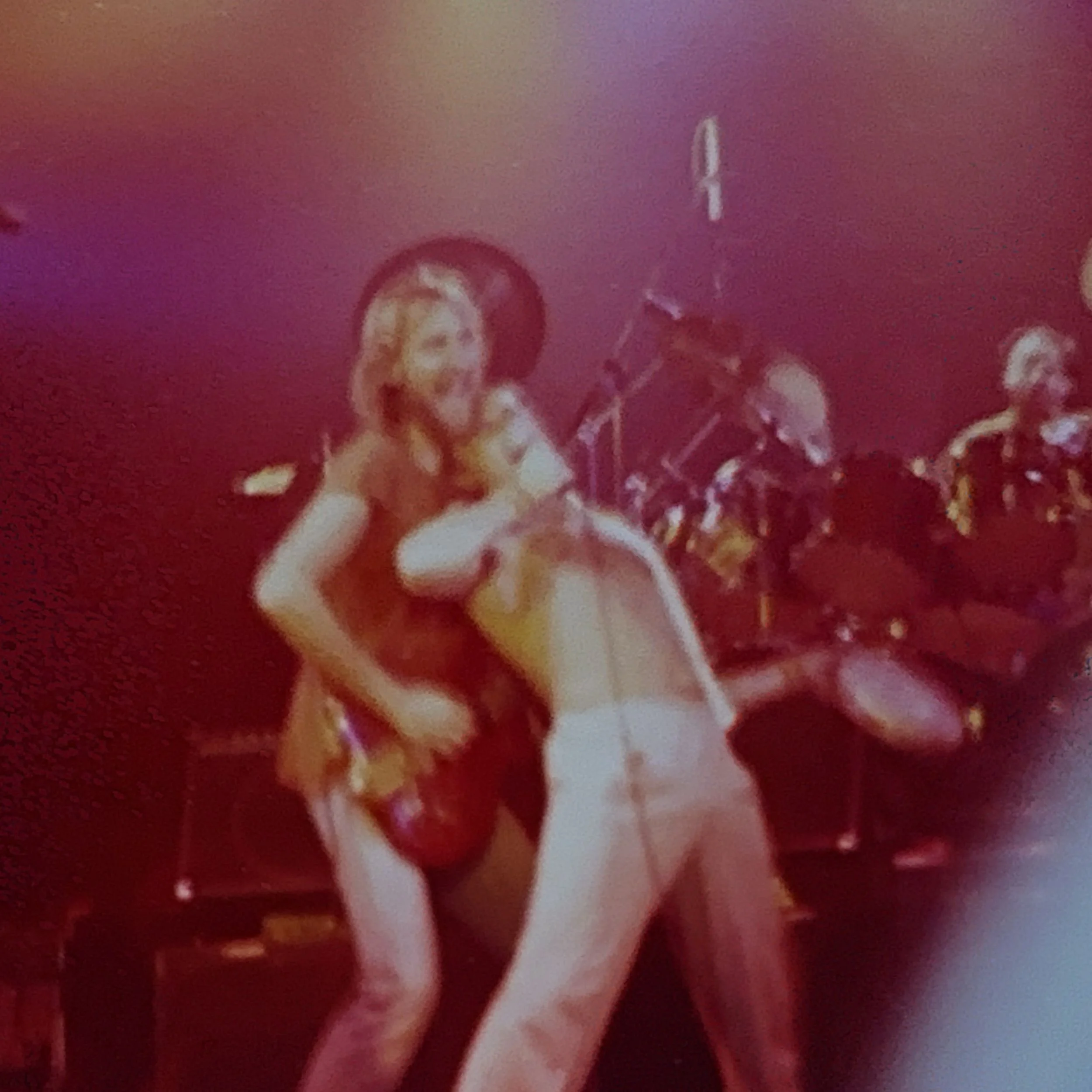
Reduced to a trio of Banks, Rutherford, and Collins, Genesis entered their most lucrative phase. They stopped writing about mythological giants and focused on personal, everyday human relationships. With the arrival of the CD era, records like "Duke" (1980), "Abacab" (1981), and the multi-platinum "Invisible Touch" (1986) transformed them from progressive outsiders into global pop icons. Collins' instinct for immediate, radio-friendly hooks perfectly matched the clean, gated-reverb drum sound that defined eighties radio.
This era brought unprecedented commercial accolades. "Invisible Touch" became an absolute juggernaut, selling over 6 million copies in the US alone and more than 1.2 million in the UK, on its way to over 15 million sales worldwide. The album also secured a historic milestone, making Genesis the first foreign act to land five top-five singles on the US Billboard Hot 100 from a single record. Their global dominance was recognised with major industry awards, including a Grammy for the pioneering "Land of Confusion" music video, and ultimately culminated in them winning Favorite Pop/Rock Band at the 1993 American Music Awards during the "We Can't Dance" era. What started as an art-school experiment had become one of the biggest stadium acts on Earth.
To replicate this massive studio sound on stage, the core trio relied on a highly stable unit of live touring musicians. In late 1977, they recruited former Frank Zappa and Weather Report drummer Chester Thompson to handle the heavy live percussion, freeing Collins to step out from behind the kit and engage directly with the audience. Alongside him, American guitarist and bassist Daryl Stuermer joined to cover the intricate guitar and bass parts left behind by Hackett and Rutherford. Both Thompson and Stuermer became permanent fixtures of the Genesis live experience, anchoring their global stadium tours for decades.
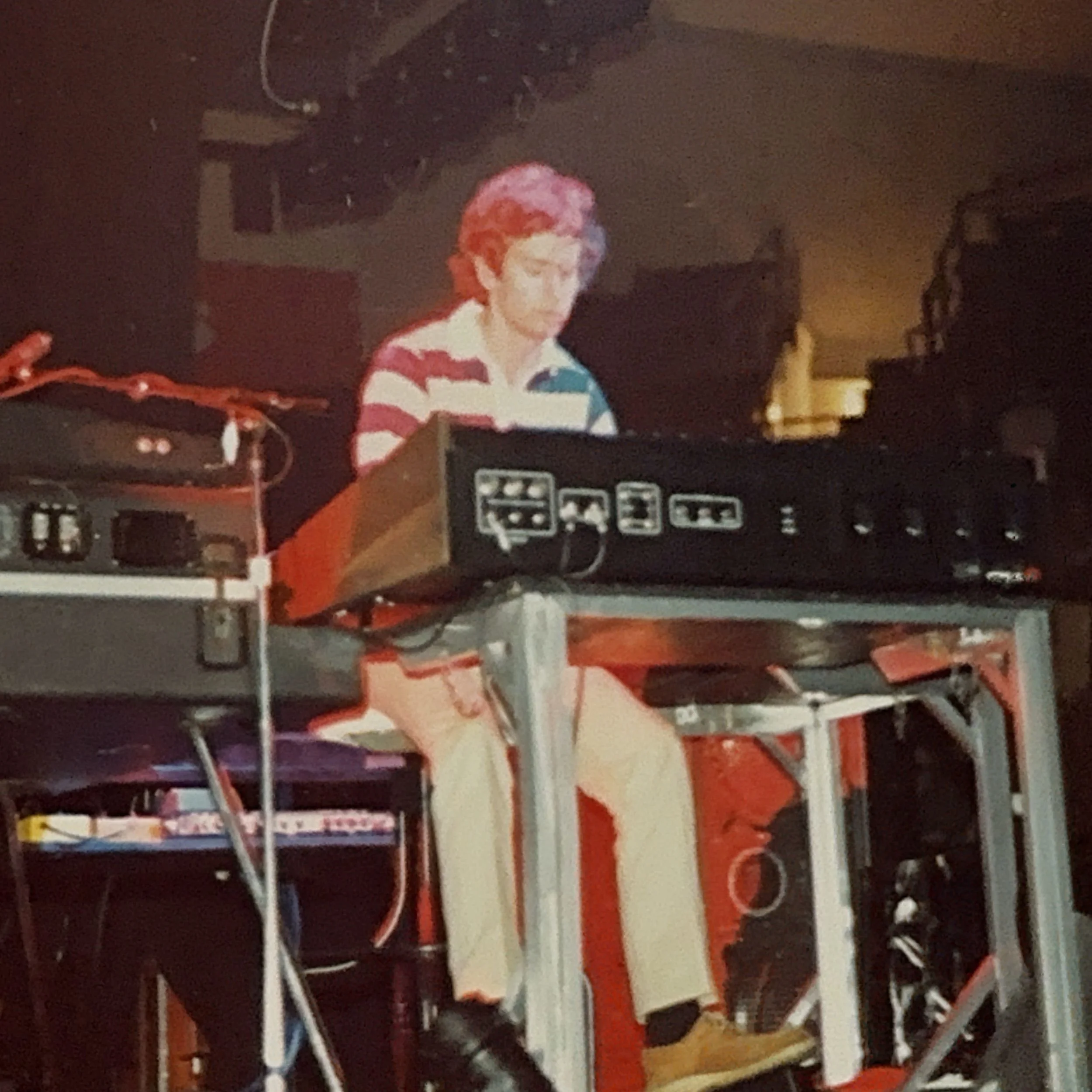
The Solo Juggernaut and We Can't Dance (1985–1996)
By the late 1980s, Genesis had become more than a band; it was a multi-franchise commercial empire. Alongside Mike Rutherford’s success with Mike + The Mechanics, Phil Collins had exploded into one of the biggest solo artists on the planet. Blockbuster solo albums like "No Jacket Required" (1985) and "...But Seriously" (1989) turned Collins into a permanent fixture on global radio, meaning he was regularly competing with his own band for the top spot on the charts.
The band managed to balance these parallel careers. In 1991, they returned to the studio to record "We Can't Dance", their final album with Collins. It was another massive success, selling over 10 million copies worldwide behind hits like "No Son of Mine" and the satirical title track.
However, the sheer scale of Collins’ solo fame made a parting of ways inevitable. Exhausted by the gruelling cycle of stadium touring and wanting to focus on his own music and film scores, Collins decided to step away. In March 1996, his departure was made official, bringing a highly lucrative twenty-six-year partnership to a close.
The Stiltskin Era (1996–1997)
Rather than calling time on the band after Collins' departure, Tony Banks and Mike Rutherford chose to press on. Refusing to let the legacy fade, they recruited Scottish singer Ray Wilson, who had recently found mainstream success fronting the post-grunge outfit Stiltskin.
Wilson brought a darker, deep baritone voice to their final studio album, "Calling All Stations" (1997). It was an intriguing, murky effort that tried to bridge their progressive past with contemporary alternative rock. However, without Collins’ commercial gravity, the record struggled to capture the public’s imagination, bringing the band’s studio recording history to a quiet end.
The Last Domino: Reunions, Legacy, and the Final Bow
The studio catalogue ended with Ray Wilson, but the core trio returned several times over the following decades to look back on their legacy. In 2007, Banks, Rutherford, and Collins reunited for the "Turn It On Again" tour, followed in 2014 by a rare gathering of all five classic members—Peter Gabriel, Steve Hackett, Tony Banks, Mike Rutherford, and Phil Collins—to compile the "R-Kive" box set and participate in a BBC documentary.
The final statement came with "The Last Domino? Tour" in 2021 and 2022. Battling severe spinal and nerve damage that left him unable to drum or stand, Phil Collins performed the shows seated. Taking his place on the drum stool was his 20-year-old son, Nic Collins, who handled the physically demanding, high-velocity drum arrangements from both the progressive and stadium eras.
Genesis played their final concert on 26 March 2022 at London’s O2 Arena, with Peter Gabriel watching from the audience. Today, Tony Banks and Mike Rutherford remain active, with Rutherford touring with Mike + The Mechanics, while Phil Collins has officially retired from the stage, ending a fifty-five-year run for one of rock's most resilient lineups
The Catalyst of Country Rock: Linda Ronstadt and the Birth of the Eagles
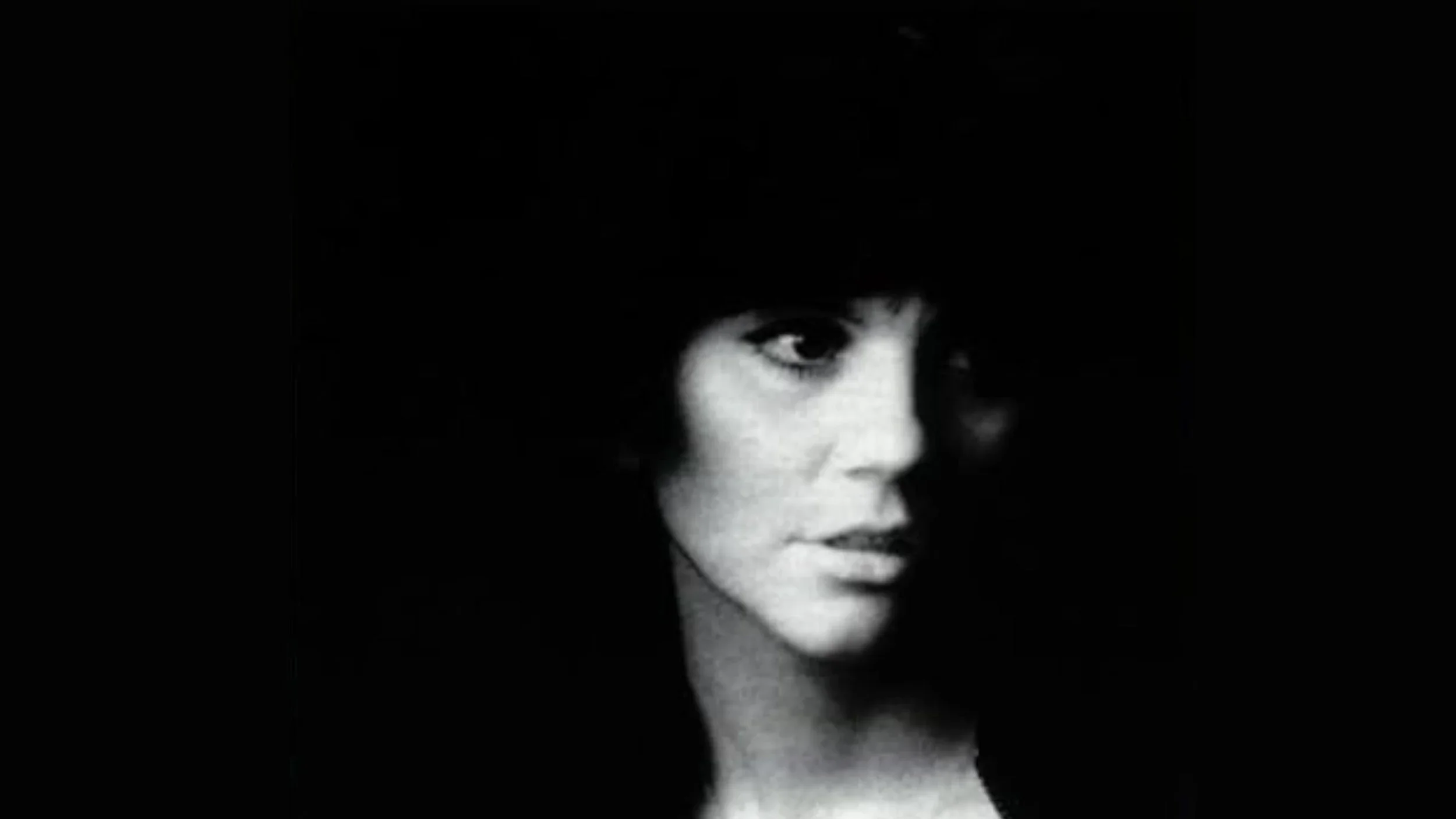
Who is Linda Ronstadt? Long before she became the first female superstar to pack out sports arenas, she was the quiet catalyst of the entire West Coast sound. Discover how a solo artist from Tucson hand-assembled the band that became the Eagles.
The Catalyst of Country Rock: Linda Ronstadt and the Birth of the Eagles
Ask a casual listener to define the sound of the 1970s American West Coast, and they will almost certainly name the Eagles. Yet, the actual blueprint for that multi-platinum era belonged to a solo female artist whose legacy is often unfairly obscured by the very giants she helped launch.
To truly answer the question “who is Linda Ronstadt?” is to meet the ultimate catalyst of the country-rock boom. In 1971, she hired two struggling musicians named Glenn Frey and Don Henley for her backing band, unwittingly assembling the core of the Eagles. This historic intersection launched a movement, but Ronstadt’s influence stretched far beyond discovering stadium-fillers. She stood as a towering creative force in her own right, harmonising on Neil Young's most cherished acoustic records, collaborating with JD Souther, and eventually conquering the global vinyl market as the decade's highest-paid woman in rock. Before she became the first female superstar to pack out sports arenas, she spent the early seventies setting the stage for a musical revolution.
Linda Ronstadt was born on . Today she is years old.
Where Was Linda Ronstadt Born? Tucson Roots
To understand the warmth and dusty textures of Ronstadt’s sound, you have to look southeast to where the desert meets the mountains. Linda Ronstadt was born on 15 July 1946 in Tucson, Arizona. She grew up on a ten-acre ranch surrounded by the acoustic guitars and traditional Mexican folk songs of her family’s living room. It was a rustic, musical upbringing that permanently hard-wired her ears.
The Stone Poneys and the "Different Drum" Breakthrough
In late 1964, at just eighteen years old, Ronstadt packed a single suitcase and moved to Los Angeles. She was chasing an acoustic folk-trio sound with her Tucson friends Bob Kimmel and guitarist Kenny Edwards. Together, they formed the Stone Poneys. By 1967, the band landed a deal with Capitol Records, but their early acoustic records struggled to find an audience. Everything changed when producer Nick Venet insisted on backing Ronstadt with a full baroque-pop orchestral arrangement on a song written by Michael Nesmith of the Monkees.
That song was "Different Drum". Released in September 1967, "Different Drum" climbed to No. 13 on the Billboard Hot 100. It was a bittersweet breakthrough. It established Ronstadt as a solo star-in-the-making but fractured the Stone Poneys, who couldn't survive the transition from a democratic folk trio to a singer-and-backing-band dynamic. By 1968, the band was gone. Linda was on her own, standing at the edge of a fast-changing musical frontier.
Linda Ronstadt and the Eagles History: Her 1971 Backing Band
By 1970, the Troubadour bar was the informal headquarters of the Southern California country-rock scene. It was here that Linda Ronstadt first crossed paths with Glenn Frey, a sharp-witted guitarist from Detroit, and Don Henley, an intense, singing drummer from the small town of Linden, Texas.
The Linda Ronstadt Eagles connection began with a simple, practical transaction. In the spring of 1971, Ronstadt needed a live band for her upcoming summer tour to support her self-titled third solo album. She hired Glenn Frey and Don Henley. At their very first rehearsal, the musical chemistry was startling. The blend of Henley and Frey's raw Texas-and-Michigan vocals with Ronstadt's powerful range created a high, lonesome sound that felt entirely fresh.
As Glenn Frey recalled decades later during her Rock and Roll Hall of Fame induction in 2014: "From the first rehearsal, I felt we were working on a style of music none of us had ever heard before. Two years later, people called it country-rock."
During that humid 1971 tour, travelling together in packed station wagons, Henley and Frey told Ronstadt of their dream to step out of the shadows and form their own band. Rather than feeling threatened, Ronstadt championed them. She actively helped them recruit guitarist Bernie Leadon and bassist Randy Meisner to complete the lineup. The band was the Eagles. They would soon conquer the world. Even after they split from her orbit, Ronstadt continued to support them, recording a heartbreaking version of their song "Desperado" for her 1973 album Don't Cry Now. It gave the young songwriting duo of Henley and Frey a massive shot of industry credibility—and a steady stream of publishing royalties when they needed it most.
JD Souther: The Unseen Architect of the L.A. Connection
John David Souther, a handsome, guitar-slinging songwriter from Amarillo, Texas, had moved to L.A. in the late sixties and formed the country-folk duo Longbranch Pennywhistle with his roommate, Glenn Frey. But Souther’s life changed when he met Ronstadt at the Troubadour. The two began dating, sharing a house in the Hollywood Hills that became an informal salon for the era's best musicians. Frey famously joked that the only reason Souther wasn't a bigger solo star was because he gave all his best songs to the Eagles and Linda Ronstadt. It is hard to argue with the data. Souther co-produced Ronstadt's Don't Cry Now (1973) and wrote some of her most devastating country-rock performances, including the acoustic masterpiece "Faithless Love" on Heart Like a Wheel (1974) and "White Rhythm and Blues" on Living in the USA (1978).
Concurrently, he was co-writing the Eagles' biggest hits, including "Best of My Love", "New Kid in Town", and "Heartache Tonight". Through Souther, the creative lines between Ronstadt and the Eagles were permanently blurred. They shared songs, players, harmonies, and a singular, melancholic vision of the American West.
"You're No Good" and Solo Superstardom
After several years in which her solo career struggled to fully ignite, Ronstadt found a crucial creative partner in British producer Peter Asher. As a former member of Peter and Gordon, Asher brought a direct line to London and the Beatles' inner circle, infusing her sound with a slicker, highly disciplined production value. Their first collaborative effort, 1973’s Don’t Cry Now, reset her trajectory and restored Capitol Records' faith in her commercial potential, prompting the label to quickly repackage her earlier tracks under the title Different Drum. The next record changed everything. Released just before Christmas in 1974, Heart Like a Wheel established the definitive blueprint for Ronstadt’s mid-seventies dominance. By meticulously pairing forgotten roots-music classics with contemporary singer-songwriter material, she created a sound of immense dynamic contrast, balancing polished arrangements with raw vocal force. The album soared to No. 1 in the United States the following spring. Its breakthrough single, "You’re No Good", topped the pop charts, while her brilliant acoustic reading of Hank Williams’ "I Can’t Help It (If I’m Still in Love with You)" hit No. 2 on the country chart, earning her a Grammy. By the late seventies, Ronstadt was moving well beyond any narrow ideas of country-rock. Her driving cover of the Rolling Stones' "Tumbling Dice" on the multi-platinum Simple Dreams in 1977 showed she could tackle the gritty rock of Exile on Main St. without losing her distinctive musical identity.
Neil Young and Linda Ronstadt: The Nashville Intersect
In February 1971, Linda Ronstadt flew to Nashville, Tennessee, to appear on The Johnny Cash Show. By coincidence, another young singer-songwriter named Neil Young was also in town to tape the same episode. Young was in the middle of recording his landmark album Harvest at Quadrafonic Studios. He invited Ronstadt and James Taylor to stop by the studio after the television taping to lay down backing vocals on a couple of acoustic tracks he was working on. “When the music is this good, you don’t get bored and you don’t get tired. Heart of Gold, one of the tracks we recorded that night, became the biggest single of Neil’s career.” — Linda Ronstadt - Simple Dreams.
The resulting sessions produced some of the most iconic harmonies in rock history. Ronstadt's soaring, unmistakable voice can be heard clear as a bell on "Heart of Gold"—which became Young's only No. 1 single—and the timeless classic "Old Man". That spontaneous session in Nashville captured the casual, highly collaborative spirit of the era, proving that even outside her Southern California base, her vocal presence was already a highly valued commodity among the decade's greatest songwriters.
What Musical Styles Did Linda Ronstadt Prefer to Work In?
As her career progressed, music critics struggled to categorise Ronstadt. Was she a country singer? A rock chick? A pop diva? When looking at what musical styles Linda Ronstadt prefer to work in, she operated under a strict, self-imposed rule: she only recorded genres of music that she had heard in her family's Tucson living room by the age of ten. This rule, far from limiting her, opened up a massive canvas of traditional American and Mexican styles:
Country-Rock and Folk: Her natural habitat in the late sixties and seventies, blending acoustic, string-band instrumentation with the electric power of rock and roll.
Traditional Mexican Mariachi / Canciones: In 1987, she defied her record label to record Canciones de Mi Padre, an album of traditional Mexican mariachi music she learned from her father. It went double-platinum in a single day and remains the biggest-selling non-English album in US history.
The Great American Songbook: Working with legendary arranger Nelson Riddle, she recorded a trilogy of traditional pop standards in the mid-1980s, reintroducing an entire generation of vinyl listeners to the classic pop of the pre-rock era.
Opera and Gilbert & Sullivan: She starred in the Broadway production of The Pirates of Penzance in 1981, earning a Tony nomination for her operatic performance.
Duets, Comebacks and a New Kind of Hit
By the late eighties, Ronstadt had entered a completely different phase of her career. She remained a formidable star in her own right, but she had also evolved into a unique vocal presence capable of changing the temperature of an entire record the moment she arrived. Her collaborations carried immense weight, aligning her with some of the most distinctive male vocalists of the era. The most commercially potent of these partnerships came with Soul icon Aaron Neville. Their performance of "Don’t Know Much", from the 1989 album Cry Like a Rainstorm, Howl Like the Wind, became one of Ronstadt's final massive chart triumphs.
Produced by Peter Asher alongside Steve Tyrell, the track beautifully juxtaposed Ronstadt’s steady poise with Neville’s fragile, soaring delivery. The single climbed to No. 2 in both the US and the UK, dominating the adult contemporary charts and winning a Grammy. More than a commercial hit, it proved her unmatched ability to share a duet while leaving an indelible, personal stamp on the arrangement. Her contribution to Paul Simon's landmark 1986 album Graceland was far subtler, yet no less powerful. On "Under African Skies", Ronstadt laid down shimmering harmony vocals that became one of the album's most luminous, graceful moments. Rather than a headline-grabbing, competitive duet, her voice slipped naturally into Simon’s expanding acoustic landscape.
Neil Young's work in the early nineties offered another angle on her late-career magic. Ronstadt provided the warm, nocturnal backing vocals for the title track of his nostalgic 1992 masterpiece, Harvest Moon. By this era, she was no longer simply a solo star touring her own catalogue. She had become one of those rare, irreplaceable vocalists whose mere presence brought instant warmth, familiarity, and a deep sense of musical history to another artist's record.
"It's About Time": The Rock and Roll Hall of Fame Legacy
On 10 April 2014, Linda Ronstadt was formally inducted into the Rock and Roll Hall of Fame. Because her Parkinson's diagnosis had sadly forced her into retirement, she was unable to attend or perform. Fittingly, it was Glenn Frey who stood at the podium to induct her. “Linda lives in a place where art trumps commerce, where self-exploration trumps self-exploitation, where hard work and integrity trump fame and failure.” — Glenn Frey, 2014 Rock & Roll Hall of Fame Induction. Frey’s speech was a heartfelt tribute to the woman who had given him and Don Henley their start in a dingy L.A. club forty-three years earlier. It was a reminder to the music world that the entire Southern California sound—with its beautiful harmonies, electric guitars, and dusty desert poetry—was built on a foundation laid by Linda Ronstadt.
Listen to Heart Like a Wheel or the Eagles' Desperado, and the shared DNA of this West Coast circle is unmistakable.
At the root of that family tree, holding the entire scene together, is the voice of Linda Ronstadt.
“Linda lives in a place where art trumps commerce, where self-exploration trumps self-exploitation, where hard work and integrity trump fame and failure.”
The Rolling Stones Band Members: The Definitive Genealogy of Rock’s Greatest Lineup
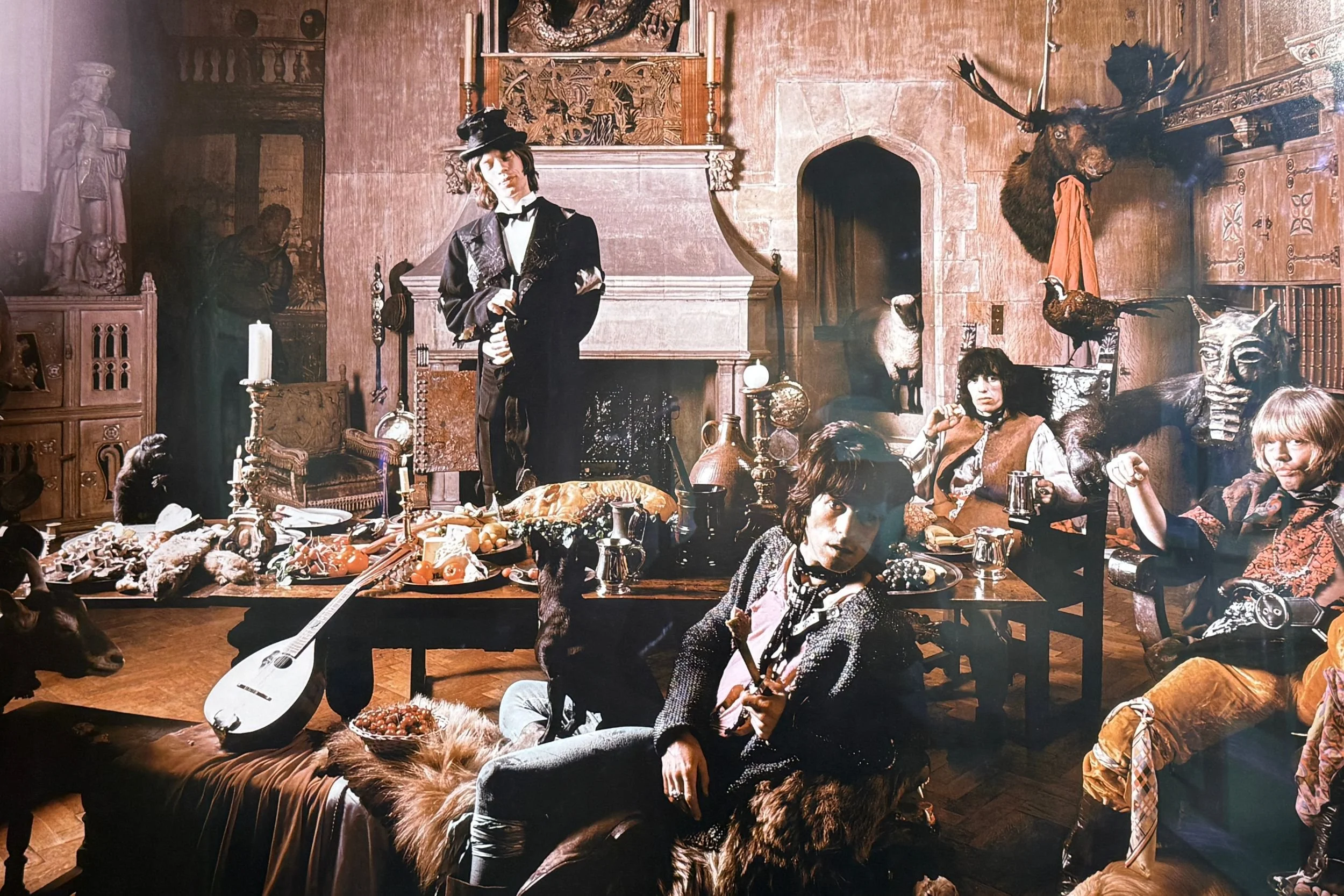
For over six decades, the Rolling Stones have defined rock 'n' roll longevity. But behind the legendary tongue-and-lips logo lies a complex, shifting matrix of official members, session giants, and inner-circle collaborators. This definitive guide charts the band’s evolution through every major era—from the raw R&B of the Brian Jones years and the "golden" virtuosity of Mick Taylor, to the stable dual-guitar weaving of Ronnie Wood and the modern touring machine.
For over six decades, the Rolling Stones have served as the ultimate blueprint for rock ’n’ roll longevity. Yet, behind the mythic tongue-and-lips logo lies a complex, shifting matrix of musicians, session giants, and backroom instigators who shaped their world-conquering sound.
To understand the Rolling Stones is to understand their lineup transitions. This definitive guide details every era of the band's personnel, profiles the official members, and explores the vital "Stones Orbit"—the legendary musicians who defined their classic recordings without ever holding an official share in the partnership.
The Rolling Stones Lineup at a Glance
For quick reference, here is the current status, role, and tenure of every official member in the history of the Rolling Stones.
Mick Jagger Lead Vocals, Harmonica, Guitar 1962–Present
Keith Richards Guitar, Vocals, Songwriter 1962–Present
Ronnie Wood Guitar, Backing Vocals 1975–Present
Charlie WattsDrums, Percussion 1963–2021
Bill Wyman Bass Guitar 1962–1993
Mick Taylor Lead & Slide Guitar 1969–1974
Brian Jones Guitar, Harmonica, Multi-instrumentalist 1962–1969
Ian Stewart Piano, Keyboard 1962–1963
Rolling Stones Current Lineup (2026)
With the release of Foreign Tongues we can see the very latest line up of the Rolling Stones. Mick Jagger, Ronnie Wood and Keith Richards were joined by Darryl Jones on bass, and Steve Jordan on drums.
How Old are the Rolling Stones members?
The age of Mick, Keith and Ronnie have long been the source of query and often derision. Yet decades on from their raw London R&B sessions, the band continue to deliver great music. Here is how old the band members are today:
- Mick Jagger is years old.
- Keith Richards is years old.
- Brian Jones would be years old today.
- Bill Wyman is years old.
- Charlie Watts would be years old today.
- Ian Stewart would be years old today.
The Rolling Stones Birthdays:
- Mick Jagger:
- Keith Richards:
- Brian Jones:
- Bill Wyman:
- Charlie Watts:
- Ian Stewart:
Ronnie Wood was born on . He is years old today.
The Evolutionary Eras of the Rolling Stones
By dividing their sixty-year career into distinct personnel eras, we can map how their musical identity shifted from raw London R&B to polished arena rock.
1. The Formative & Brian Jones Era (1962–1969)
Core Lineup: Mick Jagger, Keith Richards, Brian Jones, Bill Wyman, Charlie Watts, Ian Stewart (until 1963)
Key Albums: Aftermath (1966), Beggars Banquet (1968)
In the spring of 1962, it was the enigmatic multi-instrumentalist Brian Jones who founded the band, naming them after Muddy Waters' "Rollin' Stone" during a hurried phone call with Jazz News. Jones was the band's musical vanguard, introducing slide guitar, sitar (Lady Jane), dulcimer, and mellotron to their early arrangements.
This era also birthed Nanker Phelge, the collective pseudonym used between 1963 and 1965 for group compositions (such as Stoned and Play with Fire). This clever construct allowed the band to split royalties evenly among all members and their manager during their lean, formative years.
As the decade waned, Jones’ creative authority was eclipsed by the rising songwriting partnership of Jagger–Richards, a transition aggressively engineered by their ambitious young manager, Andrew Loog Oldham. Stifled by addiction and creative alienation, Jones was asked to leave the band in June 1969. Less than a month later, he was found dead in the swimming pool of his home, Cotchford Farm, aged 27.
2. The Mick Taylor "Golden" Era (1969–1974)
Core Lineup: Mick Jagger, Keith Richards, Mick Taylor, Bill Wyman, Charlie Watts
Key Albums: Let It Bleed (1969), Sticky Fingers (1971), Exile on Main St. (1972), It's Only Rock 'n' Roll (1974)
When 20-year-old virtuoso Mick Taylor was recruited from John Mayall’s Bluesbreakers, he brought a fluid, lyrical sophistication that unlocked the band's absolute creative peak. Taylor’s contributions were more than just rhythm guitar. He played soaring, melodic slide solos that contrasted beautifully with Keith Richards' gritty, syncopated chord structures.
Richards himself would later recall, "Sometimes I was in awe listening to Mick Taylor." His contributions on masterpieces like the sprawling Can't You Hear Me Knocking (from Sticky Fingers) and the exquisite, phase-shifted solo on Time Waits for No One (from It's Only Rock 'n' Roll) elevated the Stones to "The Greatest Rock ’n’ Roll Band in the World."
The end of this era also marked a massive operational shift for the band's core architects. On 1974's It's Only Rock 'n' Roll, Jagger and Richards officially took over the band's production duties under the pseudonym The Glimmer Twins. The nickname originated from a January 1969 holiday cruise to Brazil; an older English couple, unable to place the disguised rock stars, repeatedly implored them to "just give us a glimmer" as to their identities. By using the moniker on the sleeve credits, it signalled that the duo was now firmly in charge of their own studio destiny.
Burned out by the relentless lifestyle, frustrated by a lack of songwriting credits, and feeling his musical identity swallowed by the burgeoning Glimmer Twins machinery, Taylor abruptly resigned in late 1974.
3. The Ronnie Wood & Stable Era (1975–1993)
Core Lineup: Mick Jagger, Keith Richards, Ronnie Wood, Bill Wyman, Charlie Watts
Key Albums: Some Girls (1978), Tattoo You (1981)
To replace Taylor's technical precision, the Stones chose chemistry. Ronnie Wood, veteran of the Jeff Beck Group and the Faces, stepped in during the 1975 tour and became an official member on the 1976 album Black and Blue.
Wood brought with him "the ancient art of weaving"—a style of guitar playing where he and Richards traded lead and rhythm lines seamlessly, blurring the lines between who was playing what. This loose, telepathic guitar weave returned the Stones to their raw, dual-guitar R&B roots.
This remarkably stable era came to a close when bassist Bill Wyman quietly retired from the group in 1993 after the Steel Wheels tour. Known as "The Quiet Stone," Wyman later reflected on his departure, noting that after thirty years of global touring and financial mismanagement under archaic tax structures, he simply wanted to pursue his passions for archaeology, photography, and writing.
4. The Modern Trio & Touring Era (1993–2021)
Core Lineup: Mick Jagger, Keith Richards, Ronnie Wood, Charlie Watts
Key Albums:Voodoo Lounge (1994), A Bigger Bang (2005)
Following Wyman's departure, the Rolling Stones ceased operating as a traditional quintet. Jagger, Richards, Wood, and Watts remained the only official partners in the band, recruiting top-tier session players—most notably Darryl Jones as their mainstay touring bassist, alongside studio contributors like Living Colour's Doug Wimbish and celebrated producer Don Was—to fill the bass slot both in the studio and on the road. This era transformed the Stones into a lean, highly efficient stadium-touring machine, defining the modern rock spectacle across record-breaking world tours.
5. The Contemporary Lineup (2021–Present)
Core Lineup: Mick Jagger, Keith Richards, Ronnie Wood
Key Albums:Hackney Diamonds (2023), Foreign Tongues (2026)
The passing of legendary drummer Charlie Watts in August 2021 marked a profound, historic shift. Watts was the quiet heartbeat of the Stones. His signature style—steeped in a lifelong love of jazz—was defined by a subtle, idiosyncratic technique: he would skip the backbeat on his hi-hat whenever he hit the snare drum. This tiny pocket of empty space dragged the rhythm back, creating that famously loose, swaggering groove that defined the Stones' sound.
As Keith Richards famously said: "No Charlie, no Stones." Yet, carrying out Watts' own wishes, the band continued, recruiting acclaimed powerhouse drummer Steve Jordan to sit behind the kit.
This lineup proved its enduring vitality with the release of the critically acclaimed album Hackney Diamonds in 2023. Looking forward, the band is set to release their twenty-fifth studio album, Foreign Tongues, in July 2026. This upcoming release expands their legendary collaborative web even further, featuring guest contributions from key contemporaries, including legendary keyboardist Steve Winwood.
The Six "Stones Orbit" Entities You Need to Know
The core members laid the foundation, but the Stones' catalogue would be unrecognisable without the key collaborators who shaped their aesthetic and sound. These five musicians and one visionary manager constitute the essential entities of the band's inner circle.
1. Ian Stewart: The Secret Stone
Before Mick Jagger or Keith Richards ever stepped on a stage, Scottish pianist Ian Stewart was the first musician to join Brian Jones' embryonic blues group in 1962. However, when Andrew Loog Oldham took over management in 1963, he made a ruthless aesthetic decision: Stewart's rugged, square-jawed look did not fit the dangerous, long-haired image Oldham was crafting for the band.
Demoted from the official lineup but remaining as their road manager and premier session pianist, Stewart accepted the decision without malice. He played piano on almost every classic Stones record until his untimely death in 1985, bringing his driving boogie-woogie style to tracks like Rock and Roll Music and Star Star. When the Rolling Stones were inducted into the Rock and Roll Hall of Fame in 1989, they insisted Stewart’s name be included alongside theirs.
2. Andrew Loog Oldham: The Architect of Menace
Taking the reins of the band in 1963 at just 19 years old, Andrew Loog Oldham was the public relations genius who saw that if the Beatles were the clean-cut heroes of British pop, the Stones could conquer the world by playing the villains. He encouraged their dirty, rebellious image, famously prompting the headline: "Would you let your daughter marry a Rolling Stone?"
Crucially, Oldham recognized that the band cannot survive on blues covers alone. He locked Jagger and Richards in a kitchen, telling them they could not leave until they had written a song. The result was As Tears Go By, launching the legendary Jagger–Richards songwriting partnership that would define the band's legacy.
3. Bobby Keys: The Texan Horn
No single instrument outside of the core guitars is more closely linked to the Stones' golden era than the saxophone of Bobby Keys. Born in Texas on the very same day as Keith Richards (18 December 1943), Keys formed an instant, lifelong bond with the guitarist.
His warm, muscular, and completely unpretentious sax playing became a signature element of their early 70s masterpieces. It is Keys who plays the iconic, blistering solo on Brown Sugar, and his lazy, soul-drenched lines on Sweet Virginia anchored the country-soul peak of Exile on Main St. Known as the "Sixth Stone" until his death in 2014, Keys remains the gold standard for rock 'n' roll saxophone.
4. Nicky Hopkins: The Session Virtuoso
If Ian Stewart was the master of boogie-woogie, Nicky Hopkins was the band’s classical-meets-blues secret weapon. A peerless session pianist who worked with everyone from The Who to the Kinks, Hopkins’ elegant, cascading piano work defined the Stones' most beautiful, melancholic arrangements.
His delicate touch can be heard weaving through the tragic beauty of Sway, the driving gospel force of Loving Cup, and the dark, rhythmic undercurrent of Sympathy for the Devil. Hopkins provided the melodic sophistication that bridged the gap between Keith's rhythm and Mick Taylor's lead.
5. Billy Preston: The Soul Bridge & The Beatles Connection
Keyboard wizard and singer Billy Preston brought an incredible, high-energy soul and funk sensibility to the Rolling Stones during a crucial transition period in the mid-1970s. Toured heavily with the band from 1973 to 1977, Preston's clavinet and organ playing injected a fresh, groove-heavy funk into albums like Goats Head Soup and Black and Blue.
Preston also holds one of the most unique distinctions in music history: he is the ultimate bridge between the two greatest British bands of all time. Famously dubbed the "Fifth Beatle," he is the only musician to receive a joint label credit on a Beatles single (Get Back in 1969) before transferring his soulful energy directly into the Stones' legendary mid-70s touring lineup.
Active Touring Musicians
To maintain their massive wall of sound on global stadium tours, the Stones rely on a highly stable elite unit of backing musicians:
Darryl Jones (Bass Guitar, 1993–Present): Following Bill Wyman’s departure, "The Munch" has held down the low end for over thirty years. Formerly of Miles Davis' and Sting's bands, his precise, jazz-funk background brings a steady, modern pocket to the rhythm section.
Chuck Leavell (Keyboards, Vocals, Music Director, 1982–Present): The former Allman Brothers Band member has been the Stones' onstage musical director for over four decades, keeping the band’s sprawling catalogue structured and cueing the transitions on stage.
By understanding these distinct eras and the vital contributions of the musicians in their orbit, we see that the genius of the Rolling Stones is not just in their individual talents, but in their peerless ability to weave different creative energies into the greatest rock 'n' roll tapestry in history.
Oh by the way… Who were the original Pink Floyd band members and who’s still here today?
Who were the original members of Pink Floyd, and how did the line-up change from Syd Barrett to The Division Bell? This guide follows the band through its key eras.
The story of Pink Floyd is not merely a chronicle of shifting musical boundaries; it is a masterclass in internal chemistry, friction, and structural evolution. Across four decades, the group transformed from a whimsical, London-underground psychedelic outfit into a global stadium powerhouse. Driving that evolution was a fluid roster of musicians whose personal and creative relationships defined the very parameters of the vinyl era.
To truly understand Pink Floyd, one must trace how the songwriting credits, the studio environments, and the microphone itself shifted across distinct chapters of the band's history.
The Original Pink Floyd Line-Up & The Cambridge Connection (1965–1968)
The first functional version of Pink Floyd was forged in London, built upon schoolboy friendships and artistic connections established in Cambridge.
The original four-piece line-up comprised:
Syd Barrett (Roger Keith Barrett) – Lead guitar, lead vocals, chief songwriter
Roger Waters – Bass guitar, backing vocals
Rick Wright – Keyboards, synthesisers, backing vocals
Nick Mason – Drums, percussion
Here is a breakdown of the original line-up's ages alongside their official birthdays:
Today:
- Syd Barrett would be years old today.
- Roger Waters is years old.
- Rick Wright would be years old today.
- Nick Mason is years old.
Pink Floyd Birthdays:
- Syd Barrett:
- Roger Waters:
- Rick Wright:
- Nick Mason:
David Gilmour was born on . He is years old today.
This tight-knit Cambridge circle also included close friends Storm Thorgerson and Aubrey Powell—who would later establish the legendary design partnership Hipgnosis that created the visual presentation of the band that would conquer the world.
In this first chapter of the band, Syd Barrett was the undisputed creative nucleus. He was a figure of singular, eccentric charisma, projecting a strange, playful, and faintly unsettling energy. It was Barrett who coined the band's name in 1965, hurriedly combining the first names of two Carolina bluesmen in his record collection—Pink Anderson and Floyd Council—to avoid a name clash with another London group called the Tea Set.
This original quartet recorded the band’s landmark debut, The Piper at the Gates of Dawn (1967) at EMI’s Abbey Road studios with early recordings were captured across London at Sound Techniques on Chelsea’s King’s Road.
The Five-Man Transition & A Saucerful of Secrets (1968)
By early 1968, Barrett’s mental state had deteriorated, rendering him increasingly erratic on stage and unproductive in the studio. To preserve the live act, the band recruited fellow Cambridge guitarist David Gilmour (formerly of Jokers Wild) in January 1968.
For a brief, fraught window of several months, Pink Floyd existed as a five-piece. This transitional phase is frozen in time on their second album, A Saucerful of Secrets (1968)—the only record in the catalogue to feature contributions from all five key figures: Barrett, Gilmour, Waters, Wright, and Mason.
Barrett’s final creative offering to the band was the closing track, "Jugband Blues", a hauntingly prophetic lyric that laid bare his own mental fracture and imminent detachment from the group:
"It's awfully considerate of you to think of me hereAnd I'm most obliged to you for making it clearThat I'm not here."
Shortly after its recording, Barrett was officially let go from the group. While there were fears that the band would collapse without their main songwriter, Gilmour’s arrival provided the structural and sonic foundation that allowed Pink Floyd to transition from a transient psychedelic novelty into a serious progressive force.
The Classic Era & The Shared Microphone (1968–1979)
With Barrett's exit, Roger Waters gradually emerged as the band's primary conceptualist and lyricist, but the musical direction remained a remarkably democratic collective effort between Waters, Gilmour, Wright, and Mason.
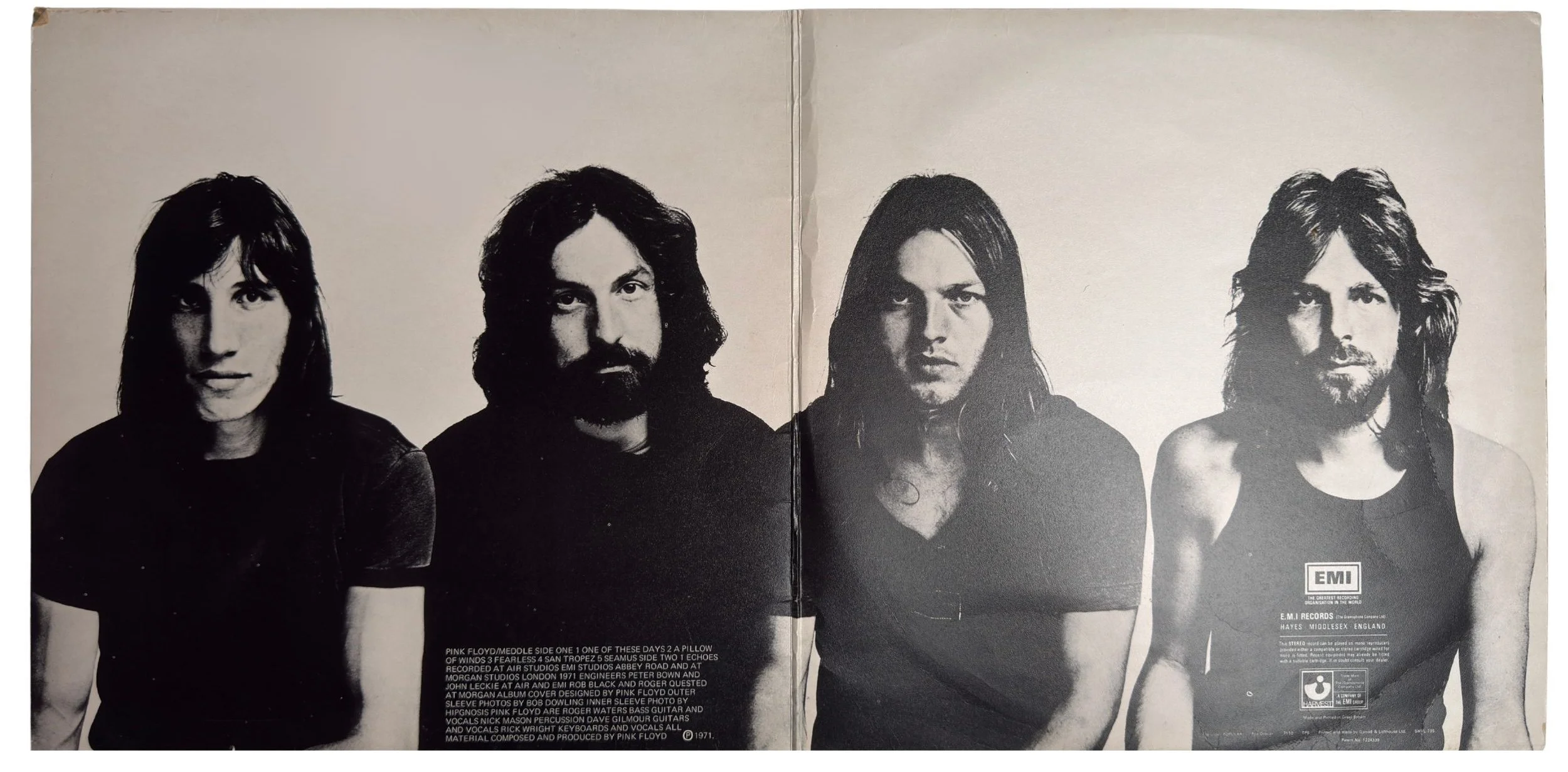
Pink Floyd - left to Right - Roger Waters, Nick Mason, David Gilmour, Rick Wright. Taken from the Meddle album cover.
Throughout this golden era, Pink Floyd famously rejected the conventional "frontman" dynamic. Instead, vocal duties were distributed with deliberate care, matching the emotional weight and tonal colour of each track to the vocalist:
David Gilmour provided the soaring, rich, and melodic lead vocals that anchored the band's most accessible moments. His voice carried the weight of "Time", "Money", "Breathe", and "Wish You Were Here".
Roger Waters delivered a sharper, more theatrical, and spoken-delivery vocal style. It was a voice designed for cynicism and dramatic narrative tension, perfectly utilised on "Brain Damage", "Dogs", and "Pigs (Three Different Ones)".
Rick Wright was the band’s secret vocal weapon, offering a delicate, melancholic lead vocal on early tracks like "Echoes" and "Us and Them", whilst providing the indispensable, cushion-like backing harmonies that defined their signature studio sound.
Nick Mason rarely stepped up to the microphone, but delivered one of the band's most iconic and menacing vocal performances on the instrumental-heavy opener of Meddle (1971), "One of These Days". His heavily distorted, ring-modulated declaration—"One of these days I'm going to cut you into little pieces"—stands as his sole credited vocal contribution on a Pink Floyd studio track.
As they refined their sound through Ummagumma (1969) and Meddle (1971), the band occasionally sought isolation outside of London, recording Obscured by Clouds (1972) at the residential Château d’Hérouville studio near Paris.
However, it was their return to Abbey Road with staff engineer Alan Parsons that crystallised their efforts. Released on EMI's progressive imprint, Harvest Records, The Dark Side of the Moon (1973) became an instant monument of the vinyl era, selling over 50 million copies and forever shifting the scale of the band's existence.
The Fracturing Wall: Sacking and Studio Exile (1979–1983)
The monumental success of Dark Side inevitably disrupted the group's delicate democratic balance. By the late 1970s, Waters began taking absolute control of the conceptual narrative, a shift that hardened during the sessions for Animals (1977) and culminated in The Wall (1979).
To escape the crushing tax rates of late-seventies Britain and the growing tension within London, the band decamped to Super Bear Studios in the South of France. Tucked away in the Alpes-Maritimes, this residential facility became both a technical haven and a symbol of their growing estrangement.
The physical layout of Super Bear allowed the members to live and work in near-complete isolation from one another. Waters, Gilmour, and Wright tracked their parts during different shifts, with co-producer Bob Ezrin brought in to act as an intermediary and musical arbiter between the warring factions.
It was during these fractured French sessions that Waters forced keyboardist Rick Wright out of the band. Wright was stripped of his partnership, but in a bizarre twist of corporate irony, he was retained as a salaried session musician for The Wall’s subsequent live tour. Because the touring costs were astronomically high, the actual band members lost money on the road, while Wright emerged as the only person to make a profit from those legendary shows.
By the time they recorded The Final Cut (1983), Pink Floyd was operating as a trio of Waters, Gilmour, and Mason. Wright was entirely absent, and the album was widely regarded as a Roger Waters solo record in everything but name.
The Gilmour-Led Reboot (1987–1994)
When Roger Waters officially left the group in 1985, he declared Pink Floyd a "spent force" and attempted to legally block the remaining members from using the name. David Gilmour and Nick Mason chose to fight, initiating a bitter high-court battle over the trademark that ultimately fell in their favour.
With Gilmour at the helm, the band was reborn:
A Momentary Lapse of Reason (1987): A heavily studio-assisted transition album that saw Rick Wright return to the fold, initially paid as a session musician due to ongoing legal entanglements with Waters.
The Division Bell (1994): A true return to form that saw Wright reinstated as a full partner. The album benefited from the lyrical input of journalist Polly Samson (soon to become Gilmour’s wife), whose reflective, poetic lines brought a mature, pastoral tone to the record.
The Division Bell’s visual campaign was handled by their long-time graphic designer, Storm Thorgerson, formerly of Hipgnosis. The sleeve—featuring two monolithic metal heads constructed and photographed in a Cambridgeshire field with Ely Cathedral standing on the distant horizon—became one of the twilight era's most iconic images. It served as a fitting, atmospheric bookend to the active recording life of the band.
A Timeline of Legacy & Mortality
For collectors and historians of the progressive rock era, the story of Pink Floyd is a closed book, punctuated by moments of deep reconciliation and the inevitable passage of time.
The final curtain for the classic four-piece came on 2 July 2005 at the Live 8 benefit concert in London's Hyde Park. Gilmour, Waters, Wright, and Mason walked onto the stage together for the first time in 24 years, delivering a brief, emotional four-song set that served as a moving tribute to their shared history. It remains the final time they would ever perform together.
The passing of Syd Barrett on 7 July 2006 (aged 60) in Cambridge, followed by the death of keyboardist Rick Wright on 15 September 2008 (aged 65), permanently closed the door on any future reunion.
Today, the remaining three members continue to steward their legacies from very different corners of the musical world:
Roger Waters (now 82) continues to tour globally, presenting stark, politically charged live shows and challenging the band's legacy with solo projects like The Dark Side of the Moon Redux.
David Gilmour (now 80) maintains a highly respected solo career, recently releasing the critically acclaimed Luck and Strange, an album deeply concerned with themes of aging, family, and mortality.
Nick Mason (now 82) stands as the only member to play on every single Pink Floyd studio album. In recent years, he has come full circle, touring the globe with his outfit Nick Mason's Saucerful of Secrets to keep the adventurous, experimental spirit of the pre-1973 catalog alive.
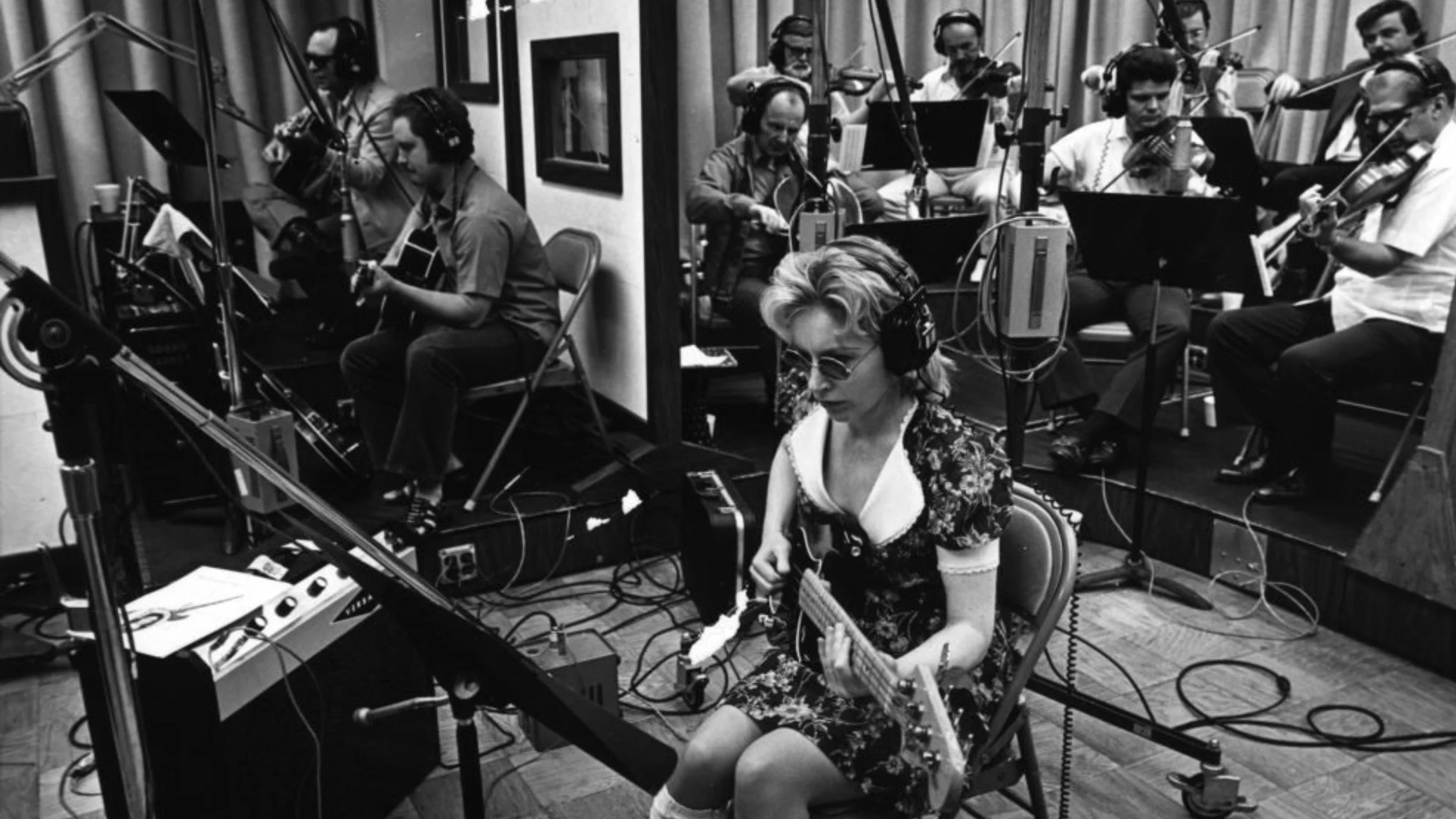
The Wrecking Crew - the greatest band you've never heard of.
The Wrecking Crew were elite Los Angeles session musicians who powered Pet Sounds, the Wall of Sound and the biggest hits of the vinyl era.
The Wrecking Crew were among the most important musicians of the vinyl era. They were not a band in the traditional sense, releasing albums under their own name. Yet operating effectively as the ultimate studio band, their playing underpins some of the most celebrated records ever pressed to vinyl.
If you love Pet Sounds, you are hearing the Wrecking Crew. The drums on Bridge Over Troubled Water? Hal Blaine. Phil Spector’s Wall of Sound? Built by Los Angeles session players who turned charts into hits at industrial scale.
This is the story of the Wrecking Crew — the most influential backing band you’ve never heard of.
Between 1962 and 1972, a rotating group of elite session players working in Los Angeles performed on hundreds of hit records that defined the vinyl era. The term “Wrecking Crew” was applied later to describe a loose collective of first-call studio musicians who functioned as a de facto band, repeatedly booked by producers across the Los Angeles recording scene. While they were not a fixed touring group with a formal membership list or a record contract, they operated as a cohesive musical unit. They were a pool of professionals who could read charts instantly, adapt to any genre and deliver complete takes under pressure.
Producers relied on them because studio time was expensive and expectations were high. A typical session began with an arrangement or chord chart placed on a music stand. The musicians would run the song once or twice, clarify the structure, and then record master takes in quick succession. Adjustments were made between takes. Keys could shift. Tempos could tighten. These players were experienced sight-readers who understood harmony and rhythm at a level that allowed them to shape a record in real time.
Using elite studio musicians also expanded what a successful band could achieve. The Beach Boys are the clearest example. While the group toured a hit single, Brian Wilson remained in Los Angeles after retiring from the road in 1964, focusing on writing and production. He worked with the Wrecking Crew to construct increasingly sophisticated backing tracks. When the rest of the band returned, they added their trademark vocal harmonies to foundations that had already been carefully built in the studio. “Good Vibrations” was the perfect example of this recording process.
The system also enabled producers to accelerate output. The Monkees, assembled initially as a television project, relied heavily on Los Angeles session musicians for their early recordings under producer Don Kirshner. Although members such as Mike Nesmith and Peter Tork were capable musicians, many of the instrumental tracks on the first albums were cut by seasoned professionals, allowing recordings to be completed quickly while the group fulfilled filming and promotional commitments.
The songwriting pipeline feeding those recordings often stretched beyond California. Carole King, who had emerged from New York’s Brill Building as one of the most successful staff writers of the early 1960s, co-wrote “As We Go Along” for The Monkees’ film Head. By the late 1960s, King herself had relocated to Los Angeles, becoming part of the same creative environment that sustained the Wrecking Crew. The journey from Brill Building songwriter to West Coast performer reflects the wider migration of pop’s centre of gravity during the vinyl era.
The sound of mid-1960s Los Angeles was built inside studios such as Capitol Records and Sunset Sound. Records by The Beach Boys, Simon & Garfunkel, Nancy Sinatra, Frank Sinatra and The Byrds were powered by these musicians. When listeners hear the opening drum pattern of “Be My Baby,” the bass movement in “Wichita Lineman,” or the layered instrumentation of “Good Vibrations,” they are hearing the work of this session machine.
Recording in this period depended heavily on layering and doubling, partly because engineers were working with only a handful of tape tracks. In the early and mid-1960s, most Los Angeles studios were using three-track or four-track machines. Every instrument, every vocal and every overdub had to be carefully planned. There was no unlimited digital workspace. Decisions were physical and often irreversible.
Double tracking became one of the key techniques for creating scale. The same part might be recorded twice to add weight and width. A guitarist could replay a rhythm figure to thicken the sound. Two basses might reinforce the same line. Pianos were layered. Percussion was doubled. When these performances were locked tightly together, the result felt larger than the number of tracks would suggest.
Phil Spector’s Wall of Sound and the Wrecking Crew
In Phil Spector’s sessions, the approach became known as the Wall of Sound. Rather than isolating instruments, Spector recorded multiple guitars, pianos, basses and percussion playing in unison in the same room. Their parts blended acoustically before ever reaching the tape machine. Working within the limits of three- and four-track recorders, musicians often performed together, creating a dense, unified texture that could not easily be separated once recorded.
Engineers enhanced that massed sound using echo chambers and analogue compression. The result was a thick, orchestral wash built from rhythm instruments. When transferred to vinyl, the record felt expansive and powerful despite the technical constraints of the era.
This method can be heard clearly on A Christmas Gift for You from Phil Spector. Hal Blaine’s drumming, layered guitars, doubled bass lines and stacked keyboards created the scale that defined those recordings. The singers stood prominently at the front of the mix, but the foundation was laid by the session players.
The same production system drove Spector’s major hits, including “Be My Baby” by The Ronettes, “You’ve Lost That Lovin’ Feelin’” by The Righteous Brothers, and “River Deep – Mountain High” by Ike & Tina Turner. Across these records, the Wrecking Crew provided the rhythmic precision and harmonic weight that made the Wall of Sound possible.
The Beach Boys, Brian Wilson and Pet Sounds
If “Good Vibrations” demonstrated the method, Pet Sounds proved how far it could go.
By 1966, Brian Wilson was writing with a level of harmonic and structural sophistication that demanded precision. The instrumental foundations of Pet Sounds were largely performed by Los Angeles session players drawn from the same circle later known as the Wrecking Crew. These musicians translated detailed arrangements into finished tracks with speed and control.
The album’s sound world was carefully constructed. Bass lines move melodically rather than simply marking time. Drums are restrained and textural. Keyboards, guitars and orchestral instruments are layered with intention rather than volume. The result is clarity and emotional depth rather than sheer density.
With limited tape tracks available, rhythm sections were often recorded live before vocals were added. The Beach Boys’ harmonies were then placed over instrumental beds that had already been shaped with meticulous care.
Pet Sounds marked a shift in American pop from energetic performance to studio composition, helping to spark the creative escalation that led to The Beatles’ Sgt. Pepper’s Lonely Hearts Club Band.
The album’s intimacy and detail depended on musicians capable of executing complex parts without hesitation. The Wrecking Crew provided that foundation.
In this sense, the Wrecking Crew were not simply backing musicians. They were collaborators in one of the most influential albums of the twentieth century.
Why Were They Called The Wrecking Crew?
The name “Wrecking Crew” was coined by drummer Hal Blaine, though it was not widely used during the group’s peak years.
In the early 1960s, Los Angeles studio work was dominated by older musicians rooted in jazz and big band traditions. When a younger generation of players began embracing rock ’n’ roll, surf music and teenage pop, some traditionalists complained that they were going to “wreck” the music business.
The nickname stuck — partly as irony, partly as badge of honour.
For most of the decade, however, the musicians themselves did not formally operate under that name. They were simply first-call session players, hired repeatedly by producers who trusted their speed, precision and adaptability. The label “Wrecking Crew” gained wider recognition later, particularly after Blaine used it in his memoir and as historians began documenting the Los Angeles studio scene.
Although there was never a fixed line-up, several musicians became central to the Los Angeles session scene of the 1960s.
Wrecking Crew: Key Members
Although there was never a fixed line-up, several musicians became central to the Los Angeles session scene of the 1960s.
Hal Blaine (drums) – One of the most recorded drummers in history. His playing powered hits such as “Be My Baby,” “Bridge Over Troubled Water,” and countless Phil Spector productions.
Carol Kaye (bass, guitar) – Among the most recorded bassists of all time. Her melodic bass lines underpin recordings by The Beach Boys, Simon & Garfunkel and Nancy Sinatra. She is widely credited with shaping the distinctive opening bass figure on “Wichita Lineman,” a part that moves beyond simple accompaniment and becomes central to the song’s identity.
Tommy Tedesco (guitar) – A master sight-reader whose versatility made him essential for pop sessions, television themes and film scores.
Larry Knechtel (keyboards, bass) – Known for his piano work on “Bridge Over Troubled Water” and later a member of Bread.
Joe Osborn (bass) – A first-call bassist whose tone defined much of mid-60s Los Angeles pop.
Earl Palmer (drums) – A New Orleans veteran who brought R&B precision to West Coast sessions.
Glen Campbell (guitar) – Before becoming a solo star, Campbell was a highly sought-after session guitarist, playing on records by The Beach Boys, Frank Sinatra and The Righteous Brothers.
Leon Russell (piano, arrangements) – Began as a session musician in Los Angeles before emerging as a solo artist, songwriter and collaborator with George Harrison and The Carpenters.
Barney Kessel (guitar) – A respected jazz guitarist whose studio work bridged swing, pop and early rock productions.
Jack Nitzsche (arranger, keyboards) – A key arranger in Phil Spector’s Wall of Sound sessions.
Wrecking Crew Songs
The Wrecking Crew appeared on thousands of recordings, but the tracks below offer a concentrated snapshot of their reach across the vinyl era:
“Bridge Over Troubled Water” – Simon & Garfunkel
“Good Vibrations” – The Beach Boys
“You’ve Lost That Lovin’ Feelin’” – The Righteous Brothers
“Mr. Tambourine Man” – The Byrds
“Monday, Monday” – The Mamas & The Papas
“Strangers in the Night” – Frank Sinatra
“San Francisco (Be Sure to Wear Flowers in Your Hair)” – Scott McKenzie
“The Boxer” – Simon & Garfunkel
“Rainy Days and Mondays” – Carpenters
“It Never Rains in Southern California” – Albert Hammond
“Rhinestone Cowboy” – Glen Campbell
“Be My Baby” – The Ronettes
“River Deep – Mountain High” – Ike & Tina Turner
“These Boots Are Made for Walkin’” – Nancy Sinatra
“Mrs. Robinson” – Simon & Garfunkel
“Then He Kissed Me” – The Crystals
“California Dreamin’” – The Mamas & The Papas
“Wichita Lineman” – Glen Campbell
From orchestral pop and folk rock to country crossover and soul, these recordings were made by different artists, producers and labels. What connects them is a core group of Los Angeles session musicians who could move effortlessly between styles and deliver hit records at pace.
What Happened to the Wrecking Crew?
There was never a formal break-up because there was never a formal band.
By the early 1970s, the recording landscape was changing. Multi-track tape machines expanded from four and eight tracks to sixteen and beyond. Bands increasingly recorded their own instrumental parts. Singer-songwriters preferred working with musicians drawn from their touring groups. The studio system became less centralised.
The demand for a standing pool of interchangeable session players began to decline. Many members of the Wrecking Crew continued working individually as the studio system evolved.
Larry Knechtel joined Bread, while others moved into television scoring, arranging, teaching or more specialised session work. The musicians did not disappear. The structure around them changed.
Glen Campbell had already stepped into the spotlight before the peak of the group’s fame. After years as a first-call session guitarist, he became a major recording artist in his own right, scoring hits such as “Wichita Lineman” and “Rhinestone Cowboy.” His success demonstrated how a musician could move from anonymous studio work to household name without leaving Los Angeles.
Leon Russell followed a different path, emerging not just as a solo performer but as a bandleader and musical director. In 1970 he became the driving force behind Joe Cocker’s Mad Dogs & Englishmen tour, assembling and leading a large ensemble that blended rock, soul and gospel. The following year he appeared at George Harrison’s Concert for Bangladesh, performing alongside some of the most prominent figures of the era. Russell’s journey from session player to international stage illustrates how the Los Angeles studio system fed directly into the upper tier of 1970s rock culture.
The Wrecking Crew were part of a broader network of studio professionals across the United States, including the Muscle Shoals Rhythm Section in Alabama, later known as The Swampers. Together, these groups formed the hidden infrastructure of the vinyl era. Album sleeves rarely highlighted their names, yet their musicianship underpinned many of the most commercially and culturally significant recordings of the 1960s and early 1970s.
“Now Muscle Shoals has got the Swampers
And they’ve been known to pick a song or two…”
In Los Angeles, the next generation of session players emerged as the 1970s progressed. Musicians such as Leland Sklar, Russ Kunkel and Danny Kortchmar — later known collectively as The Immediate Family — carried forward the precision and adaptability of the Wrecking Crew into the singer-songwriter era. They played behind artists including Carole King, James Taylor and Jackson Browne, shaping a warmer, more organic studio sound that reflected the changing aesthetic of the decade.
Eagles Band Members: Original, Classic & Current Line-Ups (1971–Present)
By the end of the 1970s, the Eagles had become a defining success of the vinyl era. Formed in Los Angeles in 1971, their shifting line-ups shaped a commercially dominant catalogue that helped define the sound of American rock at its peak. In this article we look at the history of the band members, the line up changes and the classic albums they released.
By the end of the 1970s, the Eagles had become a defining success of the vinyl era, an American rock band formed in Los Angeles in 1971 whose shifting line-ups shaped a commercially dominant catalogue in rock history
In recent years, many of us have found ourselves returning to the Eagles. Maybe it’s the timeless songwriting. Maybe it’s the voices, those perfect, layered harmonies that no algorithm could ever quite replicate. Or maybe it’s the story: a band born at the dawn of the Seventies that rose faster and flamed harder than most. Within seven years, they’d gone from backing Linda Ronstadt to creating one of the most iconic albums of all time.
What looked like a peaceful, easy feeling was anything but.
Here, we trace the band’s history — from its original lineup through the golden years, the breakups, reunions, and everything that’s followed. It begins, as these things often do, with four young musicians chasing a sound.
The Eagles were founded in Los Angeles in 1971, when Glenn Frey, Don Henley, Bernie Leadon and Randy Meisner came together after backing Linda Ronstadt.
The Eagles Band Members: Then and Now (complete line up history)
The Eagles have never been a static group. From their formation in 1971 through breakups, reunions, and reinventions. Whilst the lineup may have changed their legacy has only grown stronger.
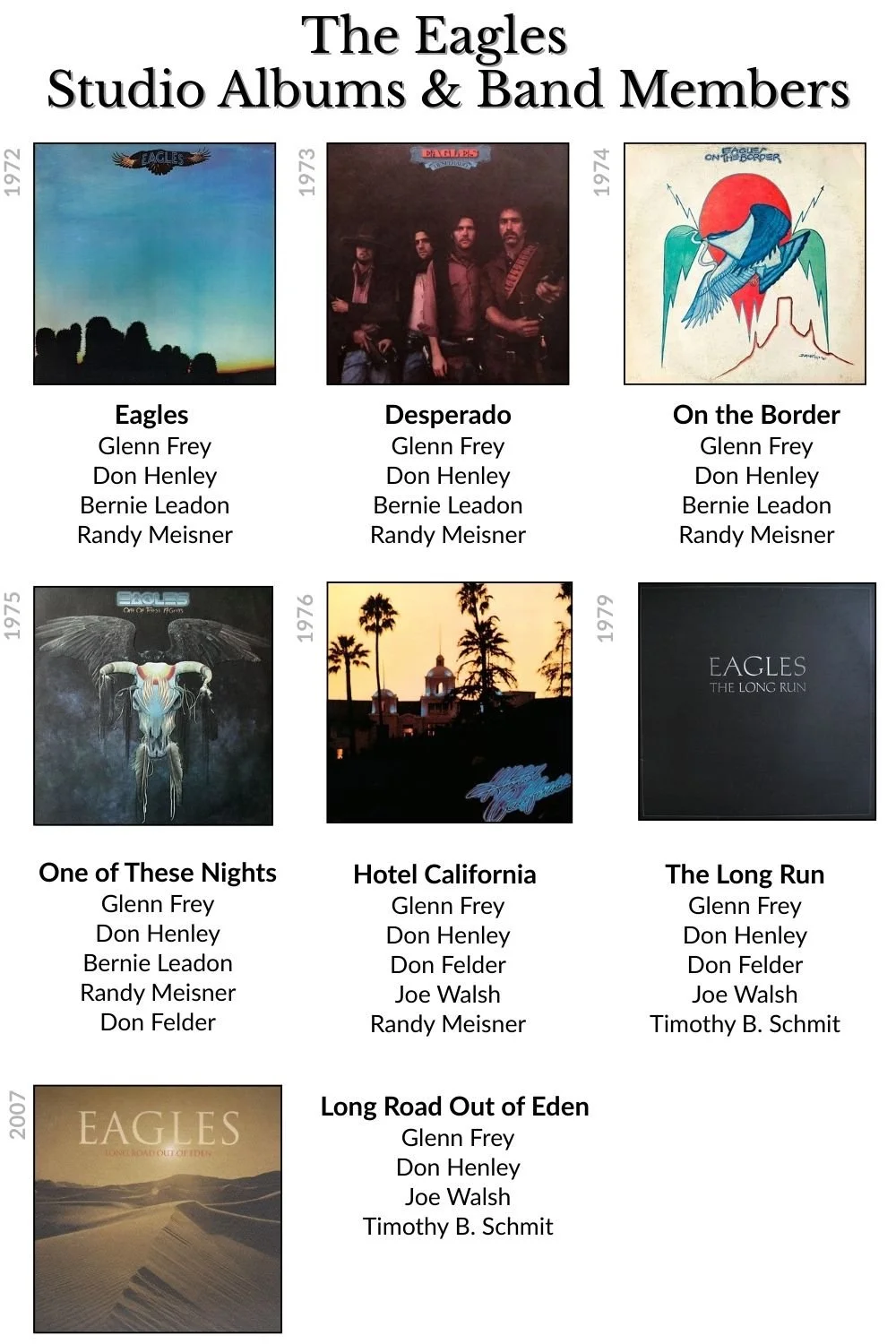
The original Eagles band members were:
Glenn Frey (b. Nov 6, 1948 – d. Jan 18, 2016) — Vocals, Guitar
Don Henley (b. July 22, 1947) — Vocals, Drums
Bernie Leadon (b. July 19, 1947) — Guitar, Banjo, Vocals
Randy Meisner (b. Mar 8, 1946 – d. July 27, 2023) — Bass, Vocals
Glenn Frey – Vocals, Guitar
A Detroit native with a knack for melody and sharp lyrics, Frey was a driving force behind the band’s sound and style. Before the Eagles, he played with the Mushrooms and briefly lived with J.D. Souther in L.A., soaking in the emerging Laurel Canyon scene.
Don Henley – Vocals, Drums
Born in Gilmer, Texas, Henley brought a deeper, more introspective tone to the group. Previously a member of the band Shiloh, he quickly emerged as the band’s moral compass and later, its de facto leader.
Bernie Leadon – Guitar, Banjo, Vocals
A multi-instrumentalist from Minneapolis, Leadon had a deep country-rock pedigree, having played with the Flying Burrito Brothers. His influence shaped the early Eagles sound — particularly on the first two albums.
Randy Meisner – Bass, Vocals
Originally from Scottsbluff, Nebraska, Meisner had stints with Poco and Rick Nelson’s Stone Canyon Band. His high, haunting vocals gave the band one of its signature moments with “Take It to the Limit.”
Though the band operated democratically at first, it quickly became clear that Henley and Frey were the dominant forces creatively and commercially.
How Old Were the Eagles When They Formed, and How Old Are They Now?
The Eagles formed in 1971 in Los Angeles. At the time, the four original members were in their mid-twenties.
When the band came together:
Don Henley was 23 years old.
Glenn Frey was 22 years old.
Bernie Leadon was 24 years old.
Randy Meisner was 25 years old.
More than five decades later, their ages today are very different.
Two of the four original Eagles members are still alive today: Don Henley & Bernie Leadon. Randy Meisner died in 2023, Glenn Frey died in 2016.
Today:
- Don Henley is years old.
- Bernie Leadon is years old.
- Glenn Frey would be years old today.
- Randy Meisner would be years old today.
Eagles Birthdays:
- Don Henley:
- Bernie Leadon:
- Glenn Frey:
- Randy Meisner:
The Classic Era Band Members (1974 - 1979)
As the Eagles’ ambitions grew, so did their sound — and their lineup. The early Americana / country-rock roots gave way to something harder, slicker, and more radio-ready. Between 1974 and 1980, they released four studio albums that took them from rising stars to global icons:
After the release of Desperado (1973), founding member Bernie Leadon became increasingly disillusioned with the band’s shift toward rock. He would leave in 1975 — but not before one crucial addition.
Don Felder – Guitar, Vocals (Joined 1974)
A Florida-born session guitarist, Felder was first brought in to add slide guitar on “Good Day in Hell” during the On the Border sessions. His performance impressed the band enough to bring him in full-time. Felder helped usher in a heavier guitar presence and later co-wrote the band’s most iconic track: Hotel California.
As the band embraced a more rock-driven direction, Leadon formally departed — famously pouring a beer over Glenn Frey’s head during a rehearsal. In his place came an established solo artist and a longtime friend of the band.
Joe Walsh – Guitar, Vocals (Joined 1975)
Walsh, previously of the James Gang, brought an irreverent spirit and serious guitar chops. His arrival marked a turning point in the band’s sound, giving Hotel California (1976) its sharp, soaring edge. Tracks like “Life in the Fast Lane” and “Pretty Maids All in a Row” bear his unmistakable fingerprint.
The next to leave was Randy Meisner, worn down by the relentless touring schedule and internal tension — particularly with Frey. His departure came after the Hotel California tour.
Timothy B. Schmit – Bass, Vocals (Joined 1977)
Schmit stepped in — just as he had years earlier to replace Meisner in Poco. His smooth tenor added a fresh layer to the group’s harmonies, and he took lead vocals on The Long Run’s standout track, “I Can’t Tell You Why.”
By the end of the 1970s, the Eagles had reached the peak of their success — The Long Run (1979) went multi-platinum — but behind the scenes, things were falling apart. The band played their final show in Long Beach on July 31, 1980, in what Henley later described as a “four-hour exercise in interpersonal tension.” They disbanded that night.
The Reunion Years & Long Road Back (1994 - 2007)
Despite Don Henley’s claim that the band would reunite “when hell freezes over,” that’s exactly what happened in 1994. Fourteen years after their infamous breakup, the Eagles returned with the Hell Freezes Over tour — a mix of live performances and new studio tracks. It marked the beginning of a second chapter for the band.
The reunion lineup included:
Don Henley – Drums, Vocals
Glenn Frey – Guitar, Vocals
Joe Walsh – Guitar, Vocals
Timothy B. Schmit – Bass, Vocals
Don Felder – Guitar (until his departure in 2001)
The tour was a commercial triumph, leading to continued performances and, eventually, a new studio album. In 2007 — 28 years after The Long Run — the Eagles released Long Road Out of Eden, a sprawling double album that addressed everything from personal loss to American politics.
The Eagles Band Members Today (2026)
Following Glenn Frey’s death in 2016, many assumed the Eagles’ story had reached its final chapter. But in 2017, the band announced it would continue — with Frey’s legacy honoured on stage by his own son.
The current lineup (2026):
Don Henley – Drums, Vocals
Joe Walsh – Guitar, Vocals
Timothy B. Schmit – Bass, Vocals
Vince Gill – Vocals, Guitar (Joined 2017)
Deacon Frey – Vocals, Guitar (2017– )
Gill, a Grammy-winning country artist, brought vocal warmth and guitar finesse, while Deacon Frey provided an emotional through-line for fans still mourning his father.
Who Wrote the Most Songs for the Eagles? (Songwriting Credits)
While most members of the Eagles contributed to the songwriting catalogue, two names stand out above all others: Don Henley and Glenn Frey. Together, they co-wrote the majority of the band’s biggest hits and defined the lyrical voice of the group.
Top Eagles Songwriters by Number of Co-Writes:
Don Henley – 46 songs
Glenn Frey – 45 songs
Bernie Leadon – 6 songs
Randy Meisner – 6 songs
Joe Walsh – 5 songs
Don Felder – 4 songs
J.D. Souther – 4 songs (though never a formal member, he was an essential contributor)
Timothy B. Schmit – 3 songs
Who Sang Lead Vocals for the Eagles? (By Band Member)
Part of the Eagles success were the strength of vocalists either as lead vocal or in harmony. Unlike many rock groups, lead vocals were shared across members, with each bringing a distinct tone and character to their performances.
Lead Vocals by Band Member:
Don Henley – 24 songs, including Hotel California and Wasted Time
Glenn Frey – 23 songs, including Tequila Sunrise and Lyin’ Eyes
Randy Meisner – 7 songs, including Take It to the Limit
Timothy B. Schmit – 5 songs, including I Can’t Tell You Why
Bernie Leadon – 4 songs, including Bitter Creek
Joe Walsh – 2 songs, including Pretty Maids All in a Row
Don Felder – 1 song: Visions
This rotation of vocal duties helped the Eagles create a broader emotional range from Frey’s easy charm to Henley’s weightier delivery, with Meisner and Schmit providing soaring, sensitive highs when it mattered most.
From the early country-tinged albums to the radio-dominating juggernaut of Hotel California, their collaborative output shaped the band’s legacy — lyrically and musically.
The Eagles’ History Told Through Albums
The Eagles’ seven studio albums take you on a journey — from the carefree optimism of Take It Easy, through the layered rock of Hotel California, to the weary finality of The Long Run. This is a band that evolved dramatically with each record, capturing the mood of the moment and the changes within themselves.
Eagles (1972) – The Debut That Started It All
Blending folk, country, and rock, the Eagles’ self-titled debut laid the foundation for their California sound. With crisp production by Glyn Johns and harmonies to spare, it introduced a band still finding its identity — but already writing classics.
Key tracks:Take It Easy, Witchy Woman, Peaceful Easy Feeling
Lineup: Henley, Frey, Leadon, Meisner
The album was a moderate success, peaking at #22 on the Billboard 200. But over time, its big singles became radio staples, ensuring its legacy as a classic.
Desperado (1973) Cowboys and Concepts
A bold shift into concept-album territory, Desperado told stories of outlaws and anti-heroes, drawing parallels with life in a rock band. Though it lacked a chart hit, its title track became iconic — and helped define the Eagles’ image as musical storytellers.
Key tracks:Desperado, Tequila Sunrise, Doolin Dalton
Lineup: Henley, Frey, Leadon, Meisner
On the Border (1974) – Crossing Into Rock
Seeking a harder edge, the band split with Glyn Johns and brought in producer Bill Szymczyk. Don Felder joined mid-recording, adding bite to their sound. Ironically, it was the ballad Best of My Love that gave them their first No.1. Read More.
Key tracks:Already Gone, Best of My Love, James Dean
Lineup: Henley, Frey, Leadon, Meisner, Felder (joins during sessions)
Despite their rock ambitions, it was actually the ballad “Best of My Love” that became their first #1 hit, launching the band to commercial superstardom. The album itself went 2× Platinum in the US (2 million copies sold).
One of these Nights (1975) - The Breakthrough
A polished, darker, and more confident record. With lush production and tighter songwriting, this album turned the Eagles into global superstars. It would also be Bernie Leadon’s last.
Read more about this almost classic album.
Key tracks: One of These Nights, Lyin’ Eyes, Take It to the Limit
Lineup: Henley, Frey, Leadon, Meisner, Felder
One of the most unexpected moments on the album was "Journey of the Sorcerer," an instrumental piece by Bernie Leadon that seemed out of place among the album’s lush harmonies and tight songwriting. However, it later gained cult fame when it was used as the theme song for the BBC radio adaptation of The Hitchhiker’s Guide to the Galaxy.
Their Greatest Hits 1971–1975 (1976) A Record-Breaking Pause
A label move by David Geffen rather than a band initiative, this compilation became a phenomenon — and the calm before the storm. With the Eagles’ rise to global superstardom, Asylum Records’ David Geffen saw an opportunity. In a piece of genius inspiration, he released Their Greatest Hits (1971–1975), a compilation that collected all of the singles and some of the best album tracks from the band's first four records. With over 40 million copies sold, it remains one of the best-selling albums of all time.
Includes: Take It Easy, Desperado, Best of My Love
Beyond its commercial success, the album also bought the Eagles valuable time. With a hit compilation keeping their name on the charts, they had the space to craft their follow-up album—a record that would cement their legacy forever...
Hotel California (1976) - The Masterpiece
Arguably their defining work. Hotel California captured the disillusionment beneath the L.A. dream with a mix of shimmering ballads and rock bravado. Joe Walsh had joined, bringing grit and swagger. This was the band at its peak — and at its breaking point.
Key tracks: Hotel California, Life in the Fast Lane, New Kid in Town
Lineup: Henley, Frey, Meisner, Felder, Walsh
The Long Run (1979) – A Burnt-Out Farewell
How do you top one of the greatest and biggest albums of all time? That was the challenge facing the Eagles as they prepared what would become their final studio album of the 1970s. Exhausted and fractured, the band limped into their final studio album of the ’70s. The magic still flickered — but so did the tension. Timothy B. Schmit replaced Meisner and added new depth, but the end was near.
Key tracks: The Long Run, I Can’t Tell You Why, Heartache Tonight
Lineup: Henley, Frey, Schmit, Felder, Walsh
The real emotional weight of the album comes in its closing track, “The Sad Café”, which, to me, feels like the end of an era. Don Henley’s lyrics reflect on dreams, disillusionment, and the fading idealism of the '70s, referencing The Troubadour, the legendary Los Angeles club where the band’s story first began.
"Oh, it seemed like a holy place, protected by amazing grace
And we would sing right out loud, the things we could not say
We thought we could change this world with words like love and freedom
We were part of the lonely crowd inside the Sad Café."
By 1980, the cracks had become unfixable. The band split, and when Don Henley was asked if the Eagles would ever play together again, he famously responded:
"When hell freezes over."
Hell Freezes Over (1994) – The Comeback
Hell finally froze over in 1994. After years of insisting they would never reunite, the Eagles came back with a world tour and an accompanying album, aptly named Hell Freezes Over. A live album with four new tracks, including Get Over It and Love Will Keep Us Alive. More than a nostalgia act, the band returned with tight harmonies and renewed energy, selling out arenas worldwide.
Highlights: Hotel California (Live), Love Will Keep Us Alive
The tour took them around the world for two years, reintroducing the band to both longtime fans and a new generation. The live album featured updated versions of their classics alongside a few new studio tracks, including "Get Over It" and "Love Will Keep Us Alive." The band may not have been as unified as they once were, but their harmonies and musicianship were still undeniable.
In 1998, the Eagles were inducted into the Rock & Roll Hall of Fame, solidifying their place as one of the most influential bands of all time. The moment was historic—every past and present member took the stage together, a rare and fleeting reunion of the classic and later-era lineups.
While their biggest years were behind them, the Eagles were far from finished.
Long Road out of Eden (2007) - One Last Ride
Nearly three decades after The Long Run, the Eagles returned with a double album of new material. Part political, part personal, it showed a more reflective, mature band — still capable of blending harmony with bite.
Key tracks: How Long, Busy Being Fabulous, No More Cloudy Days
Lineup: Henley, Frey, Schmit, Walsh
The Band’s Final Years & Touring Legacy
By the end of the 2000s, the Eagles had wrapped their Long Road Out of Eden tour and gone relatively quiet. But in 2013, they returned to the stage for the History of the Eagles tour, launched alongside their revealing two-part documentary. The film offered a candid look at the band’s rise, fall, and rebirth — complete with archival footage, bruised egos, and a few hard truths. It remains essential viewing for anyone interested in how one of rock’s most successful bands held it all together (and occasionally didn’t).
The passing of Glenn Frey in 2016 marked the end of an era. But rather than call time, the Eagles chose to continue — not as a tribute act, but as a living legacy. Deacon Frey, Glenn’s son, stepped into his father’s place with grace and familiarity, while Vince Gill added his own warmth and vocal finesse. Together, they helped the band honour the past while still playing with heart and credibility.
Remarkably, the Eagles remained one of the world’s highest-grossing live acts well into their sixth decade. In 2021, they ranked seventh globally in concert revenue — just behind the Rolling Stones.
The Sphere Sell Outs
The Eagles’ Long Goodbye tour, announced in 2023, was billed as a farewell — but like most things Eagles-related, it keeps extending. A run of dates at the Las Vegas Sphere has proven to be more than just a send-off as they continue to sell out dates well into Spring 2026.
The visuals alone look worth the ticket, but it’s the music that still resonates. Watching clips of them performing Don Henley’s Boys of Summer inside that immersive 360° space definitely gives FOMO!
After all these years, the band that once swore they’d only reunite when hell froze over is still out there, playing, evolving, and reminding us why the Eagles mattered in the first place.