

Songs for a Japan Trip: A Playlist
A personal playlist for a trip around Japan, from ‘You Only Live Twice’ and ‘Kyoto Song’ to ambient Japanese artists and a few tracks chosen purely for mood.
A trip to Japan meant I just had to create a Japan playlist. But being a vinyl historian I didn’t want it to be, you know, Japan songs. Whilst I love David Sylvian’s ‘80’s albums I was thinking more about songs that Japanese in style, songs that reference Japan, and stretch me to learn more about Japanese artists.
This playlist moves from Bond drama and 80s pop to ambient Japanese artists and a few pieces that simply felt right for our Japan cruise.
My Japan playlist came together before and during our cruise around Japan, and it reflects that mix of anticipation, mood and place. It is not a strict guide to Japanese music, nor a playlist built around one genre. It moves between songs that reference Japan directly, songs that carry a sense of atmosphere, and a few Japanese artists I was glad to spend more time with while travelling.
It opens, naturally enough, with Nancy Sinatra’s ‘You Only Live Twice’, the title song from the 1967 Bond film set in Japan, with John Barry’s sweeping orchestration doing much of the heavy lifting in my imagination long before the trip began.
I had this in mind as we departed Kobe docks at the start of our cruise.
I had this sweeping soundtrack in mind for our visit to Sakurajima Volcano, though the weather offered a different vibe.
‘Kyoto Song’ by The Cure follows, taken from The Head on the Door, while Alphaville’s ‘Big in Japan’ earns its place simply because the title works and because it is still such a strong 80s record. We’ll skip the Vapors hit ‘Turning Japanese’ as I don’t think that was about the evolution of man…
Japan’s ‘Methods of Dance’ is in there too, from Gentlemen Take Polaroids. The band’s name was not chosen for any deep cultural reason, at least not from the account most often repeated. David Sylvian later said it came from a travel brochure found on the way to an early gig, which feels suitably accidental for a playlist like this. Even so, the group’s elegant, stylised sound suits the mood of travel beautifully.
We’ll skip ‘Japanese Boy’ from Scottish singer Aneka. The Killin based artist sold over half a million copies of this 1981 single but struggled to escape the association for the rest of her career.
From there the playlist drifts into another side of Japan altogether. Artists such as Yasuaki Shimizu, Hiroshi Yoshimura, Toshi Tsuchitori and Akira Ito bring a quieter, more spacious feel, the kind of music that works well with bullet train windows, early mornings and the slightly unreal rhythm of moving from one port to the next. Air’s ‘Cherry Blossom Girl’ joins them for obvious Sakura Season reasons, while Passengers’ ‘Ito Okashi’ is less literal but still feels at home here, more a matter of tone than direct reference.
That is probably the best way to understand this playlist. It is not trying to define Japan. It simply captures some of the excitement, elegance and strangeness I associated with the trip, along with a few artists I was pleased to get to know better along the way.
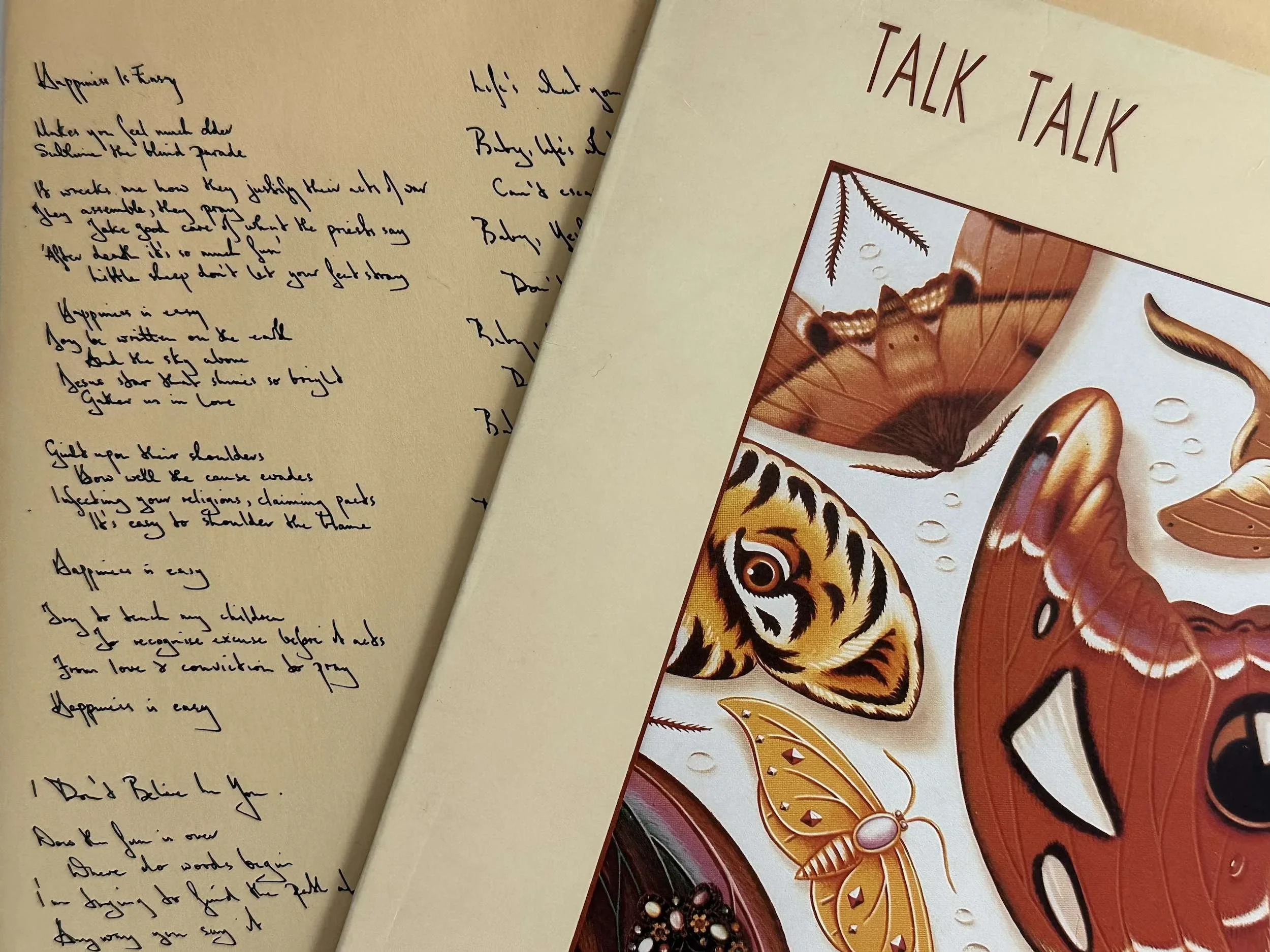
Talk Talk’s “Happiness Is Easy”: The Dark Irony Behind The Colour of Spring’s Opener
An in-depth look at Talk Talk’s “Happiness Is Easy” from The Colour of Spring (1986). We unpack Mark Hollis’s lyrics, anti-war sentiment, and the eerie contrast of a children’s choir.
“Happiness Is Easy” by Talk Talk—one of my favourite tracks, yet one I had never truly understood until now. Like so much of their body of work, it carries a dark, introspective atmosphere, yet it wears the title of a song about joy. Was Mark Hollis being ironic? Was happiness really that simple? Or was there something far more unsettling lurking beneath its tranquil surface?
Beneath the Hymn: Faith, Conflict, and Irony
At first listen, “Happiness Is Easy” sounds like a tragic, ironic statement—especially given the sheer weight of its subject matter. Mark Hollis and co-writer Tim Friese-Greene weave together heavy themes of war, state religion, and blind faith, creating a stark contrast between the track’s uplifting title and its underlying cynicism.
The sparse opening—a minimalist, ticking drumbeat and deep bassline before the melody fully unfolds—sets the stage for a hymn-like, almost sacred listening experience. Yet the mood remains deeply unsettling. Written four years after the conclusion of the Falklands War (1982), the track reads as a direct reflection on political conflict and how modern society manipulates morality to justify state-sanctioned violence. Mark Hollis was a new father at the time, a personal shift that undeniably sharpened his perspective on how adult conflict corrupts childhood innocence.
In true Talk Talk fashion, the track avoids neat resolutions, letting the space between the notes do as much of the emotional heavy lifting as the words themselves.
“Makes you feel much older, sublime the blind parade
It wrecks me how they justify their acts
Of war, they assemble, they pray
Take good care of what the priests say
’After death it’s so much fun’
Little sheep, don’t let your feet stray”
Hollis confronts how institutional religion is weaponised to sanction conflict. The reference to priests comforting their congregation with promises of an afterlife frames religious dogma as a dangerous, tranquilising force that keeps the "little sheep" from questioning authority.
“Happiness is easy
(Joy be written on the Earth)
(And the sky above)
(Jesus, star that shines so bright)
(Gather us in love)”
The arrival of a children's choir delivering the chorus is the song's most striking artistic choice. Their innocent, angelic delivery creates an eerie juxtaposition. It forces the listener to question whether the children represent pure faith, or whether we are witnessing the early stages of political and religious indoctrination.
“Guilt upon their shoulders, how well the cause evades
Infecting your religions, claiming pacts
It’s easy to shoulder the blame”
Here, the lyric zeroes in on the moral deflection of world leaders. By claiming divine backing for political causes, authority figures strip themselves of personal guilt and pass the moral weight onto the public.
“Try to teach my children
To recognise excuse before it acts
From love and conviction to pray
Take good care of what the priests say:
”After death it’s so much fun”
Little sheep, don’t let your feet stray
Happiness is easy
(Little ships of Galilee)
(Standing on the sea)
(Jesus tried to love us all)
(Be a friend to me)
(Little ships of Galilee)
(Standing on the sea)
(Jesus tried to love us all)
(Be a friend to me)
(Joy be written upon the Earth)
(And the sky above)
(Jesus, star that shines so bright)
(Gather us in love)
(Gather us in love)”
This final movement reveals Hollis's personal stake as a parent. Rather than teaching children unconditional obedience, his goal is to teach them critical thought—to spot political excuses and state propaganda before the damage is done.
The Sonic Canvas of The Colour of Spring
When I drop the needle on The Colour of Spring (1986), I inevitably go straight down the rabbit hole—wrapped in a blanket of rich, textured melancholy. Opening the album with “Happiness Is Easy” sets a bold, cerebral tone for the rest of the record. It introduces an art-rock landscape that gradually unfolds around you, holding your attention with its quiet power.
Side A
“Happiness Is Easy”
“I Don’t Believe in You”
“Life’s What You Make It”
“April 5th”
Side B
“Living in Another World”
“Give It Up”
“Chameleon Day”
“Time It’s Time”
The journey moves seamlessly into “I Don’t Believe in You”, maintaining a tight, atmospheric grip before offering brief moments of relief with the poppier hits “Life’s What You Make It” and “Living in Another World”. But even those glimmers of commercial light are underpinned by the album’s signature brooding mood. Everything comes full circle with “Time It’s Time”, a closing track that manages to feel simultaneously upbeat and somber.
Revisiting this record made me do something I rarely forget to do: truly study the lyric sheet. I usually devour the words of my favorite tracks, but with Talk Talk, the arrangement often hypnotises you into focusing on pure feeling.
At 45 minutes, The Colour of Spring vanishes before you realise you've been lost in it. And when Side B finishes, there is only one logical step—flip the record over and hit play again. Sink back in, and let the music take complete control.
With thanks to Snow in Berlin for their valuable historical background on Mark Hollis and Talk Talk.
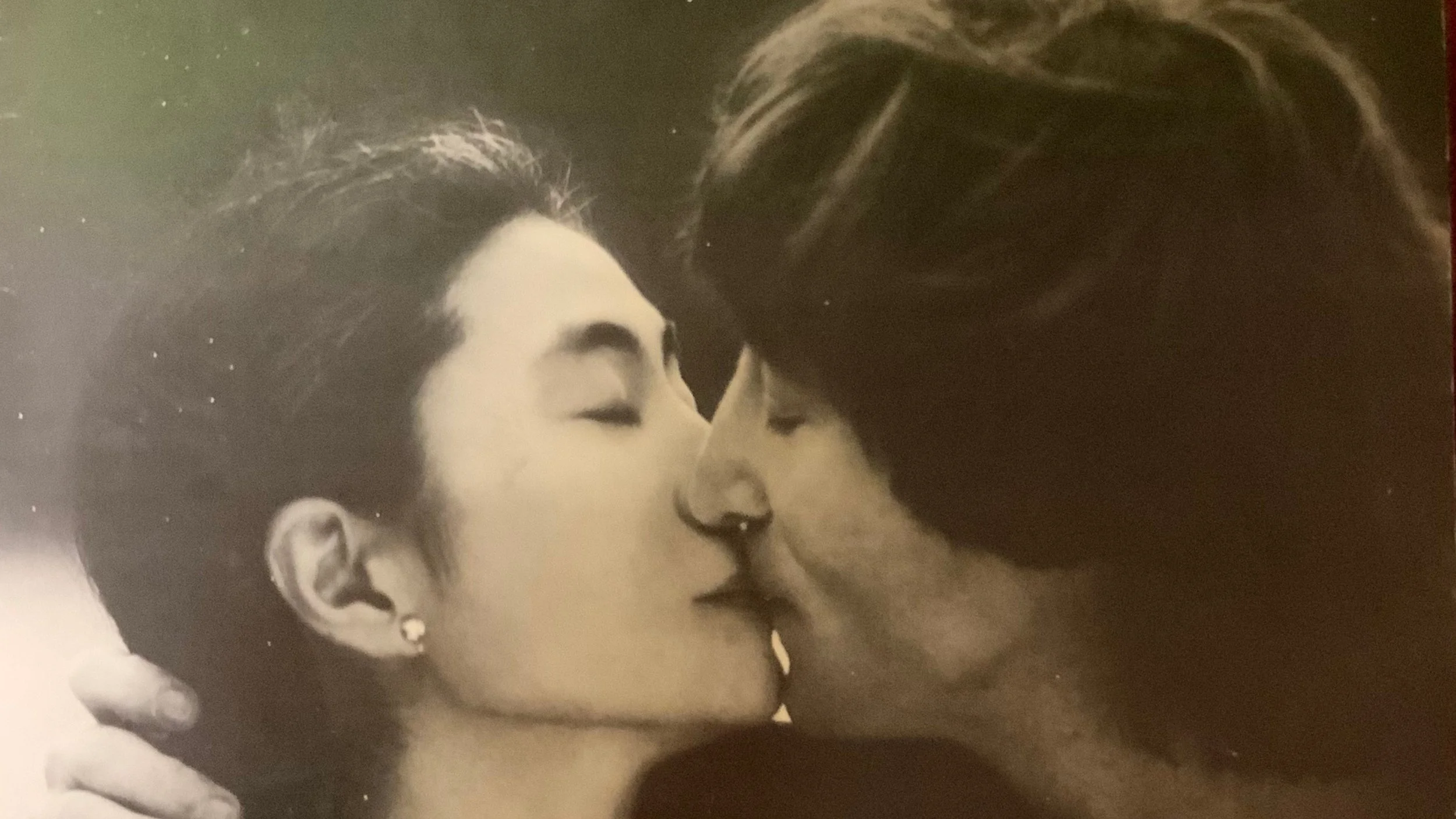
“Hard Times Are Over”: The Tragic Prophet of John Lennon’s Final Album
Intended as a celebration of domestic peace and a bright new dawn, Double Fantasy ended in tragedy. Read how its closing track, “Hard Times Are Over”, became a heartbreaking prophecy for John Lennon.
In November 1980, John Lennon and Yoko Ono released Double Fantasy (1980). Twenty-one days later, John was assassinated outside his home at New York’s Dakota building. The tragedy instantly recast the album not just as a long-awaited return to the spotlight, but as a bittersweet, heartbreaking final statement on a life that was only just finding its light again.
The preceding decade had been turbulent. Following the painful dissolution of The Beatles and the release of Imagine (1971), Lennon struggled to find his solo footing, with Mind Games (1973) stalling both critically and commercially. What followed was an eighteen-month period of chaos in Los Angeles—his famous "lost weekend"—before he ultimately returned to New York, reconciled with Yoko, and stepped away from the music industry to focus on raising their young son, Sean.
By the time they entered The Hit Factory studio in Midtown Manhattan during the humid summer of 1980, domestic peace had borne creative fruit. Double Fantasy was designed as an intimate, back-and-forth dialogue between husband and wife, alternating track by track across the vinyl sides to give both artists equal billing. John’s opening burst on Side A, Track 1, “(Just Like) Starting Over”, captured the genuine, sunny optimism of a couple stepping out of the shadows. Elsewhere, tracks like “Woman” and the tender lullaby “Beautiful Boy (Darling Boy)” reflected a man entirely at peace with his roles as a partner and father.
Yet, for me, the entire emotional weight of the record is encapsulated by its very last track, “Hard Times Are Over”.
Though written and sung by Yoko, the gospel-tinged song served as their shared declaration of relief after years of struggle. It sounded like a warm exhale, carrying the quiet joy of a couple looking forward to the rest of their lives together:
“It’s been very hard, it’s getting easier now
Hard times are over, over for a while
The leaves are shining in the sun, and I’m smiling inside
You and I watching each other on a street corner”
Upon its initial release, critics were dismissive, calling the sentiment simplistic and balking at the shared billing. But history quickly rewrote that narrative. Following Lennon's death, Double Fantasy climbed to the top of the charts worldwide, eventually taking home Album of the Year at the 1981 Grammy Awards.
Listened to today, the closing lines of “Hard Times Are Over” carry a devastating resonance. What was intended as a triumphant declaration of a new dawn became, in an instant, a tragically prophetic farewell. While Imagine will always remain John's most celebrated masterpiece, it is that final, quiet note of hope on Double Fantasy that truly marks the end of his story. Just as things were getting better, the music stopped.
Songs About Los Angeles: The Ultimate LA Playlist
The boulevards, blocks and canyons of Los Angeles have inspired countless songs, many captured on this playlist of Los Angeles songs. Grab the playlist and read some of the fascinating stories of songs inspired by, written about or recorded in the City of Angels.
The City of Angels has long been the source of great songs. The boulevards, blocks and canyons of Los Angeles have been the inspiration, both lived and imagined for countless artists from N.W.A. to the Eagles, Jan & Dean to Joni Mitchell.
This city fascinates from afar. Whether you have only dreamed of LA, you’ve lived there or just visited, it is a city that gets under your skin. Somewhere between dream and reality, songs have been forged in the city and about it. Music Landmarks like Doug Weston’s Troubadour, recording studios like Sunset Sound, even the smog above LA have become part of the musical story.
This curated playlist of Los Angeles songs brings those diverse strands together. I have built, what I hope is a playlist of LA songs that mix the old and new, spanning the vinyl era of the Flying Burrito Brothers to the cassette era of N.W.A. and beyond.
Set beside my companion New York songs playlist, the difference between the two coasts is immediately clear. Where New York arrives in song as urgency, steel, and rapid-fire ambition, Los Angeles arrives in a softer, stranger light—a place of fractured myths, endless horizons, and gorgeous disillusionment. Two iconic American cities, two different vibes.
So kick back, grab a drink and enjoy the songs whilst I share some of the stories behind the ultimate Los Angeles soundtrack.
Songs with "L.A." or "Los Angeles" in the Title: The Direct Anthems
To capture the true essence of the city, we must start with the tracks that put the location directly on the label. These are the records that address the myth of the metropolis head-on, balancing celebratory pop with the underlying strangeness of the West Coast.
“I Love L.A.” – Randy Newman (1983)
Perhaps no song carries the visual depth of the city quite like Randy Newman’s satirical masterpiece from Trouble in Paradise (1983). While the roaring chorus has turned it into a stadium anthem, Newman’s trademark irony runs deep. He sketches a sun-drenched, top-down drive through the micro-neighbourhoods of Glendale, Century City, and the South Central streets, celebrating the superficial glamour of the city while quietly nodding to the underlying friction of the era. It is a cinematic postcard painted in brilliant, complicated colours.
“Drinking in L.A.” – Bran Van 3000 (1997)
The beauty of the Los Angeles myth is that it is often projected most vividly by outsiders. Bran Van 3000 were not an LA band at all; they were a loose, multilingual collective from Montreal, but they captured the absolute essence of West Coast drift. The track came from a literal image: James Di Salvio waking up face down on a manicured Hollywood lawn after a heavy night in West Hollywood, forgetting what on earth he was doing there. It catches the city at its most hungover, beautiful, and faintly absurd.
“City of the Angels” – Bill Withers (1976)
Featured on Naked & Warm (1976), Bill Withers brings a warm, laid-back soul perspective to the city’s complex geography. Written during a transitional period in his career, the track captures the feeling of arriving in Los Angeles with nothing but expectations, searching for the warmth of the “L.A. lady” while navigating the massive freeway sprawl. Withers’ organic groove grounds the city, making the intimidating metropolis feel deeply human.
The Vinyl Era: Canyon Folk and Sunset Strip Rock (1967–1984)
This is the historic heart of The Vinyl Historian. Between the late sixties and the mid-eighties, physical constraints shaped an explosion of creativity. These tracks capture the legendary acoustic and electric movements that turned hillside cabins and historic clubs into sacred ground.
“Love Street” – The Doors (1968)
A gentle, pastoral detour from the dark psychedelia of Waiting for the Sun (1968). Jim Morrison wrote “Love Street” about Rothdell Trail—the quiet residential road situated directly behind the Laurel Canyon Country Store. Morrison and Pamela Courson lived in a small bungalow there, watching the local bohemian characters drift by. When Morrison sings of the “store where the creatures meet,” he is paying tribute to the physical hub of the canyon scene. It is a gorgeous, sunlit snapshot of old Laurel Canyon.
“Twelve Thirty (Young Girls Are Coming To The Canyon)” – The Mamas & The Papas (1968)
Originally released as a single in 1967 before appearing on The Papas & The Mamas (1968), this track documents the literal migration of folk-rock nobility into the Hollywood Hills. John Phillips wrote the lyric to contrast the dark, damp streets of New York with the airy, redwood-scented promise of Laurel Canyon. With its soaring, symphonic harmonies, the track serves as a historical gateway into the peaceful, communal atmosphere that defined the late-sixties West Coast sound.
“Ladies of the Canyon” – Joni Mitchell (1970)
The title track of her landmark album Ladies of the Canyon (1970) is a brilliant piece of acoustic folklore. Joni Mitchell lived at 8217 Lookout Mountain Avenue, and this song serves as a domestic portrait of her neighbours—women who baked bread, made pottery, and kept the bohemian flame alive in the hills. Through Mitchell’s intricate guitar tunings and soaring vocal, the canyon becomes more than a place; it becomes a state of mind that still echoes through the hills today.
“Blue Jay Way” – The Beatles (1967)
Written on a Hammond organ in a rented home high in the Hollywood Hills, George Harrison’s contribution to Magical Mystery Tour (1967) is a masterpiece of jetlagged disorientation. Harrison was waiting for publicist Derek Taylor, who had become hopelessly lost in the thick, swirling fog creeping up from the Pacific. The track’s heavy, psychedelic phasing perfectly captures the eerie, surreal atmosphere of the hills at twilight. The house itself carries another layer of pop folklore; it is the same residence where Simon & Garfunkel tracked the legendary handclap rhythm for “Cecilia”.
“For What It’s Worth” – Buffalo Springfield (1966)
While often treated as a broad protest standard, Stephen Stills wrote this track as a direct, highly localized response to the Sunset Strip curfew unrest of late 1966. When local businesses and police attempted to shut down the youth-dominated nightlife along the Strip, clashes erupted outside Pandora’s Box. The track is tied to a real stretch of Sunset Boulevard, capturing the exact moment when the youth culture of Los Angeles began to push back against the old guard.
“Bad Night at the Whiskey” – The Byrds (1969)
Taken from Dr. Byrds & Mr. Hyde (1969), this heavy, claustrophobic track directly addresses the tense, post-riot atmosphere surrounding Whisky a Go Go on the Sunset Strip. The Byrds, who had helped establish the Strip’s folk-rock dominance, find themselves looking at the scene as it began to turn dark, paranoid, and commercialized. It is a crucial transition record, marking the end of the peace-and-love era.
“The Sad Cafe” – Eagles (1979)
Closing out The Long Run (1979), “The Sad Cafe” is Don Henley’s elegiac tribute to The Troubadour and Dan Tana’s restaurant, the physical spaces that nurtured the Eagles’ early careers. It is a retrospective look at a vanished era; the clubs are still standing, but the bright, innocent feeling that once united the singer-songwriter community has been worn down by fame, excess, and time. It is the sound of the seventies turning to grey.
“Walking On Sunset” – John Mayall (1968)
British blues pioneer John Mayall visited Los Angeles in 1968, fell in love with the geography, and never went back. He recorded Blues from Laurel Canyon (1968), a conceptual album documenting his relocation. “Walking On Sunset” features the driving, propulsive keyboard work of Mayall alongside Mick Taylor’s fluid blues guitar, capturing the raw excitement of an outsider navigating the historic venues and neon signs of the Strip for the first time.
“Surf City” – Jan & Dean (1963)
Co-written by Brian Wilson of the Beach Boys, “Surf City” is the ultimate expression of early sixties Southern California optimism. Released on Surf City and Other Swingin’ Cities (1963), its famous “two girls for every boy” lyric projected a sunlit fantasy of endless beaches, woodie wagons, and perfect waves to listeners around the world. It is the foundational pop myth of Los Angeles before the counterculture added its complicated shadows.
“Sin City” – The Flying Burrito Brothers (1969)
Gram Parsons and Chris Hillman crafted this chilling country-rock warning from The Gilded Palace of Sin (1969). Writing from a green shag-carpeted apartment in West Hollywood, Parsons uses the town’s music business machinery, cheap motels, and earthquake vulnerabilities to paint Los Angeles as a modern Babylon. It stands as a brilliant, acoustic-electric cautionary tale about the seductions and moral hazards of the West Coast dream.
“River Song” – Dennis Wilson (1977)
The opening track of Dennis Wilson’s solo masterpiece Pacific Ocean Blue (1977)—recorded at Brother Studios in Santa Monica—offers a stark, bruised contrast to the Beach Boys’ sun-drenched harmonies. Wilson looks at the sprawling metropolis with visible weariness, singing of a city where he can "only see a block or two." Supported by a roaring gospel choir and a heavy piano arrangement, “River Song” is a passionate, soulful plea to escape the smog and concrete of Los Angeles for the clean water of the mountains.
“Sick Again” – Led Zeppelin (1975)
Written during their legendary residency at The Beverly Hills Hotel and the Riot House (now The Andaz West Hollywood), Jimmy Page and Robert Plant tracked this heavy guitar groover for Physical Graffiti (1975). The song captures the absolute peak of mid-seventies rock excess on the Sunset Strip, reflecting on the scene’s physical and moral exhaustion. It is rock mythology with a postcode—dark, gritty, and incredibly loud.
Cinematic Nights and Hollywood Illusions
Los Angeles is a city built on the film industry, and its soundtrack is naturally layered with cinematic drama. These tracks explore the twilight world of the silver screen, looking behind the glowing marquees to find the disillusionment and paranoia hiding in the shadows.
“Hollywood Nights” – Bob Seger (1978)
With its double-drum driving rhythm, this standout track from Stranger in Town (1978) captures the breathless, overwhelming velocity of arriving in Los Angeles as an outsider and falling under the spell of a “Hollywood lady.” Seger’s vocal is raw and desperate, painting a picture of high-altitude houses in the hills and the irresistible, dangerous pull of the city’s glamorous illusions.
“Cracked Actor” – David Bowie (1973)
By the time David Bowie tracked Aladdin Sane (1973), his own mid-seventies life had descended into a theatrical blur of excess and paranoia. “Cracked Actor” is a sleazy, hard-rocking portrait of an ageing Hollywood star prowling Sunset Boulevard, attempting to buy back his youth. It is a brilliant, brutal look at the city’s obsession with youth and surface-level beauty, delivered with Bowie’s signature cinematic flair.
“The Garden Of Allah” – Don Henley (1995)
Don Henley uses the physical demolition of the historic Garden of Allah Hotel on Sunset Boulevard—once home to F. Scott Fitzgerald, Errol Flynn, and Joni Mitchell—as a broader metaphor for the city’s habit of tearing down its own history. Taken from Actual Miles: Henley’s Greatest Hits (1995), the track is a dark, atmospheric spoken-word piece where the devil returns to Los Angeles and finds that the locals have successfully outdone him in greed and commercialization.
“Say Goodbye to Hollywood” – Billy Joel (1976)
Written immediately after Billy Joel decided to pack up his California life and return home to New York, this track from Turnstiles (1976) uses a massive, Phil Spector-inspired wall of sound to say farewell to the West Coast dream. The song is a celebration of survival, acknowledging the seductive charm of the city while choosing to escape before the illusions harden into reality.
“Love Theme From Chinatown” – Jerry Goldsmith (1974)
Goldsmith’s haunting, trumpet-led score for Roman Polanski’s masterpiece Chinatown (1974) is the definitive sound of Los Angeles noir. It captures the dry, dusty heat of the San Fernando Valley, the corruption of the city's water infrastructure, and the tragic romance of a town built on secrets. It is entirely wordless, yet it tells the story of the city’s dark history more vividly than almost any lyric.
“MacArthur Park” – Richard Harris (1968)
Written by Jimmy Webb and released on A Tramp Shining (1968), “MacArthur Park” is a sprawling, seven-minute orchestral pop epic. Webb used the actual park in Westlake—with its yellow cotton shirts, old men playing checkers, and muddy lake—to write a brilliant, highly dramatic allegory of a broken relationship. Despite its eccentric cake-in-the-rain metaphor, Harris’s dramatic delivery makes it one of the most memorable and beloved symphonic pop records of the era.
“Gone Hollywood” – Supertramp (1979)
The opening track of the classic album Breakfast in America (1979) tells the classic story of a struggling artist arriving in Los Angeles with high hopes, only to be beaten down by the cold reality of the music business. The track’s shifting movements—from anxious saxophones to soaring choruses—perfectly capture the transition from desperation to eventual acceptance.
“Tiny Dancer” – Elton John (1971)
Few songs carry the physical atmosphere of Los Angeles so lightly and so clearly. Bernie Taupin’s lyric from Madman Across the Water (1971) gives us the famous “L.A. lady” line, drawing on his first visits to The Troubadour and the dusty, sunlit boulevards of the city. The song is affectionate, warm, and grounded, focusing on real people, headlights on the highway, and late-night music rather than postcard landmarks. It remains one of the most enduring anthems of the West Coast dream.
Modern L.A. and Street-Level Realities (1985–Present)
As the vinyl era faded into the digital age, a new generation of artists emerged to reclaim the streets of Los Angeles. These tracks strip away the pastoral folk myths of Laurel Canyon and the old Hollywood glamour, presenting instead the raw, real, and vibrant street-level experiences of the modern metropolis.
“Straight Outta Compton” – N.W.A. (1988)
The title track of Straight Outta Compton (1988) completely shattered the sun-drenched, easy-going California narrative. Anchored by Dr. Dre’s heavy, relentless beat and Ice Cube’s explosive opening verse, the track put the geographical reality of Compton directly on the musical map. It was a raw, unfiltered report from the front lines of South Los Angeles, establishing hip-hop as the new dominant force in the city's musical soul.
“It Was a Good Day” – Ice Cube (1992)
A brilliant, laid-back narrative that details a single day of peace and calm in South Central. Ice Cube avoids his usual explosive delivery, using an Isley Brothers sample to sketch a beautifully grounded portrait of everyday neighbourhood routine—the Lakers on television, a game of dominoes, clear weather, and a day moving without trouble. In a city so often defined by extremes, this brief stretch of calm is a powerful, cinematic triumph.
“Under the Bridge” – Red Hot Chili Peppers (1991)
Anthony Kiedis wrote this deeply personal hymn to Los Angeles for Blood Sugar Sex Magik (1991) while processing his own isolation and recovery from addiction. The "bridge" in the song represents a dark, shadier physical corner of the city where Kiedis hit his lowest point. He turns the city into his only true companion, describing its streets, concrete overpasses, and quiet hills as active participants in his inner life. It is a bruised, beautiful love letter to the real Los Angeles that hides beneath the palms.
“City of Stars” – Justin Hurwitz, Emma Stone & Ryan Gosling (2016)
The Oscar-winning centerpiece of the La La Land (2016) soundtrack captures the quiet, tentative hope of chasing a dream in modern Los Angeles. Filmed extensively at Griffith Observatory and across empty, late-night studio lots, the track is intimate and delicate. It perfectly represents the vast distance that can exist between two people searching for connection in a city of millions.
“Bel Air” – Lana Del Rey (2012)
Featured on her Paradise (2012) EP, Lana Del Rey uses her signature cinematic, dream-pop aesthetic to explore the twilight mythology of the wealthy enclave of Bel Air. Her breathy vocals, layered over slow piano chords and strings, turn the exclusive neighbourhood into a mystical, high-altitude sanctuary. It is a modern continuation of the classic "Hollywood illusion" theme.
“Pink Pony Club” – Chappell Roan (2020)
Before appearing on The Rise and Fall of a Midwestern Princess (2023), “Pink Pony Club” was released as a breakout single, telling the story of a girl leaving the conservative Midwest to find her true self on the stage of a fictional gay club in West Hollywood. It is a high-energy, modern synth-pop anthem of self-realization, celebrating West Hollywood as a safe haven of self-expression, dance, and glitter.
“San Andreas Fault” – Natalie Merchant (1995)
The opening track of her solo debut Tigerlily (1995) looks at the fragile, shifting nature of the West Coast dream. Merchant uses the literal geological fault line running beneath California as a metaphor for the temporary, unstable nature of fame, fortune, and human life in Los Angeles. It is a quiet, thoughtful, and deeply evocative warning that everything built on the sand can easily slide into the sea.
“Valley Girl” – Frank Zappa & Moon Zappa (1982)
Frank Zappa enlisted his teenage daughter, Moon Unit Zappa, to deliver a sharp, satirical monologue mocking the distinct slang and superficial lifestyle of the San Fernando Valley. Released on Ship Arriving Too Late to Save a Drowning Witch (1982), the track became an accidental pop hit, immortalising phrases like "gag me with a spoon" and "totally tubular" in the global consciousness, highlighting the hilarious cultural divide between the Valley and the Hollywood Hills.
Next Stop: New York!
While Los Angeles songs are defined by their wide-open spaces, neon-lit paranoia, and quiet hillsides, the sound shifts entirely when you cross the country. Where L.A. leans towards myth and distance, New York demands your immediate attention with steel, speed, and hard edges.
Once you have finished drifting through these West Coast canyons, head over to our companion guide to the best New York songs to experience the grit, urgency, and raw energy of the opposite coast. Put the two side-by-side, and the contrast becomes part of the pleasure.

Songs About New York City: The Ultimate Big Apple Playlist
Every city has its soundtrack, but New York’s is cut deep into the very grooves of vinyl history. Join us as we drop the needle on the ultimate collection of New York songs, tracing the city’s shifting sonic geography from the raw punk grit of the Ramones’ “53rd & 3rd” to the late-night, rain-slicked jazz of Lou Reed’s Coney Island Baby (1975). This is more than a list of favourite anthems—it is a journey through the storied recording studios, vibrant neighbourhoods, and historic streets that shaped the sound of a metropolis.
This playlist brings together songs about New York City, songs that mention New York in the lyrics, and a few records so tied to Manhattan, Brooklyn or Harlem that they belong in any New York playlist. Some are obvious classics, others are less expected, but all of them help sketch the sound of the city.
“Wow, New York, just like I pictured it. Skyscrapers and everything,” sings Stevie Wonder on his landmark soul statement Innervisions (1973). It is a sentiment that has captured the imagination of music lovers around the world.
This collection brings together iconic records where the city name defines the title, classic anthems from the analog warmth of the vinyl era, and hidden gems that hide their urban coordinates deep within the lyrics.
Songs with “New York” in the title.
For a song to become a monument, sometimes it must wear its destination on its sleeve. The tracks below represent those definitive moments where the city's name itself is stamped right onto the label, serving as brass-heavy declarations of metropolitan ambition and urban romance.
“Theme from New York, New York” – Frank Sinatra (1980)
How can we not finish with this, the most towering of urban anthems? Sinatra, born across the Hudson River in Hoboken, New Jersey, recorded this classic for his ambitious triple-album Trilogy: Past Present Future (1980), covering the theatrical original performed by Liza Minnelli.
“New York State of Mind” – Billy Joel (1976)
“I’ve seen all the movie stars in their fancy cars and their limousines,
Been high in the Rockies under the evergreens
I know what I’m needin’, and I don’t want to waste more time
I’m in a New York state of mind”
A gorgeous, slow-burning love letter to his home city, Bornxite Billy Joel’s piano ballad from Turnstiles (1976) captures the friction of feeling both exhilarated and utterly exhausted by the concrete grind. While initially overlooked by mainstream radio, its bruised, gospel-infused beauty found its true, tear-stained resonance when Joel played it solo during the 9/11 Tribute to Heroes broadcast. It is the definitive hymn of a wounded but resilient city.
“The Only Living Boy in New York” – Simon & Garfunkel (1970)
While writing for Bridge Over Troubled Water (1970), Art Garfunkel headed down to Mexico to film Catch-22, leaving Paul Simon alone in the studio to construct the album’s towering harmonies. He wrote this airy, melancholy masterpiece as a gentle creative dig at his absent partner.
“Englishman in New York” – Sting (1987)
Taken from ...Nothing Like the Sun (1987), this elegant, jazz-pop portrait pays tribute to Sting’s dear friend Quentin Crisp, the legendary British gay icon who moved to Manhattan to live out his twilight years as a self-described “resident alien.” The track’s sparse, rhythmic space is punctuated by Branford Marsalis’s bright, conversational soprano saxophone.
“New York City Serenade” – Bruce Springsteen (1973)
Bruce Springsteen grew up in nearby New Jersey, frequently taking the bus into the city for his earliest club dates. The epic, ten-minute closing track of The Wild, the Innocent & the E Street Shuffle (1973) is a sweeping, highly cinematic portrait of a young couple navigating the neon-slicked underworld of Manhattan.
“New York City” – John Lennon (1972)
Encouraged by Yoko Ono, John Lennon moved to the Big Apple in 1971, instantly falling in love with its round-the-clock energy, artistic freedom, and confrontational street life. Featured on the politically charged double-album Some Time in New York City (1972), this raucous, three-chord rocker captured his immense joy before the city’s dark history turned his residence fatal.
“Leaving New York” – R.E.M. (2004)
Michael Stipe always considered Manhattan his spiritual second home, admitting that escaping its gravitational pull was never easy. On one late-night departure from John F. Kennedy International Airport, the spectacular aerial view of the glittering skyline inspired him to write this vulnerable ballad for Around the Sun (2004).
“New York Tendaberry” – Laura Nyro (1969)
The Bronx-born piano prodigy Laura Nyro delivered her masterpiece with the album New York Tendaberry (1969). The title track is an abstract, intensely intimate play on words—a literal “tender berry” of a song that shifts unpredictably between quiet, whispered vulnerability and explosive, dark-hued vocal runs.
“Fairytale of New York” – The Pogues (1987)
Now deeply woven into the fabric of the festive season in the UK, this bittersweet, drunken waltz from If I Should Fall from Grace with God (1988) took its title from a book by J. P. Donleavy. The track is a bruised, beautifully tragic dialogue between Shane MacGowan’s gravelly romanticism and Kirsty MacColl’s sharp-tongued defiance.
“New York Minute” – Don Henley (1989)
With the Eagles Henley is forever anchored to the sun-drenched acoustic mythologies of the West Coast, this polished, synth-laden track from The End of the Innocence (1989) captures the cold, unforgiving pace of the Eastern seaboard. The title phrase serves as a grim warning of how quickly fortunes can change on these asphalt streets.
“The Boy From New York City” – Darts (1978)
A brilliant, high-energy slice of retro-revivalism from the London doo-wop group Darts, covering the Ad-Libs' 1965 original. This track was a staple of vintage compilation tapes, capturing the mythic allure of New York from an ocean away. (The band earned legendary status among collectors for naming their greatest hits collection Double Top.)
“New York Counterpoint: I. Fast” – Steve Reich (1985)
A pulsing, electronic minimalist masterpiece created by the visionary Steve Reich—himself the son of a Broadway lyricist. This piece uses layered, overlapping clarinets to mimic the throbbing, syncopated, and overwhelming rhythmic patterns of Manhattan's morning commute.
“Down and Out in New York City” – James Brown (1973)
Taken from the gritty analog soundtrack to the Blaxploitation cinematic landmark Black Caesar (1973), this hard-hitting, funk-laden groove sets a dark, brassy scene for a narrative about survival and systemic corruption on the streets of Harlem.
“New York City” – The Peter Malick Group (feat. Norah Jones) (2003)
Recorded just before Norah Jones took the world by storm with her multi-Platinum debut Come Away With Me (2002), this collaborative blue-eyed soul track features her smoky, late-night vocals gliding over a warm, laid-back blues groove.
“I Love New York” – Madonna (2005)
A distorted, guitar-heavy dance-pop track from Confessions on a Dance Floor (2005). The pop icon loudly declares her allegiance to Manhattan’s dirty, crowded club scene at a time when she was actually living a manicured life across the Atlantic in London.
“New York” – St. Vincent (2017)
A gorgeous, piano-led ballad from Masseduction (2017). Annie Clark sings of lost lovers and decaying artistic eras, demonstrating how even the most towering skyline can feel like a claustrophobic cage when a specific person is missing from its streets.
The Vinyl Era New York: Anthems of Grit & Gold (1967–1984)
Between the late sixties and the mid-eighties, New York’s soundtrack was forged on heavy wax and analog tape just as the city was shaking off it’s rough edges. This is the golden era of physical pressings, tracking the raw warmth of folk, the jagged edges of early punk, and the soulful street poetry that defined the city's physical grit.
Mona Lisas and Mad Hatters” – Elton John (1972)
On Bernie Taupin’s very first trip to New York, he allegedly heard a gunshot echoing outside his hotel window. Elton John took those shocked, sensory lyrics and spun them into a masterpiece of bruised, slow-burning beauty. This landmark statement of urban disillusionment was recorded during the legendary sessions for Honky Château (1972) at the historic Chateau d'Hérouville studio.
“I’m Waiting for the Man” – The Velvet Underground (1967)
Lou Reed’s uncompromising street poetry laid bare the city’s underbelly, tracking a white consumer heading uptown to Harlem to score drugs. Featured on the landmark The Velvet Underground & Nico (1967)—the legendary record with the peelable Andy Warhol banana cover—it chugs along on a relentless, treble-heavy piano beat.
“53rd & 3rd” – Ramones (1976)
This notorious Midtown intersection was a grim hub for male prostitution in the mid-seventies. Written by bassist Dee Dee Ramone, this frantic, three-chord punk blitz from Ramones (1976) documents the desperate struggles of a young hustler turning tricks to feed a raging drug habit.
“Across 110th Street” – Bobby Womack (1972)
Historically recognized as the boundary line separating Harlem from the manicured lawns of Central Park, 110th Street serves as the geographic anchor for this hard-hitting soul masterpiece. Bobby Womack’s grit-encrusted vocal was recorded as the title track for a 1972 crime drama, later finding global fame on the soundtrack to Quentin Tarantino’s Jackie Brown (1997).
“Chelsea Hotel #2” – Leonard Cohen (1974)
The historic Chelsea Hotel on 23rd Street was Manhattan’s bohemian sanctuary, drawing in poets, junkies, and visionary songwriters. Leonard Cohen immortalized his brief, legendary encounter with Janis Joplin in this warm, acoustic folk song from New Skin for the Old Ceremony (1974), delivered with a heavy dose of regret and nostalgic affection.
“Chelsea Girls” – Nico (1967)
After her haunting guest vocal appearances with the Velvet Underground, the German songstress Nico recorded this chamber-folk title track for her solo debut Chelsea Girls (1967). The song was written by Lou Reed to accompany Andy Warhol’s underground cinematic experiment of the same name.
“Chelsea Morning” – Joni Mitchell (1969)
Before the Canadian singer-songwriter packed up her guitar and made Los Angeles her permanent home, she resided in a sunlit Chelsea apartment. This bright, open-tuned acoustic track from her sophomore album Clouds (1969) was directly inspired by the colorful glass mobile hanging in her window and the lively, melodic street noise drifting up from the pavement below.
“The Killing of Georgie (Pt. I and II)” – Rod Stewart (1976)
“An ambulance screamed to a halt on fifty-third and third”
A beautifully sequenced, narrative track from A Night on the Town (1976). Rod Stewart sings with gravelly warmth about the true story of a gay friend who fled to New York to find acceptance, only to meet a tragic, violent end at the hands of a street gang.
“Back in NYC” – Genesis (1974)
From the progressive rock double-album masterpiece The Lamb Lies Down on Broadway (1974). This complex, synth-driven track introduces the listener to Rael, a rebellious Puerto Rican youth navigating a surreal, theatrical journey of self-discovery through the city's dark underbelly.
“Subway Train” – New York Dolls (1973)
A messy, gloriously distorted proto-punk track from New York Dolls (1973). It combines romantic heartbreak with the screeching, analog noise of riding Manhattan’s subterranean transit system.
“Native New Yorker” – Odyssey (1977)
Originally written for Frankie Valli, this polished disco-soul anthem from Odyssey (1977) became a massive international hit. It delivers a soaring, string-drenched message of hope to a heartbroken city dweller, reinforcing the classic idea that if you can survive the emotional grind here, you can survive anywhere.
“Living for the City” – Stevie Wonder (1973)
Stevie Wonder’s epic soul masterpiece from Innervisions (1973) tackles systemic racial prejudice and poverty. While the lyrics don't explicitly name New York, the dramatic, claustrophobic spoken-word interlude in the middle of the studio version—complete with sirens and a harsh arrest sequence—makes it undeniably clear where this tragedy unfolds.
“Coney Island Baby” – Lou Reed (1975)
Ditching his cold, street-level persona, Lou Reed delivered this warm, nostalgic, and surprisingly vulnerable title track for Coney Island Baby (1975). The song’s sweet, slow-burning guitar harmonies were dedicated directly to his trans partner, Rachel Humphreys.
“To Turn You On” – Roxy Music (1982)
The late-career return of Roxy Music on their final masterpiece Avalon (1982) saw Bryan Ferry cast as a sleek, nocturnal lounge lizard. This highly atmospheric, rain-soaked ballad contains one of Ferry’s most evocative, whispered vocal lines: “Is it raining in New York, on Fifth Avenue?”
Modern NYC: Hip-Hop, Rap & Indie Jungles (1985–Present)
As the analog warmth of the vinyl era gave way to drum machines and distorted guitars, a new metropolitan myth emerged. This is the sound of New York's modern evolution—from the pioneering block-party storytelling of hip-hop to the jagged, neon-lit revivals of the indie-rock underground.
“Welcome To New York City” – Cam’ron feat. Jay-Z (2002)
Harlem rapper Cam’ron, flanked by Jay-Z, delivers a heavy-hitting, street-level introduction to the city on Come Home with Me (2002). The track’s booming, modern production frames rapid-fire raps about local mythology, shouting out the World Trade Center, the birthplace of Michael Jordan, and the legacy of Biggie Smalls.
“An Open Letter To NYC” – Beastie Boys (2004)
Having famously declared they would get "no sleep" until they reached the borough, the Beastie Boys dedicated an entire album to their beloved hometown with To the 5 Boroughs (2004). This track is an affectionate, beat-heavy love letter celebrating the cultural melting pot of Manhattan, Brooklyn, Queens, the Bronx, and Staten Island.
“No Sleep Till Brooklyn” – Beastie Boys (1986)
This raucous rap-metal crossover from their multi-Platinum debut Licensed to Ill (1986) features a roaring guitar solo from Slayer’s Kerry King. The title is a hilarious, heavy-metal-edged nod to Motörhead’s live album No Sleep 'til Hammersmith (1981)—itself a tribute to London's legendary Hammersmith Odeon venue. It remains the ultimate, high-octane celebration of Brooklyn's gritty outer-borough energy.
“Empire State of Mind (Part II)” – Alicia Keys (2009)
“Grew up in a town
That is famous as a place of movie scenes...”
While Jay-Z’s original was a booming, stadium-sized rap record, Alicia Keys reclaims the song’s emotional core on The Element of Freedom (2009). Stripping the track down to a solo piano and her own soaring, gospel-tinged vocal, the Hell's Kitchen native delivers a vulnerable and deeply inspirational anthem of survival.
“New York, I Love You But You’re Bringing Me Down” – LCD Soundsystem (2007)
The epic closing track of Sound of Silver (2007) is James Murphy's ultimate love-hate letter to his home city. Beginning as a quiet, late-night piano ballad before exploding into a wall of distorted guitars, the song perfectly captures the exhausting push-and-pull of modern urban life:
“New York, I love you but you're bringing me down
Like a death of the heart
Jesus, where do I start?
But you're still the one pool where I'd happily drown”
“New York Is Killing Me” – Gil Scott-Heron (2010)
Taken from the legendary poet’s final studio album I’m New Here (2010), this dark, bluesy, and highly textured track chugs along on a sparse, handclap-driven rhythm. It stands as a haunting, autobiographical reference to Scott-Heron's struggles with addiction and his time spent in New York State prison.
“Heaven’s in New York” – Wyclef Jean (1997)
“First thing I'd do is go back in time
Take the Twin Towers put it back in the skyline”
After emigrating from Haiti, Wyclef Jean made the metropolitan streets of New York his creative home, delivering this smooth alternative hip-hop tribute on his solo debut The Carnival (1997).
“Brooklyn Bound” – The Black Keys (2004)
A raw, garage-rock track from Rubber Factory (2004). The duo’s gritty, blues-rock riffs and room-shaking drums perfectly mimic the industrial clatter of an outer-borough subway train.
“King of New York” – Fun Lovin’ Criminals (1996)
This ultra-cool, cinematic track from Come Find Yourself (1996) tells a story of wannabe mobsters and street-level grifters trying to emulate the notorious "Dapper Don" John Gotti, who was famously arrested by the FBI at the Ravenite Club in Little Italy.
New York in the Lyrics: Neighbourhoods, Streets, and Subways
A great metropolitan record doesn't always need to name the city in its title. Sometimes, the true spirit of the five boroughs is hidden in the geography of the lyric sheet—revealed through a passing street name, a midnight subway line, or a crowded neighborhood square.
“Walking Down Madison” – Kirsty MacColl (1991)
This infectious, sample-heavy dance-pop track from Electric Landlady (1991) features a clever title that riffs on Jimi Hendrix's Electric Ladyland (1968). It serves as a subtle nod to his legendary Greenwich Village studio, Electric Lady Studios, completed just before his tragic death in London.
“Nights On Broadway” – Bee Gees (1975)
Taken from Main Course (1975), this brilliant slice of blue-eyed soul was recorded just two years before the brothers became synonymous with the global disco boom of Saturday Night Fever (1977).
“Union Square” – Tom Waits (1985)
A gloriously off-kilter, horn-heavy track from his masterpiece Rain Dogs (1985). Waits sketches a jazzy, nocturnal portrait of the street hustlers, drag queens, and late-night characters drifting through this historic Manhattan square.
“Back to Manhattan” – Norah Jones (2009)
Now established as a solo superstar, Norah Jones recorded this melancholy ballad for her breakup album The Fall (2009). The lyrics trace her emotional departure from her partner's Brooklyn home as she heads back across the East River.
“Little Italy” – Stephen Bishop (1977)
A charming, acoustic folk-pop tale from Careless (1976), detailing everyday life, immigrant heritage, and romance in this historic Manhattan neighborhood.
“Take the ‘A’ Train” – Ella Fitzgerald (1957)
“You must take the ‘A’ train
To go to Sugar Hill way up in Harlem
If you miss the ‘A’ train
You’ll find you’ve missed the quickest way to Harlem...”
The definitive vocal version of Billy Strayhorn’s jazz standard, celebrating the subway line that connected Brooklyn and Midtown directly to the cultural heart of Harlem.
“Harlem” – Bill Withers (1971)
“Saturday night in Harlem,
Ahh everything’s alright.
You can really swing and shake your pretty thing,
The parties are out of sight.”
Released on Withers’ debut Just as I Am (1971), this acoustic-soul classic was originally put out as a single. Radio DJs overwhelmingly preferred the B-side, pushing the legendary “Ain’t No Sunshine” to become Bill’s breakout signature hit.
“Harlem Blues” – Nat King Cole (1958)
A stunning, historic vocal performance of W. C. Handy’s blues standard, taken from the film soundtrack album St. Louis Blues (1958).
“Rhapsody in Blue” – George Gershwin (1924)
As immortalized in Woody Allen’s classic film Manhattan (1979), this majestic orchestral piece is the ultimate sonic representation of the city. Gershwin, born in Brooklyn, described it as a “musical kaleidoscope of America, of our vast melting pot, of our unduplicated national pep, of our metropolitan madness.”
“Manhattan” – Ella Fitzgerald (1956)
“The great big city’s a wondrous toy
Just made for a girl and boy —
We’ll turn Manhattan
Into an isle of joy.”
Ella delivers the definitive, breezy vocal version of this Rogers and Hart show tune, turning the intimidating metropolis into a charming romantic playground on Ella Fitzgerald Sings the Rodgers and Hart Song Book (1956).
“Hey Manhattan!” – Prefab Sprout (1988)
From Durham, England, to the heart of New York City, Prefab Sprout recorded this lavish, orchestral love letter for From Langley Park to Memphis (1988), capturing the wide-eyed excitement of a first-time visitor:
“Hey Manhattan! Here I am! Call me star-struck Uncle Sam.
Strolling Fifth Avenue
Just to think Sinatra’s been here too...”
“Angel of Harlem” – U2 (1988)
On The Joshua Tree (1987), U2 had begun to embrace Americana. With their follow-up Rattle and Hum (1988), they dove deeper, recording at Memphis’s legendary Sun Studio, collaborating with a Harlem gospel choir, and writing this soulful tribute to Billie Holiday. By the release of All That You Can't Leave Behind (2000), most of the band had bought apartments in Manhattan.
“Autumn in Washington Square” – Dave Brubeck (1956)
A cool, melancholy jazz instrumental from Jazz Impressions of the U.S.A. (1956) that perfectly captures the changing of the seasons in Greenwich Village's historic park.
“Arthur’s Theme (Best That You Can Do)” – Christopher Cross (1981)
The Oscar-winning theme song to the classic comedy Arthur (1981). With its iconic, sweeping chorus about getting caught between the moon and New York City, it remains the gold standard of late-era soft rock.
Next Stop: LA, Baby!
While New York songs are defined by their urgency, grit, and forward analog motion, the mood shifts completely when you head out west. Once you've finished spinning this playlist, escape the concrete jungle and explore our companion guide to the best Los Angeles songs to hear how the West Coast contrasted the sounds of the East.
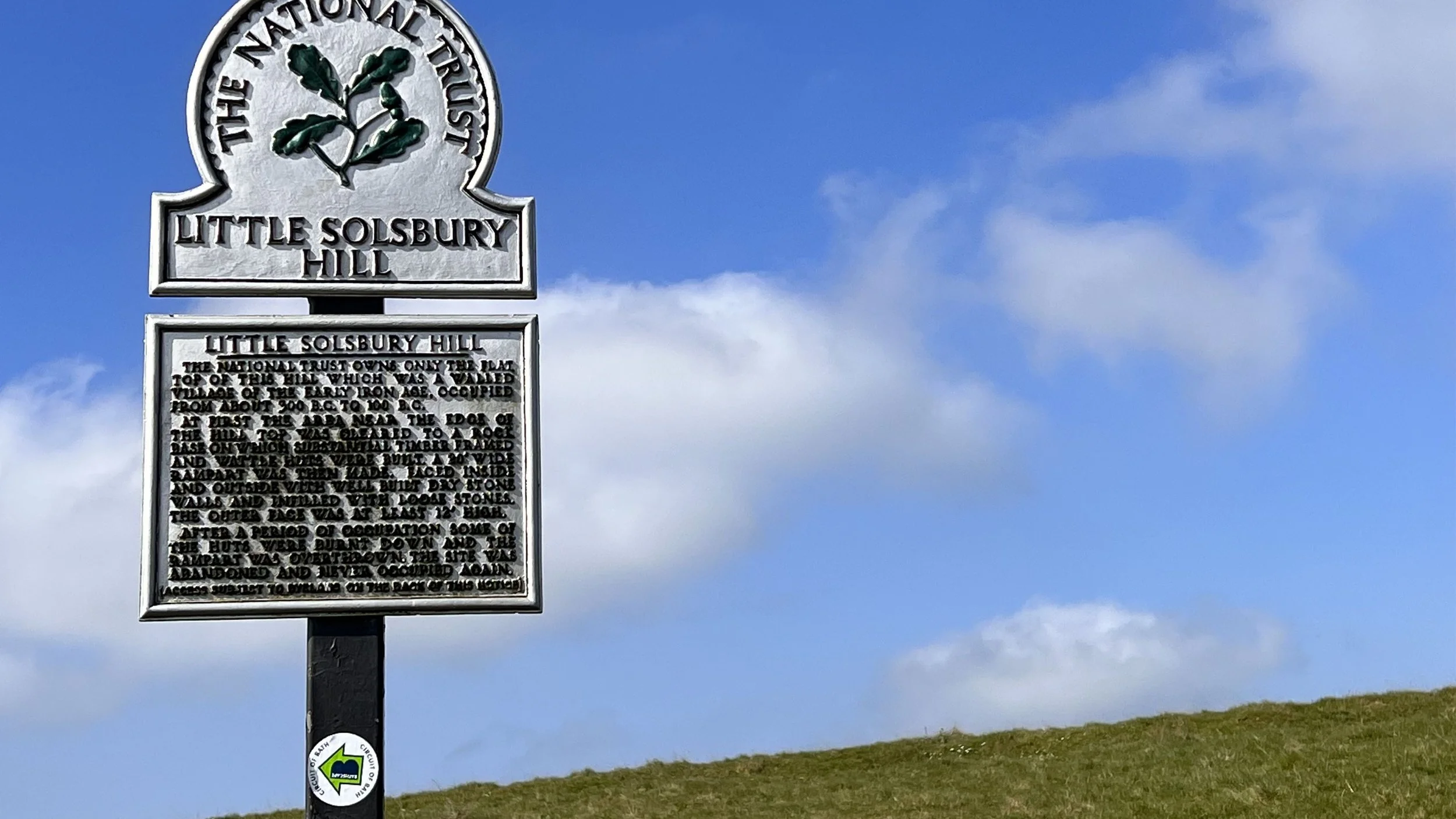
Climbing Peter Gabriel's Solsbury Hill: Where is the real-life landmark, and can you walk it?
In 1977, Peter Gabriel released a masterpiece about leaving the corporate machinery of Genesis for spiritual freedom. That liberating transition happened on a real Somerset peak. Discover the true meaning of Solsbury Hill, where it is, and how to climb it.
At the top of a little-known hill on the outskirts of Bath lies the physical inspiration for one of the most liberating solo debuts in rock history. For years, I listened to the track without ever realising the landmark was real.
One afternoon, while poring over a detailed map of the Somerset countryside, the name practically leaped off the page: Solsbury Hill.
Could this really be the physical peak that gave its name to Peter Gabriel’s beloved anthem? I had to find out. More importantly, I had to know if you could actually climb it.
Gabriel’s Great Gamble: Walking Out of the Machinery
Released in March 1977 on Charisma Records, "Solsbury Hill" was Peter Gabriel’s first solo statement after his dramatic departure from Genesis. Walking away from the band he had co-founded—just as they stood on the absolute precipice of global superstardom—was viewed by the music industry as complete madness.
His friends and peers were baffled. They thought he was a nut.
““To keep in silence I resigned
My friends would think I was a nut
Turning water into wine
Open doors would soon be shut...””
For Gabriel, the departure wasn't about commercial survival; it was about spiritual preservation. The song serves as his explicit artistic manifesto. By stepping away from the gruelling, highly structured corporate machinery of a major touring rock band, he was finally free to find his own voice. The climb up Solsbury Hill became both the literal and metaphorical setting for this terrifying leap of faith.
Where is Solsbury Hill Located?
Because of the phonetics, music fans frequently misspell the title, searching instead for the Wiltshire city of Salisbury. However, Little Solsbury Hill is located in Somerset, sitting proud on the northeast outskirts of the historic city of Bath.
Rising 191 metres above the River Avon, the hill is capped by a flat-topped plateau that was once the site of a bustling Iron Age hill fort. Towering directly over the picturesque village of Batheaston, it commands an extraordinary, unobstructed view of the surrounding Somerset scenery.
The Pilgrimage: Can You Climb It?
Yes, you can absolutely climb Solsbury Hill. Today, the site is proudly looked after by the National Trust, ensuring it remains as wild and evocative as it was when Gabriel stood atop it in the mid-1970s.
It is not a treacherous alpine expedition. You do not need specialist climbing gear, though you will certainly want a sturdy pair of walking shoes, as the incline is deceptively steep.
How to climb Solsbury Hill:
The Starting Point: Head to the village of Batheaston, located roughly five miles northeast of Bath city centre.
The Ascent: Follow the winding lane named Solsbury Lane. Look out for the clearly marked National Trust signs.
The Shortcut: As you ascend Solsbury Lane, keep an eye out for the signposted public footpath on your left. Taking this trail serves as a steep, grassy shortcut up the flank of the hill—saving you some road walking and getting your heart pumping.
On a crisp, quiet morning, the experience is profoundly peaceful. Standing on the flat, grassy plateau with only the larks and the whistling wind for company, you can look down and see the distant Bath city lights glittering in the valley below.
Standing there, it becomes impossibly easy to understand why Gabriel felt the wind blow, why time stood still, and why he decided to let go of everything he knew to take himself back home.
Whether you are a vinyl collector tracing the origins of a masterpiece or a walker seeking a breathtaking view of Somerset, Solsbury Hill is a musical pilgrimage that delivers on every promise.
The Anatomy of the Anthem: 7/4 Time and Toronto Warmth
To understand how the landscape shaped the music, one only has to look at the track's brilliant, unconventional structure.
While most pop and rock songs of the era settled into a comfortable, passive 4/4 groove, Gabriel wrote "Solsbury Hill" in an unusual, syncopated 7/4 time signature (only dropping into standard 4/4 for the final bar of the chorus).
This rhythmic choice was deliberate. The constant, looping cycle of seven beats creates an exquisite, unresolved tension. It feels like a physical heartbeat, mimicking the constant, rhythmic effort of pulling oneself up a steep incline. It forces the listener to climb along with him.
To capture this organic warmth, Gabriel travelled to The Soundstage in Toronto to record with legendary producer Bob Ezrin. Armed with a highly syncopated acoustic guitar riff and three-dimensional, dry percussion, they built a acoustic-led masterpiece that was lightyears away from the sweeping, keyboard-heavy progressive arrangements of Genesis. It was the sound of a man shedding his old skin.
Decades later, history has rendered its verdict on Gabriel's terrifying leap of faith.
It was, indisputably, the correct call.
Walking out of the corporate machinery didn't destroy his career; it saved his artistry. It paved the way for the groundbreaking visuals of his eighties work, the global rhythm experiments of his world music label Real World, and a legendary solo legacy that continues to influence generations. Sometimes, leaving everything behind is the only way to find out who you really are.
Deciphering Kate Bush’s Cloudbusting: The Meaning Behind the Song
A clear guide to the meaning of Kate Bush’s ‘Cloudbusting’, from Peter Reich and Wilhelm Reich to Orgonon, memory and Hounds of Love.
Kate Bush’s ‘Cloudbusting’ begins with one of her most haunting lines: ‘I still dream of Orgonon.’ From there, the song unfolds as a child’s memory of wonder, fear and approaching loss. Released in 1985 on Hounds of Love, it drew on the story of Peter Reich and his father Wilhelm Reich, the controversial psychoanalyst whose strange cloudbusting machines gave the song its title. In Bush’s hands, that unlikely source became something intimate and moving: not a song about pseudoscience or machinery, but about a boy watching the adult world close in around his father.
What does Cloudbusting mean?
The science of cloudbusting is to encourage a cloud to rain. If you control the rain [or the weather] you can influence many things for good or bad. But Kate Bush's song is so much more than a song about machines.
Released in October 1985, the song Cloudbusting is about the relationship between a father and son, told through the eyes of Peter Reich as he reflects on his childhood with his father, Wilhelm Reich. The “cloudbusting” itself refers to Wilhelm’s controversial machines, which he believed could harness an energy he called orgone to make it rain.
Wilhelm Reich and the Cloudbuster
Wilhelm Reich was an Austrian psychoanalyst and one-time pupil of Sigmund Freud, who later struck out on his own with theories that challenged the scientific mainstream. In the 1930s and 40s he became fascinated by the idea of a universal life force he called orgone energy, which he believed could influence health, sexuality, and even the weather. His experiments ranged from controversial therapeutic practices to the invention of the “cloudbuster” — a machine designed to draw energy from the atmosphere and make rain. Reich’s unorthodox ideas and outspoken nature eventually brought him into conflict with authorities in both Europe and the United States, culminating in his imprisonment in 1956. He died the following year in a federal penitentiary, leaving behind a legacy that still divides opinion between visionary and pseudoscientist.
“I can’t hide you from the Government”
— Cloudbusting - Kate Bush
What Book is the song Cloudbusting based upon?
Willhelm’s son, Peter wrote a memoir describing the wonder and confusion of growing up around his father’s theories and inventions. Bush transformed that deeply personal perspective into song, balancing childlike fascination with the pain of loss.
The Waterstone’s Synospsis encapsulates it,
“This famous book, the inspiration behind Kate Bush’s 1985 hit song ‘Cloudbusting’, is the extraordinary account of life as friend, confidant and child of the brilliant but persecuted psychoanalyst Wilhelm Reich. Peter, his son, shared with his father the revolutionary concept of a world where dream and reality are virtually indistinguishable, and the sense of mission which set him and his followers apart from the rest of the human race.”
— Waterstones
Cloudbusting on Hounds of Love
Released in October 1985, Cloudbusting closes Side One of Hounds of Love. Its placement is deliberate — a bridge between the accessible singles (“Running Up That Hill,” “The Big Sky”) and the conceptual second side, The Ninth Wave.
By ending the first half of the record with a story about wonder, longing, and resilience, Bush sets the stage for the darker, more experimental journey that follows.
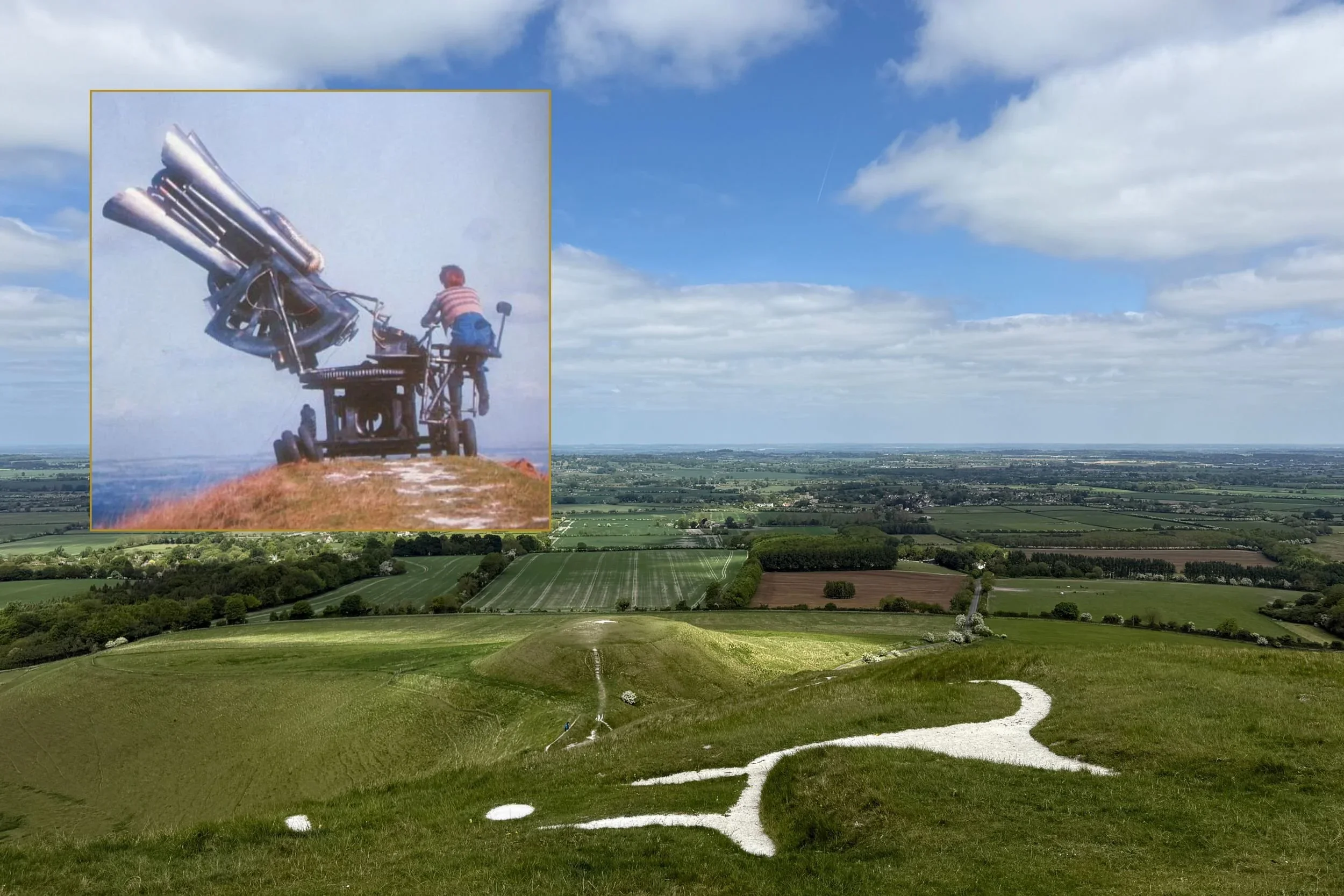
The music video portrays much of this story. Filmed on and around the White Horse at Uffingham, a prehistoric hill figure carved into an Oxfordshire hill, the video depicts the story of Peter (Kate) and his father (Donald Sutherland). In his pocket, you catch a glimpse of the book so the clue was there all along!
Elton John’s Song for Guy: Meaning, Who It Was Written For, and the Story Behind the 1978 Instrumental
Elton John’s Song for Guy Meaning. A hit without Bernie, but who was Guy and what does the lyric mean?
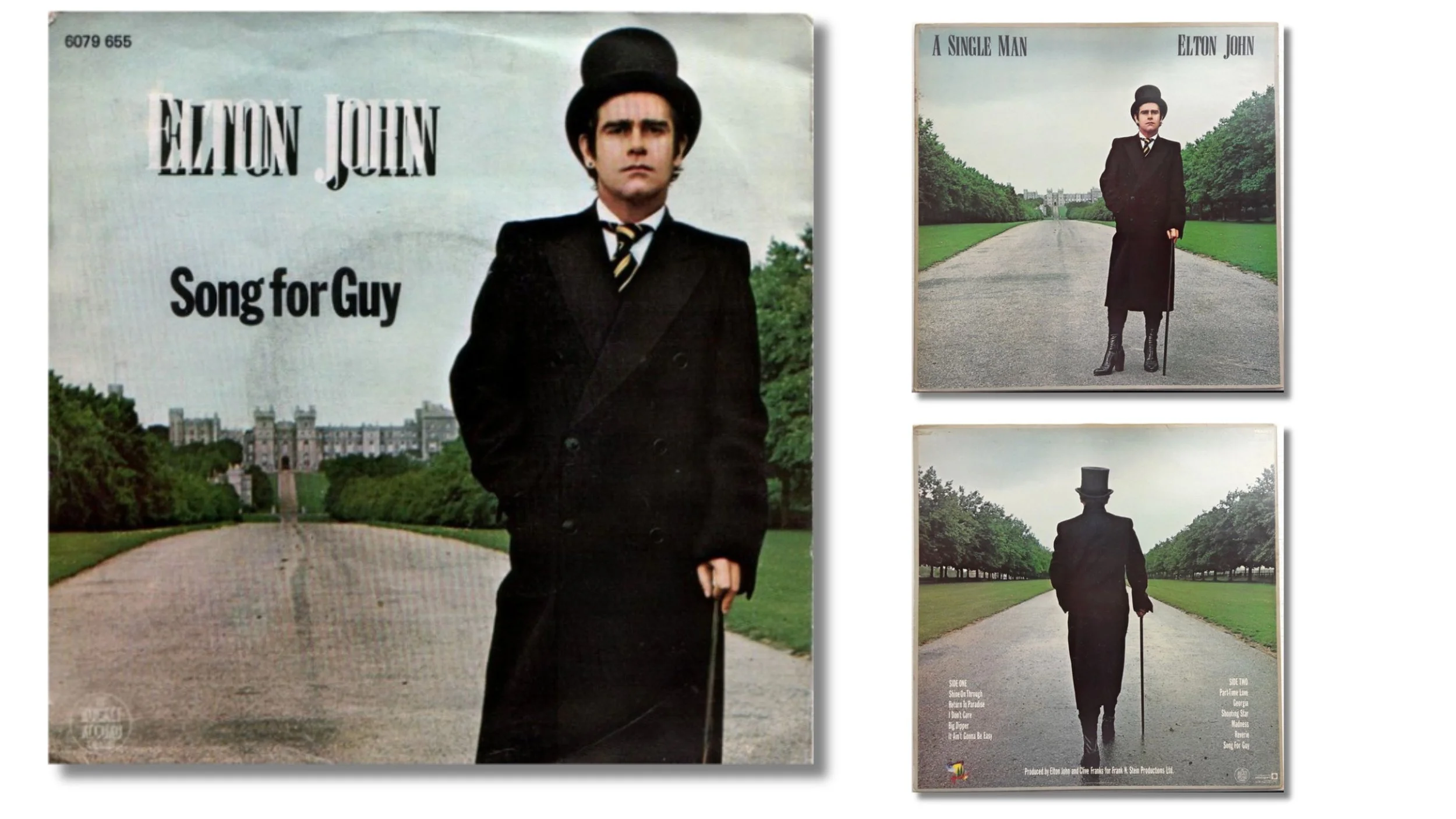
In 1978, during a period of transition, Elton John released one of the quietest records of his career. No chorus. Almost no lyrics, and no Bernie Taupin. Written in C major, the same key as Let It Be, Song for Guy became a UK Top 5 hit and remains one of the most unusual singles in his catalogue.
Song for Guy – Key Facts
Artist: Elton John
Album: A Single Man (1978)
Released: November 1978 (UK single)
Recorded: 1978
Studio: The Mill Studios, Cookham, Berkshire
UK Chart Peak: No. 4
Written by: Elton John
Produced by: Elton John and Clive Franks
Record Label (UK): Rocket Records
Record Label (US): MCA Records
A Rare Instrumental Hit for Elton John
Released on A Single Man, Elton’s twelfth studio album, Song for Guy stood apart immediately. It is largely instrumental, built around a repeating piano figure, gentle synthesiser textures, and restrained rhythm. Only a single line appears near the end:
“Life isn’t everything.”
For an artist known for soaring choruses and Bernie Taupin’s rich lyrics, this felt comparativley stripped back. Yet it connected. The single reached No. 4 in the UK charts, becoming a rare instrumental-driven hit of the late 1970s.
Who Was Guy?
Guy Burchett was a teenage office messenger at Rocket Records, Elton’s label. The day before Burchett’s death, Elton had been at the piano, working through a simple repeating phrase that had been circling in his head: “Life isn’t everything.”
The following day, Elton learned that Guy had been killed in a motorbike accident, reportedly around the same time he had been playing the piece. He later titled the instrumental Song for Guy in tribute to the young employee.
Elton John Without Bernie Taupin
By 1976, Elton and Bernie Taupin had paused their long partnership. After a run of albums including Tumbleweed Connection, Madman Across the Water, Honky Château, and Goodbye Yellow Brick Road, the collaboration stopped.
For A Single Man, Elton worked primarily with lyricist Gary Osborne, who would later co-write Olivia Newton-John’s 1980 US No. 1 hit “Magic.”
The album reflects a change in direction: new collaborators, a contemporary late-70s production style, and a move away from the grand sweep of the early 1970s records.
Song for Guy was unusual even within that shift. It was written solely by Elton, without a lyricist.
For readers asking what songs Elton John wrote without Bernie Taupin, this is a clear example.
Recording and Production
Song for Guy was recorded during the 1978 sessions for A Single Man, produced by Elton John and Clive Franks at The Mill Studios in Cookham, Berkshire, about an hour North of London.
The arrangement is deliberately restrained. A repeating piano motif forms the backbone, gradually layered with synthesiser textures and subtle rhythm. There is no dramatic build or vocal climax. The track maintains a steady emotional tone throughout. That steadiness may explain its durability.
What Does “Life Isn’t Everything” Mean?
The meaning of Song for Guy has been widely debated, particularly because of its dedication and its single line:
“Life isn’t everything.”
The phrase appears once, near the end, almost as an afterthought.
Is it fatalistic? Spiritual? A comment on perspective? The ambiguity gives the track its power. With no verses to explain it, the line hangs in the air.
Because the song became associated with Guy Burchett’s death, many listeners interpret it through grief. But the composition itself remains open.
Chart Success — But Not a Live Fixture
Song for Guy reached No. 4 on the UK singles chart but struggled in the United States. Elton was determined to release the track as a single, despite resistance from his American label, MCA. After a prolonged disagreement, MCA eventually issued it in the US, where it failed to break the Billboard Hot 100, a rare and massive flop for Elton.
The dispute contributed to a growing rift between Elton and the label, and he soon left MCA to sign with David Geffen’s Geffen Records.
Despite its success in Britain, *Song for Guy* has rarely appeared in Elton’s live setlists and did not feature during the Farewell Yellow Brick Road tour.
What Does Hotel California Really Mean?
Few songs invite interpretation like Hotel California. Often read as a mystery, the song is in fact a metaphor for fame, excess, and the hidden cost of success in the 1970s music industry. Here’s what the lyrics really mean — and why the message still resonates today.
Few songs invite interpretation quite like Hotel California.
Nearly fifty years on, listeners are still asking the same questions: what is it actually about? A real place, a state of mind, a warning, or something more abstract?
The short answer is simple. Hotel California is a metaphor for the seductive promise and hidden cost of success, fame, and the California dream, as experienced by the Eagles in the mid-1970s. Everything else in the song flows from that idea.
What gives Hotel California its lasting power is how deliberately it blurs glamour and unease, arrival and entrapment, desire and disillusionment. The song does not explain itself outright. It draws the listener in gradually, much as its narrator is drawn in, before quietly closing the doors behind them.
Hotel California as a Metaphor for Fame and the Music Industry
The “hotel” in Hotel California works as a stand-in for the music industry and the culture of excess surrounding it. It represents a place people aspire to reach, only to discover that arrival comes with conditions they did not fully understand.
By the time the song was written, the Eagles were no longer chasing success. They were living inside it. Record sales, radio dominance, and touring had placed them at the centre of American popular music, along with the expectations and pressures that came with that position.
The song presents this world as inviting rather than hostile. The hotel glows at night. The welcome feels warm. Nothing appears threatening at first. The unease builds slowly, through atmosphere rather than action. This mirrors the experience the song is describing. Fame rarely announces its cost at the door.
Arrival, Seduction, and Disillusionment in the Song’s Lyrics
The opening line, “On a dark desert highway,” establishes more than a scene. It signals movement and direction. The narrator is travelling west, drawn by light and promise somewhat echoing the physical and musical journey of the original Eagles band members, none of whom were from California.
California itself has long symbolised reinvention, escape, and opportunity, and the song leans into that mythology before questioning it.
Once inside the hotel, indulgence becomes the language of the place. Luxury and pleasure are everywhere, but they are never portrayed as satisfying. Instead, they feel compulsive and repetitive. The people inhabiting the hotel are not villains. They are participants, individuals who arrived earlier, adapted quickly, and now seem unable to imagine leaving.
What makes the song unsettling is not overt menace, but acceptance. The rules of the hotel appear to be understood by everyone inside it.
Lyrics, Suggestion, and Interpretation
The lyrics of Hotel California never spell this out directly. Instead, they rely on suggestion, atmosphere, and repetition, allowing meaning to emerge gradually rather than through explanation. That restraint is deliberate. By avoiding literal statements, the song leaves space for interpretation, encouraging listeners to project their own experiences onto its imagery while still guiding them toward a shared emotional conclusion.
Interpreting the Song’s Most Famous Line
The most quoted line in Hotel California is also its clearest statement of intent:
“You can check out any time you like, but you can never leave.”
There is no sense of menace in the line, only inevitability. It captures the idea that success alters people permanently. Even when someone steps away from the spotlight, the habits, expectations, and identity shaped by it remain. Fame, once experienced, cannot be unlearned.
Over the years, this line has attracted extreme interpretations, from addiction allegories to occult mythology. The song does not require them. Its meaning is grounded in lived experience. The trap it describes is psychological and cultural, rather than supernatural.
Lyrics, Imagery, and Industry Self-Awareness
Some of the song’s imagery works on more than one level. The reference to “steely knives” is often read as a playful nod to Steely Dan, but it also reinforces a wider idea of rivalry and sharp competition beneath polished surfaces.
Other lines point to a world where value is measured constantly and publicly, and where status and material success become substitutes for meaning. The song is not condemning individuals. It is describing a system that rewards indulgence and discourages reflection.
A Defining Record of the Golden Age of Vinyl
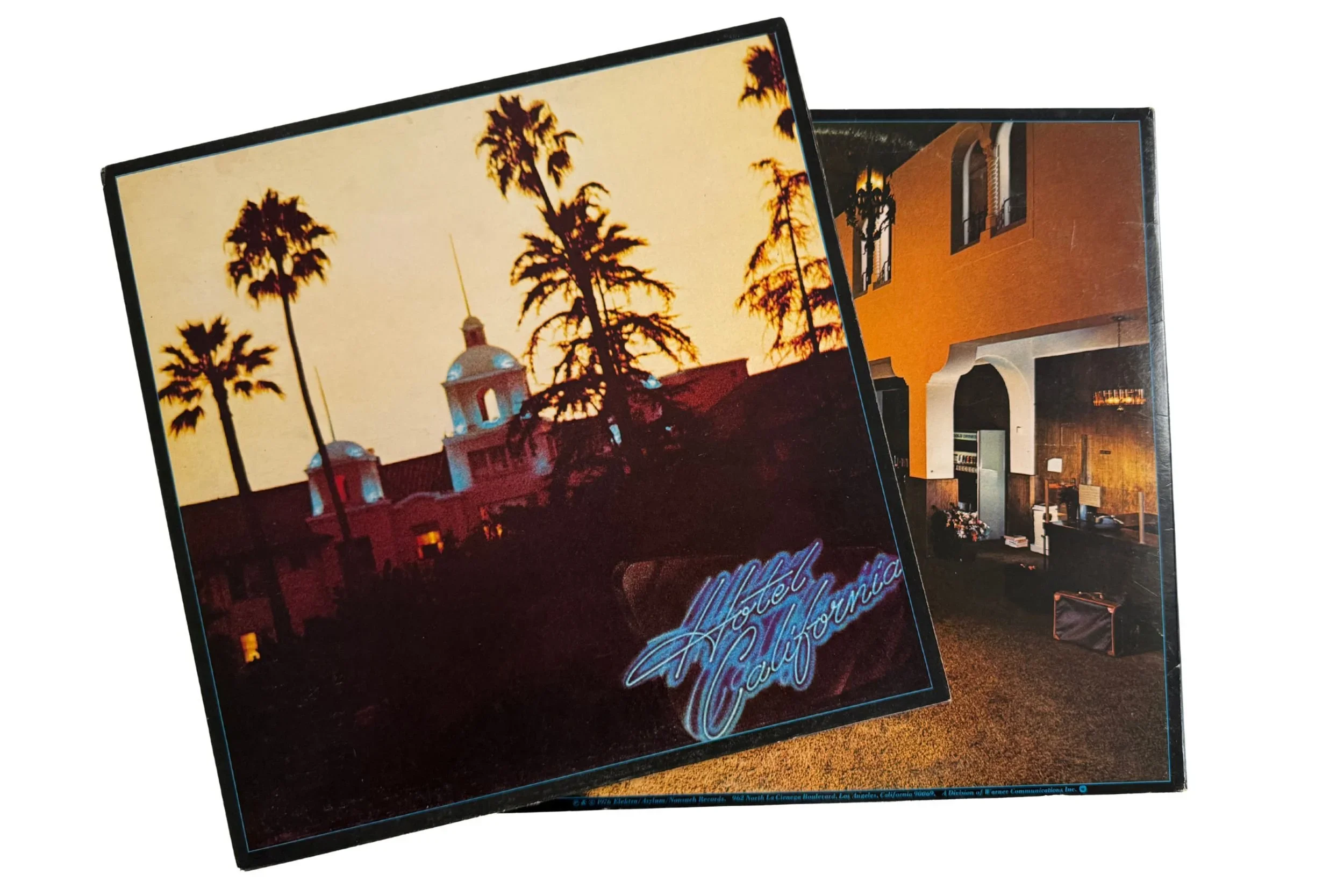
Hotel California arrived at a very specific moment in recorded music. By the mid-1970s, the LP had become the dominant artistic format, and the Eagles were operating at the height of the vinyl era. Although released as a single in its own right in early 1977, the track was conceived first and foremost as a statement piece.
As the opening song on the album, of the same name, Hotel California functions almost like an overture. It introduces the mood, imagery, and tensions that shape the record that follows, without resolving them. This approach reflected a period when songs were expected to carry meaning beyond radio play, acting as gateways into longer listening experiences shaped by sequencing, pacing, and narrative flow. In that context, *Hotel California* set the terms for everything that came after it.
Why Hotel California Resists a Single Interpretation
One reason Hotel California continues to provoke discussion is that it resists being pinned to a single explanation. The band avoided offering a definitive interpretation, not to encourage mystery for its own sake, but because the metaphor works precisely because it is flexible.
For some listeners, the song reflects addiction. For others, the emptiness of wealth. For others still, the cost of creative ambition. These readings coexist because the song is rooted in experience rather than abstraction. The hotel is not one thing. It is a pattern that reveals itself only after arrival.
Song Meaning Within the Wider Album Context
Although Hotel California opens an album that develops similar themes, the song stands on its own. It introduces ideas of arrival, indulgence, and exhaustion that echo across the record, but it does not rely on that wider context to make its point. Yet these themes are carried on across the album. Life in the Fast Lane was a reference to their experiences seeking drugs.
“They knew all the right people,
They took all the right pills
They threw outrageous parties,
They paid heavenly bills”
The New Kid in Town, possibly a reference to Bruce Springsteen, was the band looking over their shoulder, wondering if someone else would take their crown.
“They will never forget you ‘til somebody new comes along”
Later songs, particularly The Last Resort, make the critique more explicit, as if the band are now exhausted thinking, “this isn’t the dream we signed up for.”
“You can leave it all behind
Sail to Lahaina
Just like the missionaries did
So many years ago”
Why the Meaning of Hotel California Still Matters
People continue to ask what Hotel California means because the conditions it describes have not disappeared. The industry has changed. The platforms have changed. The pattern has not.
Success still promises escape and delivers obligation. Fame still invites people in before revealing its limits. The hotel still looks welcoming from the outside.
That is why Hotel California endures. It is not tied to a single place or moment. It is about what happens when ambition outruns reflection, and about how difficult it can be to recognise the price of success while it is still being paid.