
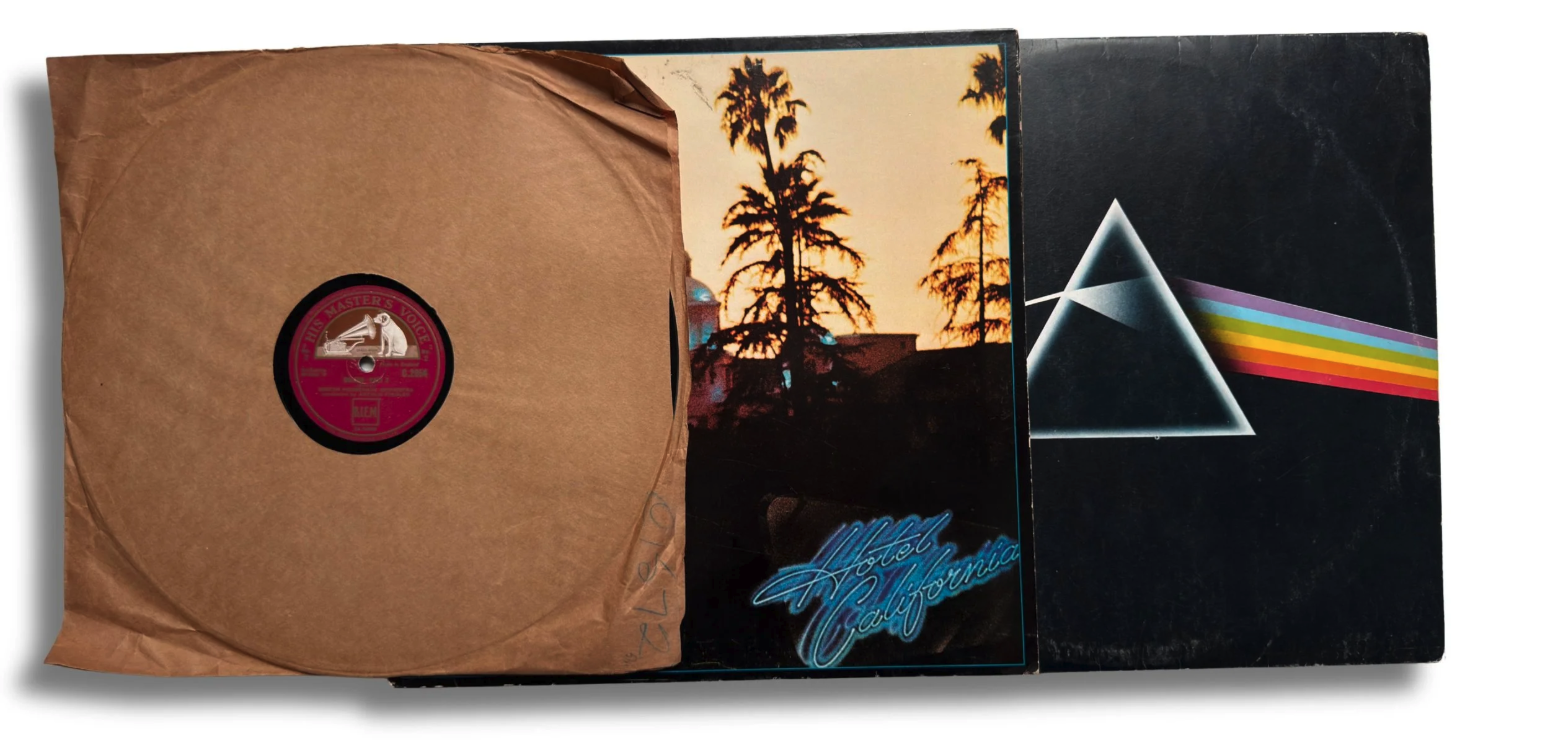
The Architecture of the Album: How Physical Constraint Shaped the Vinyl Era
The greatest era of popular music grew directly out of rigid physical constraints, proving that strict boundaries can actually ignite a brilliant creative fire. The long-playing record was never just a commercial carrier for a collection of songs. It was an act of complete cultural alchemy where music, packaging, physics, and studio environments converged to create a unified art form.
For anyone who truly loves recorded music, the physical ritual is sacred. It is the deliberate weight of sliding a 12-inch disc from its sleeve, placing it on the turntable and dropping the needle. What comes next isn't just the sounds from the record, but a cultural immersion into what the artist wanted to present.
Something beyond the music, but the album cover, the liner notes, even the record label itself.
With the vinyl format experiencing a massive cultural renaissance in the mid-2020s, the format is now beloved by another generation. But in times gone by the record came to mean so much more than a piece of black plastic or limited edition record store pressing but more of a complete package, the culmination of a band’s vision that expanded to meet the very limits of the physical format. We call it the Vinyl Era, and that is our focus on this website.
We define the Vinyl Era as 1967 to late 1985. Or, from Sgt. Pepper to Brothers in Arms.
Album Architecture: Tracking the History of the Vinyl Era (1967–1985)
To understand this era is to confront a beautiful paradox. The greatest era of popular music grew directly out of rigid physical constraints, proving that strict boundaries can actually ignite a brilliant creative fire.
For true artists, the long-playing record was never just a commercial carrier for a collection of songs (although plenty of those were released!) It was an act of complete cultural alchemy where music, packaging, physics, and studio environments converged to create a unified art form.
History is messy, and if we are being honest with each other, the creative seeds of the album era were planted well before our official starting point. Arguments can be made (and I will gladly make them over a drink) that Rubber Soul was the Beatles’ first true, grown-up masterpiece. It was the moment they stopped emulating their American idols and built something that was truly theirs.
But for the structural parameters of this history, the Vinyl Era permanently crystallised in 1967 with Sgt. Pepper’s Lonely Hearts Club Band.
As a Vinyl Historian, I believe that Sgt. Pepper represents the moment where every element of the physical medium converged to serve a singular artistic statement. To call it groundbreaking packaging downplays its cultural weight; it was a total reinvention of identity. By discarding their touring personas, donning those fluorescent satin suits, and stepping behind a dense, surreal tapestry of historical figures, The Beatles proved that the 12-inch framework could swallow an artist's entire reality.
Combined with deliberate track sequencing, a high-frequency dog whistle, and a nonsensical backward message pressed into the concentric run-out groove, it offered so much more than 39 minutes and 55 seconds of listening pleasure. It established the blueprint for the album as an immersive, self-contained universe.
This brilliant creative framework reigned supreme until 1985, arriving at its natural cusp with Dire Straits’ Brothers in Arms, the first true CD release.
While Brothers in Arms turned millions of turntables, it was engineered to be the premier showcase for a new kind of listening. With "So Far Away" launching as the world's first commercially available CD single, the blockbuster success of that album signaled a quiet, structural shift. The physical boundaries that had guided nearly two decades of album-centered thinking were beginning to dissolve, and with them, the visual grandeur of the format.
Shrinking the magnificent 12-inch canvas down to a five-inch plastic jewel case meant the rich artistry of the album cover began to disappear, the booklet replaced the inner sleeve and with it another canvas. Even the record label, itself a piece of artwork with labels like Charisma and Jet was lost to clarity and technology.
We began moving away from the shared ritual of the turntable and toward a more clinical, button-pushing relationship with music. And whilst streaming has made music ever more accessible, it provides limitless opportunities for music delivery but loses the restraints, and the canvas that made the vinyl record such a thing.
The Four Pillars of Vinyl Alchemy
To understand how artists took a spinning disc of PVC plastic and turned it into magic, we must examine the four distinct elements that define the physical grammar of the LP:
The Blueprint of Fidelity: The absolute sonic character of how music was captured. Before digital perfection flattened the landscape, records carried the warmth, tape hiss, and organic air of the rooms where they were born. There was often a difference between first and later pressings, not always for the best, and different record plants would influence the actual sound even further.
The Physics of Phasing: Because a record spins at a constant speed, the outer edge travels beneath the needle much faster than the tight inner grooves. This technical reality forced a beautiful artistic discipline. Brighter, high-energy, bass-heavy tracks had to open a side to maximize clarity, while spacious, textural, and ambient pieces were placed at the end where the groove pulled inward.
The Canvas of Packaging: The 12-by-12 inch jacket was never mere wrapping; it became a visual accompaniment. It was a cinematic space where photographers, designers, and musicians collided to create a visual mythology that dictated how the music was perceived before the needle even touched down.
The Ghost in the Studio: Music is entirely a product of its geography. The alchemy of the Vinyl Era belongs to the brick-and-mortar sanctuaries where artists laid down their tracks.
Studio Alchemy: Seeking the Spirit of Legendary Recording Spaces
As we trace this history, we are not focused in a sterile catalogue of gear. There are plenty of great examinations of recording technology, and they are important. There is a reason artists still want to use Frank Sinatra’s microphone at Capitol Records in LA, or seek out the Layla piano at Criteria Recording Studios in Miami. Instead, we focus more on the alchemy of recording, the places and people that influenced the records we spin today.
There is an undeniable mysticism tied to specific geographic coordinates. What is the common thread that links the storied hallowed halls of Abbey Road to the bleak, Berlin-Wall-shadowed rooms of Hansa Studios? Why did certain spaces pull performances out of musicians that they could never replicate anywhere else?
Outside the studio, there are places that offered musical inspiration and places the artists misbehaved that developed their own folklore. Where did Led Zeppelin ride their motorbike through the hotel? What happened to Keith Moon’s car in the swimming pool? and did Peter Gabriel really see an eagle on Solsbury Hill?
It is the presence of place—a creative friction where the environment becomes an active member of the band.
The Vinyl Era was a finite moment in time when physical limits, visual imagination, and the spirit of a room forced artists to reach for the sublime.
So welcome, friend. Drop the needle, grab a drink. Come on the amazing journey and learn all you should know.
Reader’s Digest Record Collections: Sensational Seventies and the Rise of Mail-Order Music
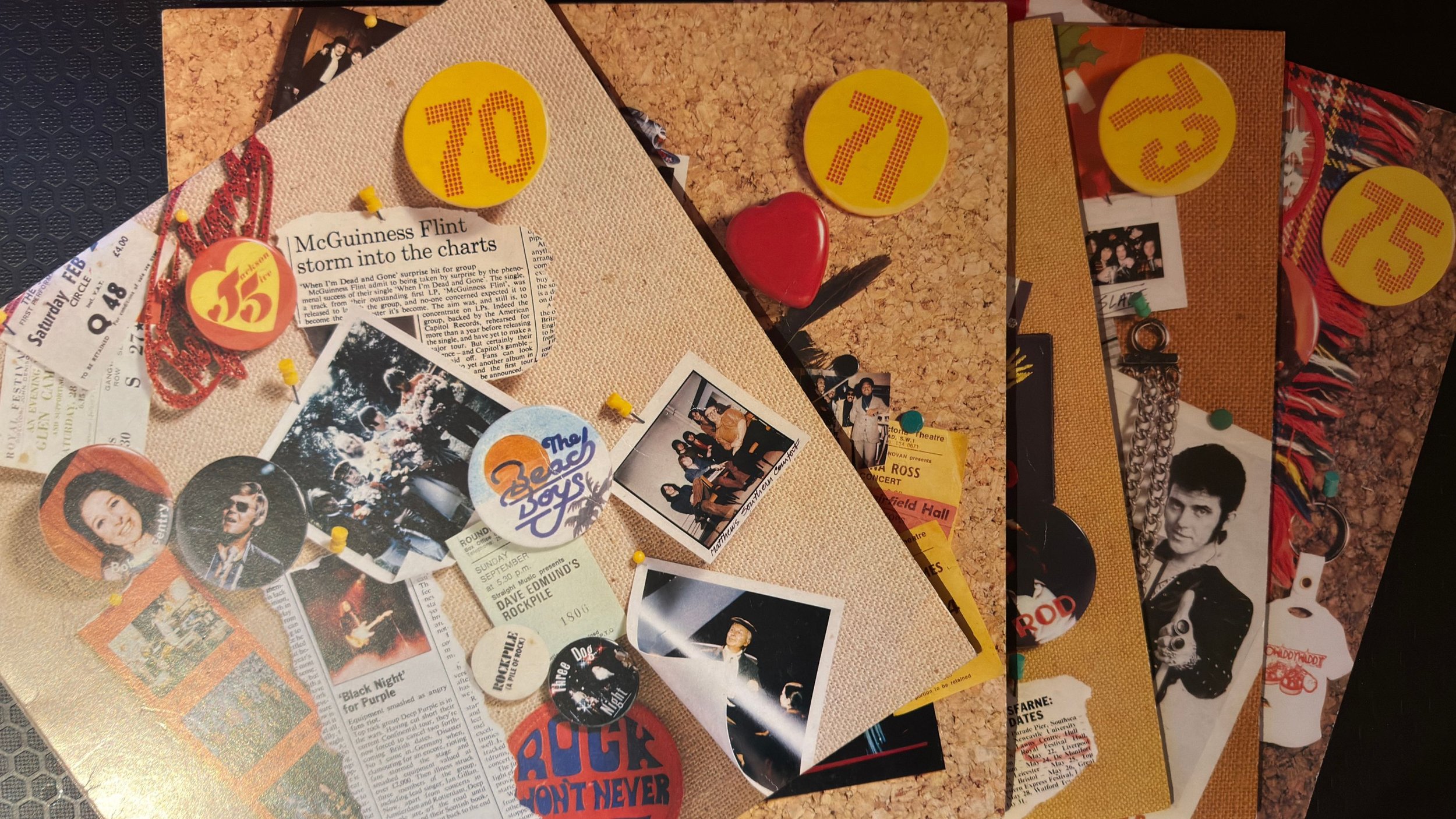
A Reader’s Digest box set from the early 1980s became an unlikely gateway into music. Sensational Seventies captures how mail-order record collections introduced a generation to the sound of the 1970s.
The Reader’s Digest compilation that started it all
In the early 1980s, mail-order music was everywhere. Television adverts promised huge collections of songs for surprisingly little money. Glossy box sets arrived by post, often split across several records or cassettes, each one packed with familiar hits.
For a young music fan trying to build a sense of musical credibility, these compilations did not always feel like the obvious place to start. Reader’s Digest albums in particular were widely seen as something designed for the family living room rather than the serious record collector.
But for me, one of those box sets became a turning point.
It was called Sensational Seventies, and it quietly became the catalyst for my love of music, which ultimately led to the Vinyl Historian.
The Sensational Seventies box set
The Sensational Seventies collection did exactly what the title promised. It gathered together a wide spread of hit singles from the decade and organised them chronologically across six records, twelve sides in total.
Each pair of sides broadly represented a year, beginning in 1970 and ending in 1979, creating a guided tour through the decade.
At the time, I was far too young to notice what was not there. There were no Bee Gees, no Eagles, no Rolling Stones, and none of the obvious arena-sized classics that now dominate so many 1970s retrospectives. You would not find ‘Hotel California’ or ‘Bohemian Rhapsody’ anywhere in the set.
What the collection offered instead was something slightly different: a cross-section of the decade that mixed major hits with songs that now feel very much of their time. Mantovani-style strings appeared alongside Rodrigo’s guitar. Novelty songs like ‘The Streak’ sat next to country heartbreak, including Billy Connolly’s comic version of ‘D.I.V.O.R.C.E.’
Looking back at the full track listing today, that may be the real strength of Sensational Seventies. Alongside chart-topping artists like ABBA, Rod Stewart, Blondie, Elton John and 10cc, there are glam rock hits from Slade and Sweet, soul classics like ‘Rock Your Baby’, and novelty records that once dominated British television and radio.
Elsewhere the collection moves into unexpected territory: Deep Purple’s ‘Black Night’, Hawkwind’s ‘Silver Machine’, Roxy Music’s ‘Virginia Plain’, and Kate Bush’s ‘Wuthering Heights’. Add in brass bands, country songs, disco anthems and TV-theme instrumentals, and the result is less a greatest hits package and more a time capsule of what the charts actually sounded like during the 1970s.
But there were also songs that stayed with you. Tracks like ‘Boy From New York City’ by Darts, ‘Dancing in the City’ by Marshall Hain, ‘Forever Autumn’ from Jeff Wayne’s The War of the Worlds, and Elton John’s ‘Song for Guy’ became part of a sequence you gradually learned by heart.
After a while, you did not just know the songs. You knew the order of the songs, the way one track seemed to follow another. In its own way, it was an introduction to the pleasure of listening to a record from beginning to end.
In hindsight, the set feels less like a conventional hits package and more like a compact archive of the decade, a reminder of how varied the charts once were, and how many different styles of music could share the same airwaves.
The rise of Reader’s Digest record collections
Reader’s Digest began producing record collections in the early 1960s, building on the company’s global publishing reach. The concept was simple: curate large themed collections of popular music and sell them directly to households through magazine advertising and television campaigns.
Instead of buying individual records one at a time, listeners could order a complete set containing dozens of songs spanning a particular theme or decade.
These collections were often attractively packaged and carefully sequenced, making them easy to live with. For many households, they became the foundation of a record collection.
By the 1970s and early 1980s, Reader’s Digest had sold millions of LP box sets around the world.
Mail-order music, compilation albums and home record collections
The success of Reader’s Digest records was part of a wider mail-order music boom.
Before streaming, before digital downloads, and before the rise of large chain record shops, mail-order offers provided a simple way for people to build a music collection. Television adverts and magazine inserts promised large selections of songs delivered directly to your door.
Compilation albums became especially popular because they offered immediate familiarity. Dozens of recognisable songs gathered into one convenient set. In many ways, these collections acted like the playlists of the vinyl era, introducing listeners to a wide range of artists across a single box.
Why the Eagles, the Rolling Stones and other major acts are missing
Like many mail-order compilations, Sensational Seventies reflects the licensing realities of its time. Reader’s Digest did not operate like a traditional record label. Instead, it licensed recordings from major labels, and not every rights holder was willing to take part.
Labels were often protective of their most valuable artists, particularly when it came to budget or mail-order collections. This limitation gives the set much of its character. Instead of presenting only the most obvious blockbusters, it captures a wider range of music that once filled the charts. It offers something closer to the texture of the decade itself.
Rediscovering Reader’s Digest vinyl in charity shops and record stores
Reader’s Digest box sets still appear regularly in charity shops, second-hand record stores and the occasional crate-digging find. They rarely command high prices, and many collectors overlook them.
But for anyone interested in exploring a particular decade, they can be rewarding.
Within those boxes are dozens of songs that once filled the airwaves, many of which rarely appear on modern compilations. For listeners curious about the sound of a particular period, they can act as a useful starting point.
For me, Sensational Seventies was exactly that. It introduced artists, songs and styles that I would later go on to explore more deeply.
Sometimes the path into music history begins with the most unexpected record in the collection.
From Reader’s Digest to Now That’s What I Call Music
By the early 1980s, compilation albums were becoming one of the dominant formats in the music industry. In the United Kingdom, the launch of Now That’s What I Call Music in 1983 turned the idea into a retail phenomenon, bringing together chart hits from multiple labels into a single album.
Like the Reader’s Digest collections, these albums offered listeners a snapshot of a particular moment in popular music. Not every artist appeared, as licensing restrictions still meant some major acts were missing, but the format proved highly successful and went on to define the compilation market for decades.
In a sense, the Reader’s Digest box sets helped establish the idea. Large, carefully sequenced collections of familiar songs, presented as a complete listening experience.
If Sensational Seventies belongs to the world of mail-order vinyl, Now That’s What I Call Music belongs to the next chapter, when the compilation album moved from the television advert and the order form to the high street.

What Is Americana Music? The Vinyl-Era Albums That Defined the Sound
What is Americana music? Discover the vinyl era albums that defined the sound, from Dylan and The Band to Tumbleweed Connection, Laurel Canyon and Hotel California.
From Tumbleweed Connection to Music from Big Pink, from Led Zeppelin III to Hotel California, the spirit of Americana runs through some of the most evocative records of the vinyl era. Many listeners know the sound long before they hear the term. So what is Americana music exactly, and why does it matter so much to the history of albums in the late 1960s and 1970s?
Americana is often treated as a genre, but it is better understood as a musical language: a blend of country, folk, blues, gospel, bluegrass and roots rock shaped by storytelling, atmosphere and a strong sense of place. It draws on older American traditions, but it is rarely limited to a single style.
Instead, it thrives in the overlap between styles, where lyrical depth matters more than polish and where songs feel rooted in landscapes, characters and memory.
That helps explain why Americana found such a natural home in the vinyl era. The LP gave artists room to build entire worlds, not just individual singles. Album sequencing, mood, artwork and narrative all mattered. To understand Americana properly, it helps to follow the records that defined its sound.
Americana Is More Than Country or Folk.
Americana shares DNA with both country and folk, but it is not quite either. Where folk can lean toward traditional balladry and country toward familiar Nashville and honky-tonk conventions, Americana tends to be broader and more fluid. It borrows freely from blues, gospel, R&B and bluegrass, combining those elements into music that feels recognisably American, but often reflective, literary and album-led.
What sets Americana apart from more commercial strands of country is its artistic focus. It tends to favour storytelling over gloss, atmosphere over formula, and emotional texture over radio polish. That is one reason the term remains useful: it helps describe records that sit between categories while still feeling deeply connected to American musical traditions.
Before It Had a Name: Dylan, The Band and the Late-1960s Blueprint
No discussion of Americana is complete without Bob Dylan and The Band. They were not usually described as Americana at the time, but they helped create the blueprint that later artists would build on.
Dylan’s late-1960s albums marked a decisive shift from protest folk into something more rural, mythic and timeless. John Wesley Harding (1967) stripped things back, introducing sparse arrangements and Biblical imagery, while Nashville Skyline (1969) leaned further into country textures, steel guitars and an unexpectedly warm vocal style. Rather than nostalgic recreations, these records reimagined American songcraft through the lens of the modern album.
The Band pushed that idea even further. First known to many listeners as Bob Dylan’s backing band, they stood at the crossroads of folk, roots music and rock. Their debut, Music from Big Pink (1968), grew out of the Catskills near Woodstock, New York, but sounded as though it had emerged from much older American soil, steeped in Southern gospel, mountain folk and front-porch soul. It helped redraw the boundaries of what rock music could be, and their self-titled follow-up deepened that approach with songs shaped by history, labour, hardship and regional memory.
Tracks such as “The Night They Drove Old Dixie Down” and “King Harvest (Has Surely Come)” captured a rugged, lived-in quality that still defines Americana today. This was music deeply concerned with the American story, but told in ways that felt old and new at once. Dylan and The Band did not just influence a genre. They showed that roots music, historical imagery and character-driven storytelling could sit at the heart of a modern LP.
Laurel Canyon and the California Sound
If Dylan and The Band laid the groundwork, Laurel Canyon helped give Americana one of its most recognisable 1970s forms. More than just a Los Angeles neighbourhood, Laurel Canyon became a creative meeting point where folk introspection, country touches, close harmonies and rock arrangements could coexist.
Artists such as Crosby, Stills & Nash, Joni Mitchell and Neil Young helped shape that West Coast turn. Their records often carried the intimacy of singer-songwriter music while drawing on the textures of folk and country rock. The result was less rugged than The Band, less overtly historical than Tumbleweed Connection, but no less central to the evolving Americana sound.
This is where the genre starts to broaden. Americana is not only about dusty plains, Civil War ghosts or Depression-era imagery. It is also about emotional geography: roads, homes, distance, relationships, escape and reinvention. Laurel Canyon brought a Californian openness to the roots vocabulary, connecting personal songwriting to wider American landscapes and myths.
It also provided a bridge. The scene’s harmonies, acoustic textures and country-rock leanings helped connect the late-1960s roots revival to the polished but still deeply American sound that would soon reach a mass audience through the Eagles.
How the Eagles Took Americana Mainstream
If Americana began in rootsier, looser forms, the Eagles helped bring many of its core elements into the commercial centre of the 1970s. Their records turned harmonies, country-rock textures, Western imagery and the pull of the open road into one of the defining album sounds of the decade.
Albums such as Desperado (1973), One of These Nights (1975) and Hotel California (1976) helped crystallise a distinctly Californian version of Americana. There were still country echoes and roots influences in the music, but they were filtered through polished arrangements and widescreen production. The result was accessible, atmospheric and hugely successful.
That success can sometimes obscure what made the Eagles important. They were not simply soft rock with cowboy touches. They were one of the groups that took a roots-derived American sensibility and translated it into blockbuster LPs. Their songs are full of movement, longing, restlessness and symbolic landscapes. The track “Hotel California”, in particular, works not only as a hit song or album title, but as a statement on California myth itself: seductive, unsettling and impossible to separate from the broader American dream.
For listeners trying to understand Americana through albums, the Eagles are crucial because they show how the sound moved from the margins to the mainstream without losing its connection to place, narrative and identity.
The British Artists Who Sold America Back to America
Americana may be rooted in American music, but some of its most powerful echoes came from Britain. By the late 1960s and early 1970s, British artists were not simply copying American blues, folk and country records. They were absorbing those traditions, reshaping them, and sending them back across the Atlantic in hugely successful new forms.
Elton John and Bernie Taupin are one of the clearest examples. On Tumbleweed Connection (1970), they imagined the American South and West through British eyes, building an album steeped in frontier imagery, Civil War references and rootsy atmosphere.
But they were hardly alone. The Rolling Stones, The Yardbirds, Eric Clapton and Led Zeppelin all drew deeply from American blues, while British rock more broadly continued to channel the pull of the American road, the delta, the plains and the mythology of freedom and reinvention.
Led Zeppelin are not usually placed at the centre of Americana, but they do belong in the wider story of how American roots music shaped the vinyl era. If Led Zeppelin III (1970) revealed the band’s acoustic and folk side, Led Zeppelin II (1969) showed even more clearly how deeply they drew from American blues. Tracks such as “Whole Lotta Love”, with its Willie Dixon lineage, point to the band’s engagement with a distinctly American musical inheritance, even as later records moved further toward British folk and mysticism.
Even the Beatles were shaped early on by American records reaching Liverpool. Before they moved toward the more self-contained studio thinking of Rubber Soul (1965) and beyond, their musical education had been formed in part by rock and roll, rhythm and blues, girl groups and soul records from the United States. That early appetite for American sound helped define the wider British invasion itself: a movement in which British musicians learned from America, transformed what they heard, and often returned it to American audiences on a grander commercial scale.
In that sense, Americana is not only a story about American artists. It is also a story about transatlantic exchange. Some of the biggest British acts of the vinyl era found success by channelling American roots music back toward the culture that first created it.
What These Vinyl-Era Albums Have in Common
At first glance, John Wesley Harding, Music from Big Pink, Tumbleweed Connection, Led Zeppelin III, the Laurel Canyon records and Hotel California do not all sound alike. That is exactly the point. Americana has never depended on strict genre purity.
That is why the vinyl era matters so much here. Americana flourished in an album culture. Sequencing mattered. Artwork mattered. Sonic atmosphere mattered. These records invited listeners into landscapes both real and imagined, whether the setting was the rural South, the mythic frontier, Laurel Canyon or the highways and hotel rooms of 1970s California.
That storytelling thread also runs through songs slightly outside the article’s core album spine. Simon & Garfunkel’s “America”, with its drifting motion, open landscapes and searching tone, captures another side of the same tradition: the idea of the United States as both a physical journey and a mythic space.
What links these albums is something deeper. They all draw, in different ways, on American roots traditions. They all privilege storytelling, mood and a sense of place. They all move between folk, country, blues and rock without worrying too much about neat classification. And, crucially, they all use the LP format to build a world.
Americana Beyond the Vinyl Era
Americana runs through more than specialist genre labels or cult favourites. Its threads can be found in some of the biggest and most influential albums of the vinyl era, from rootsier records by Bob Dylan and The Band to the California sweep of the Eagles and the transatlantic imagination of Tumbleweed Connection (1970). That is part of what makes the tradition so important: it has shaped not only critically admired albums, but some of the defining records of the album age.
Nor did that tradition end with the 1970s. As the vinyl era gave way to new formats, artists continued to draw on the same mix of landscape, myth, spirituality, roots music and restless motion. U2, for example, channelled their own version of Americana on The Joshua Tree (1987) and Rattle & Hum (1988), turning the American desert, gospel, blues and rock and roll into part of their late-1980s identity. More recently, artists such as Lana Del Rey have reworked Americana once again, using its imagery and symbols not simply to celebrate the American dream, but to question, stylise and unravel it.
Americana still matters because it gives us a way to trace these connections. It links the folk, country, blues and rock traditions that shaped the vinyl era, while helping explain why the same ideas keep returning in new forms. The sound evolves, but the pull of the road, the landscape, the mythology and the story remains.