
Super Bear Studios: the South of France studio where rock’s biggest names recorded
High in the hills above Nice, far from the routine of London studio life, Super Bear Studios became one of the most distinctive recording addresses of the late vinyl era. Opened in 1978 in a former restaurant at Berre-les-Alpes, it offered something many major artists wanted by the end of the decade: privacy, time, and enough distance from Britain to work without interruption. Owned and run by British composer Damon Metrebian and a small group of fellow expatriates, Super Bear was part studio, part retreat, and for a few short years it became a working base for some of rock’s biggest names.
By the late 1970s, major albums were taking longer to make. Budgets were growing, arrangements were becoming more layered, and sessions could stretch on for weeks. A residential studio changed the pace of that work. Artists could stay on site or nearby, work late, return the next morning and keep the shape of a record intact. Super Bear was never a public institution in the mould of Abbey Road. Its appeal came from privacy and concentration. Musicians could settle in and get on with the album.
Notable albums recorded at Super Bear Studios
- Wet Dream by Richard Wright, 1978
- David Gilmour by David Gilmour, 1978
- Lionheart by Kate Bush, 1978
- Jazz by Queen, 1978
- Eve by The Alan Parsons Project, 1979
- 21 at 33 by Elton John, 1980
- Common One by Van Morrison, 1980
- Stop and Smell the Roses by Ringo Starr, 1981
For a relatively short stretch, that formula attracted an extraordinary list of artists. Kate Bush recorded Lionheart there in 1978. Queen used the studio while making Jazz that same year. Richard Wright recorded Wet Dream there, and David Gilmour also used Super Bear for his 1978 solo debut. Elton John recorded there around the turn of the decade, with both 21 at 33 and The Fox tied to the studio. Van Morrison worked there on Common One, and The Alan Parsons Project recorded Eve there too. By the turn of the 1980s, Super Bear had become a trusted hideaway for artists who could have worked almost anywhere.
Pink Floyd are the group most closely associated with the studio, and with good reason. Super Bear sits in the Floyd story at a crucial moment. Richard Wright and David Gilmour had both worked there on solo projects in 1978, and when the band began laying the groundwork for The Wall, Super Bear became one of the places where that vast project began to take shape.
Nick Mason’s Inside Out gives the clearest sense of the studio in use. Set high in the Alpes-Maritimes, about half an hour from Nice, Super Bear came with a tennis court, a pool and enough space for the band to live and work at close quarters. Mason and Wright stayed at the studio itself, while Roger Waters and David Gilmour rented villas nearby. Bob Ezrin based himself at the Negresco in Nice. Sessions were broken up by tennis and occasional trips down to the coast, though the drive was long enough to stop too much drifting. It suited a record as large, tense and demanding as The Wall.
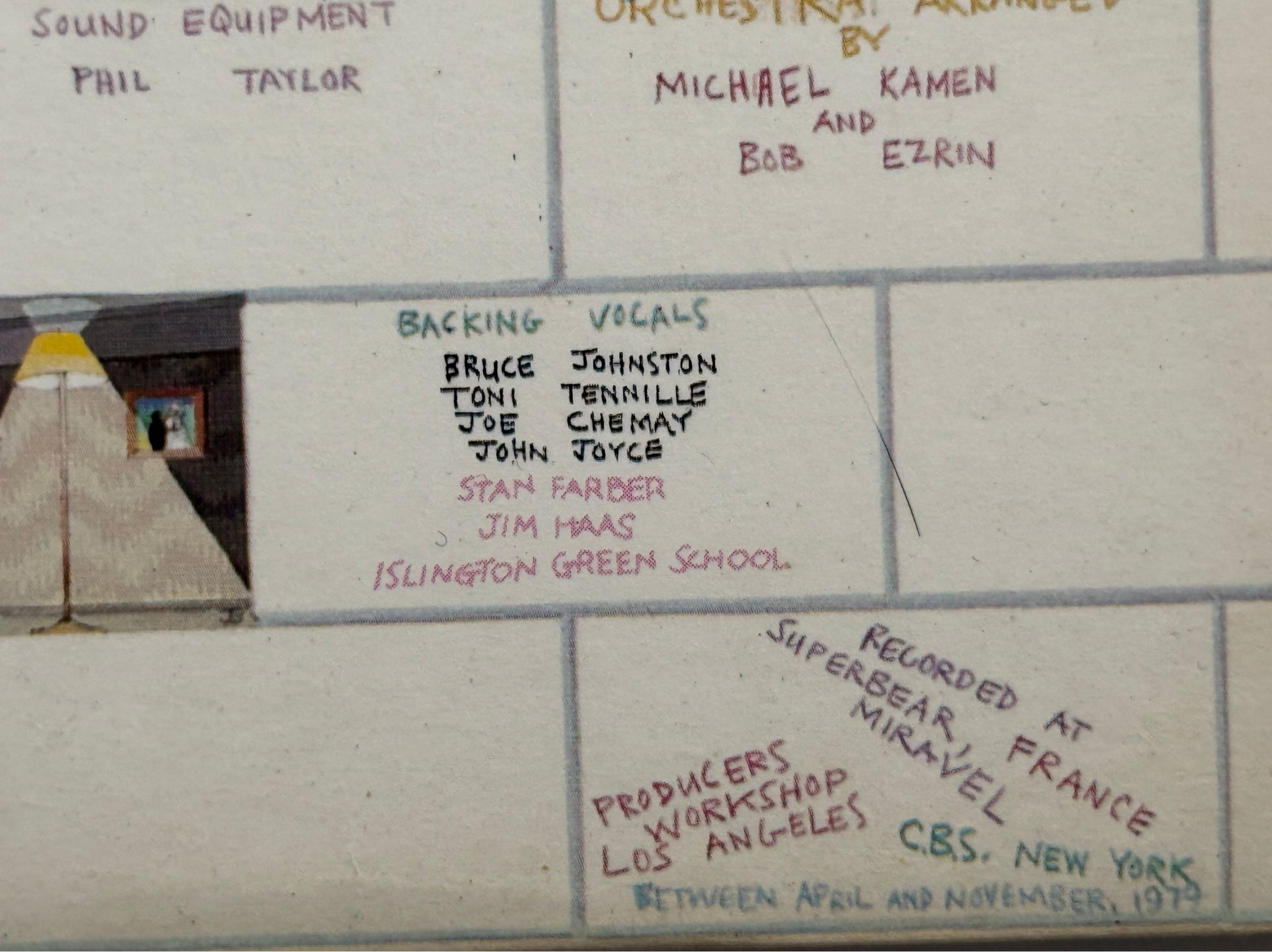
Super Bear Credits in the Wall album liner notes
Kate Bush gives the studio a different place in the story. Lionheart, released in 1978, belongs to the early burst of work that established her as one of the most original British artists of her generation. Queen’s Jazz, also released in 1978, points in another direction. Both albums came from artists already thinking on a large scale, and both fit the kind of concentrated working environment Super Bear offered. The same secluded studio in the hills above Nice sits behind very different records, linking Bush’s imaginative art-pop with Queen’s late-70s confidence.
The studio also has a Beatles connection. In July 1980, Ringo Starr began sessions there for the album then titled Can’t Fight Lightning. Soon after meeting Barbara Bach on the set of Caveman, Starr crossed paths with Paul and Linda McCartney during the Cannes Film Festival and asked McCartney to play on and possibly produce his next record. Sessions began at Super Bear on 11 July 1980 and ran until 21 July. During that time McCartney worked on ‘Private Property’ and ‘Attention’, both his own songs, along with a cover of ‘Sure to Fall’ and the title track ‘You Can’t Fight Lightning’. Recording later moved to Los Angeles, and the album eventually emerged in 1981 as Stop and Smell the Roses, but those sessions add Paul and Ringo to the studio’s history.
Super Bear belonged to a wider late-70s shift, when artists increasingly looked beyond traditional city studios and towards places where recording could become the centre of daily life. It offered that in a particularly attractive form: close enough to Nice for practicality, but far enough into the hills to feel removed from the usual music-business circuit. Artists could concentrate, live alongside the work, and keep a project moving without the stop-start pattern of a city booking diary.
Its lifespan as a recording studio was short. Most accounts place its main years between 1978 and 1986, and in July 1986 a forest fire destroyed the building during renovation work. The property was later rebuilt and took on other lives, but its chapter as a recording studio was over. That brevity is part of what makes Super Bear memorable now. It did not last long enough to become ordinary. Instead, it belongs to a specific moment in music history, when artists making ambitious records found a temporary refuge in the hills above Nice.
For a few years, Super Bear Studios was exactly the kind of place major artists were looking for. Not a famous city address or a studio tourists queued to see, but a working refuge where musicians could live, record and keep the outside world at arm’s length. That was enough to secure its place in the story of rock recording.