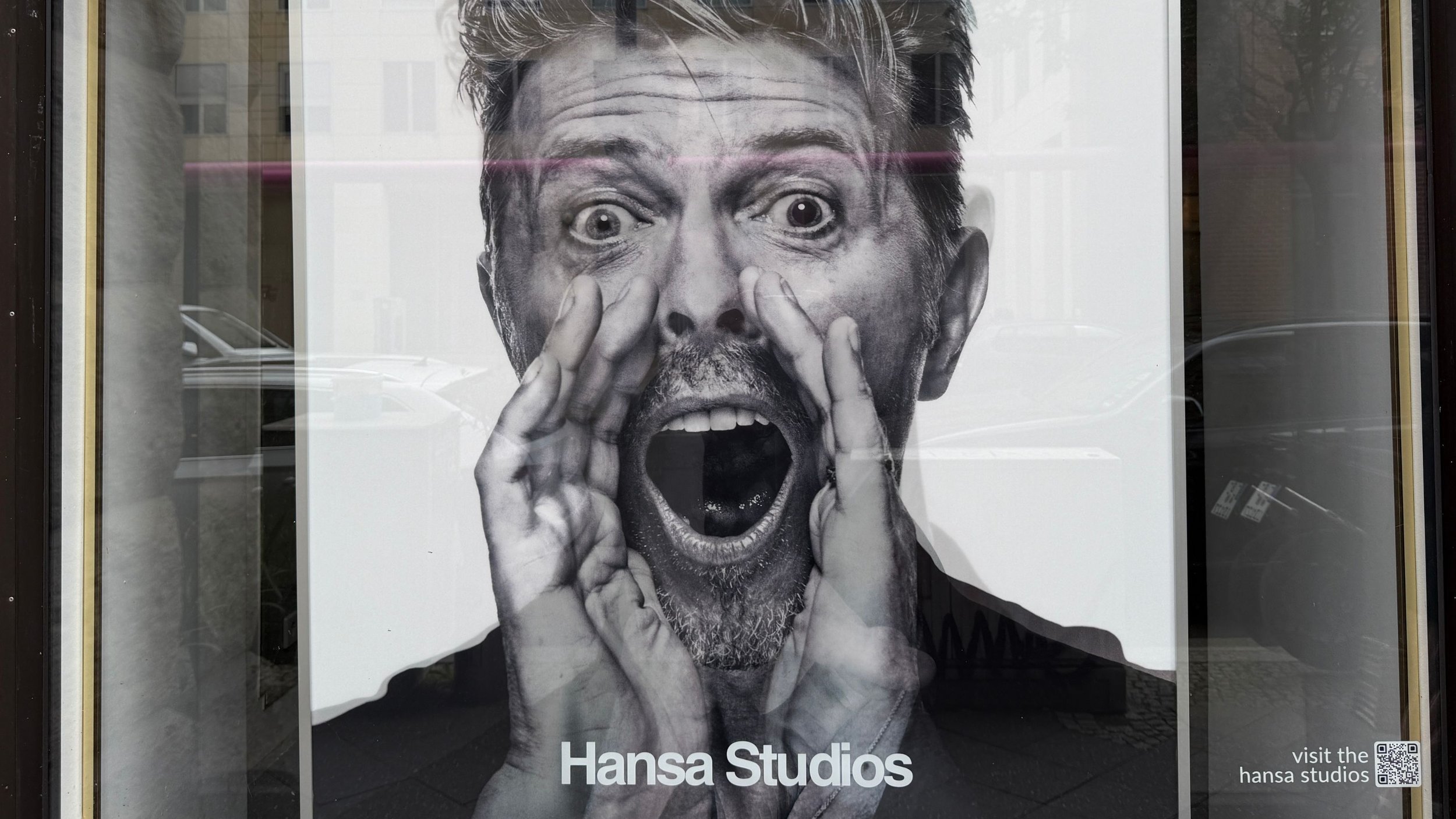
A short history of Hansa Studios
A short history of Hansa Studios in Berlin, the legendary recording space linked to David Bowie, Iggy Pop, Depeche Mode, Marillion and U2.
On a street just south of Potsdamer Platz stood one of the most famous recording studios in Europe. Hansa Studios became closely associated with David Bowie and Berlin’s late Cold War mythology, but its story reaches further than one artist or one era. For years, musicians came here to capture something of the city itself in their work.
Hansa Studios opened in 1972 under the guidance of German producer and engineer Uwe Nettelbeck. At a time when Berlin was still a divided city, the studio developed a character that few others could match. Its location, so close to the Berlin Wall, gave it a sense of tension and atmosphere that fed directly into the records made there.
Bowie in Berlin
The studio is now inseparable from David Bowie’s Berlin years. Bowie spent time in the city with Iggy Pop, and Hansa became part of the wider creative world that produced some of his most important late 1970s work. While part of Bowie’s Berlin Trilogy also reached beyond Germany, including sessions at Château d’Hérouville in France, Hansa helped define the sound and image of that period. Low and “Heroes” are the albums most closely tied to the studio, created with Brian Eno and Tony Visconti as Bowie pushed further away from conventional rock structures.
“Heroes” gave Hansa one of its most enduring legends. The line about standing by the wall seemed to collapse the distance between the studio and the divided city outside. Visconti later spoke of a kiss taking place near the wall, a detail that only added to the mythology around the song and the building where it was recorded.
Hansa’s reputation did not end with Bowie. In the years that followed, the studio drew artists who wanted a darker, more dramatic sound. Iggy Pop recorded there, and the 1980s brought in bands such as Depeche Mode, Siouxsie and the Banshees, Killing Joke and Marillion. Depeche Mode used Berlin and Hansa as part of their move into a tougher, more industrial style, recording albums including Construction Time Again, Some Great Reward and Black Celebration. Martin Gore later said they knew about Hansa because of Bowie, which says a great deal about the studio’s pull by that point.
Marillion also recorded at Hansa during a key moment in their rise, with Misplaced Childhood becoming one of the defining British rock albums of the mid-1980s. Like so many artists before them, they were drawn not only by the studio’s facilities, but by the idea of Berlin itself.
When the Berlin Wall fell in 1989, the meaning of Hansa shifted again. It was no longer simply a studio near the wall, but a place forever linked to a divided city and to the records made in its shadow. That setting had already given Hansa its place in rock history.
Achtung Baby, U2 recording in Berlin
U2 arrived in Berlin soon afterwards, at a time when both the band and the city were in transition. The group had lost some of its earlier momentum and were searching for a new direction. Their sessions at Hansa fed into Achtung Baby, the album that restored their sense of purpose and opened the door to a bolder, more adventurous phase.
That is why Hansa still holds such a powerful place in music history. It was a recording studio, but it was also a location charged with politics, geography and mood. Bowie, Iggy, Depeche Mode, Marillion and U2 all found something there that would have been difficult to recreate anywhere else. Even now, Hansa remains one of those rare studio names that carries its own story.
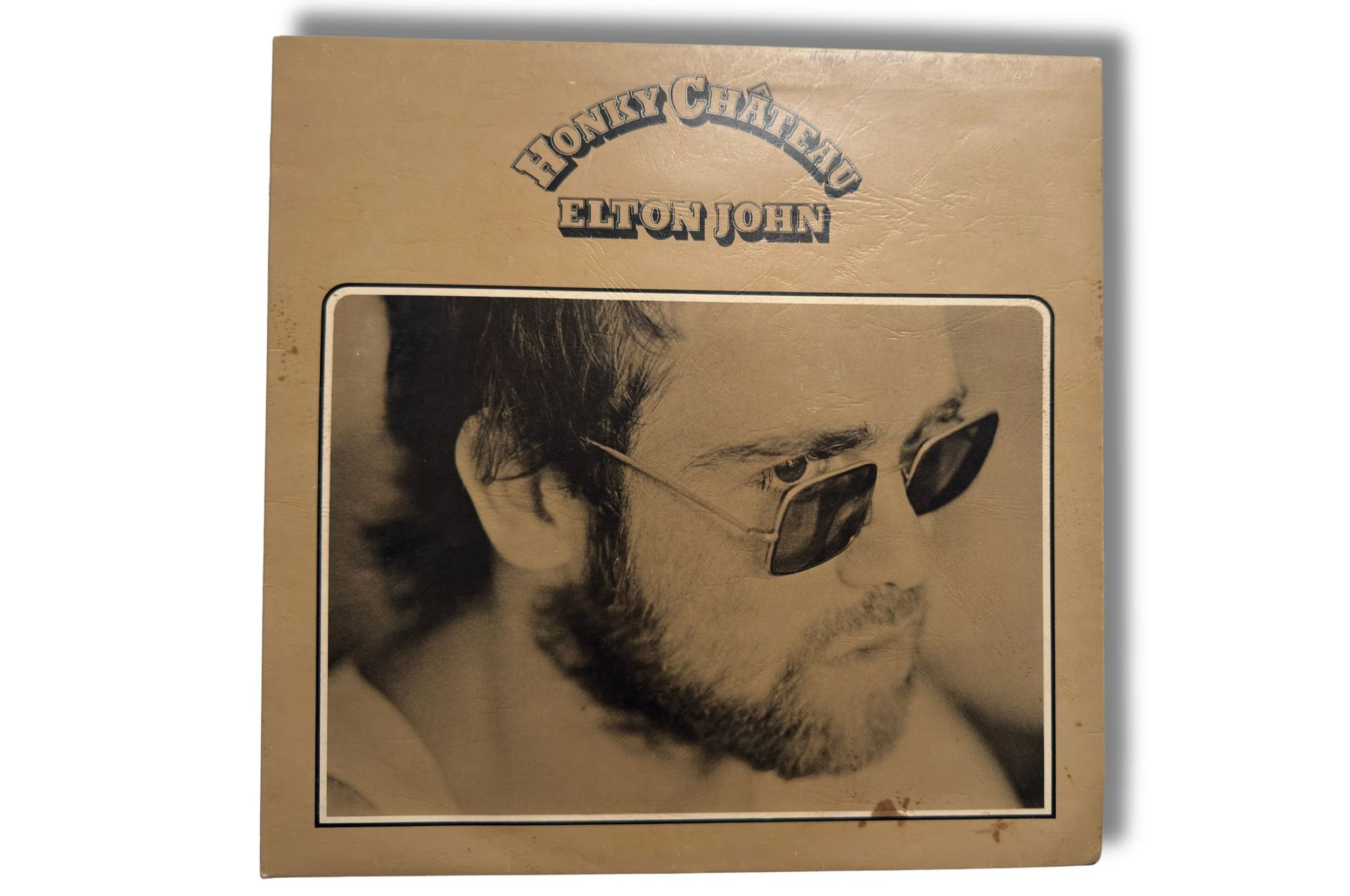
Château d’Hérouville: A French Recording Studio Used by Elton John, Bowie, Pink Floyd and the Bee Gees
Elton John recorded Honky Château in January 1972 at Château d’Hérouville, a residential studio in a quiet village north of Paris. The French countryside setting offered space, comfort, and focus, and helped spark the breakthrough run that followed, led by “Rocket Man”.
Before Goodbye Yellow Brick Road, before the sold-out stadiums and sequinned spectacles, there was a quiet village just north of Paris. It was here, in the early 1970s, that Elton John found both refuge and inspiration. The result? An album that would mark the beginning of a golden era.
So where did Elton John record Honky Château? The answer lies just north of Paris at the residential studio Château d’Hérouville. Set in the French countryside about an hour from Paris, the château offered artists something rare: space to create without distraction, yet with all the comforts needed to keep a band focused and productive.
By the time of recording in January 1972, Elton was already on the cusp of superstardom. Tumbleweed Connection and Madman Across the Water had established him as a serious artist, but Honky Château was the breakout moment. The album gave us "Rocket Man," a song that would take flight across the world—and the album’s title itself would put this quiet French studio on the map.
There’s a thread of Americana running through this period of Elton’s music. Tumbleweed Connection was overtly American in tone, and Honky Château continued that exploration — blending storytelling, space-age longing, and subtle Southern flavours. That a British artist captured this spirit while recording in a French chateau speaks to the broad appeal of Americana as a sensibility rather than a location.
Château d’Hérouville wasn’t new to music. It had been converted into a recording space in the early '60s, but it wasn’t until the 1970s that it began drawing major acts. The Grateful Dead stopped by in 1971, playing an impromptu gig in the garden. Elton recorded not just Honky Château, but returned for Don't Shoot Me I'm Only the Piano Player and parts of Goodbye Yellow Brick Road.
And Elton wasn’t the only one. Pink Floyd came here to record Obscured by Clouds. David Bowie tracked Pin Ups in 1973, and returned in 1976 for Low — the first of his Berlin Trilogy. Producer Tony Visconti would later claim the château had a "presence" that was hard to ignore. Whether that meant ghosts or just good acoustics, the place clearly had an atmosphere.
Between 1971 and 1985, the studio welcomed a remarkable list of names: Iggy Pop, Cat Stevens, Fleetwood Mac, the Bee Gees, Rick Wakeman, MC5, The Sweet, and Uriah Heep, among others. But as musical fashions changed and large residential studios fell out of favour, the château fell quiet. For a time, it was left to decay.
Today, Château d’Hérouville has been restored and returned to its roots as a recording space. Though you can’t just wander in, it still stands—an elegant reminder of the era when artists left the limelight for a countryside escape, and returned with magic on tape.
Songs & Albums Recorded at Château d’Hérouville
This quiet French château has played host to some iconic albums and tracks. Here’s a selection of the music born behind its doors:
Elton John – Honky Château, Don’t Shoot Me I’m Only the Piano Player, Goodbye Yellow Brick Road
Pink Floyd – Obscured by Clouds
David Bowie – Pin Ups, Low
Iggy Pop – The Idiot
Bee Gees – "How Deep Is Your Love?", "Stayin’ Alive" (Saturday Night Fever soundtrack)
Finding the Château
A short musical pilgrimage from Paris, Château d’Hérouville sits in the village of Hérouville-en-Vexin, just off the D928. It’s not vast, but the village is small enough that you won’t miss it.
Address:
4-6 Rue Georges Duhamel, 95300 Hérouville-en-Vexin, France
While it remains a private property, fans can still pass by and reflect on the music born behind those walls.
This is just one of many stops on the map of rock history—the kind of place that shaped records quietly, while the world turned its attention to the charts. At Wine Travel & Song, we like to think of them as musical pilgrimages: places worth seeking out, even if only from the road.