
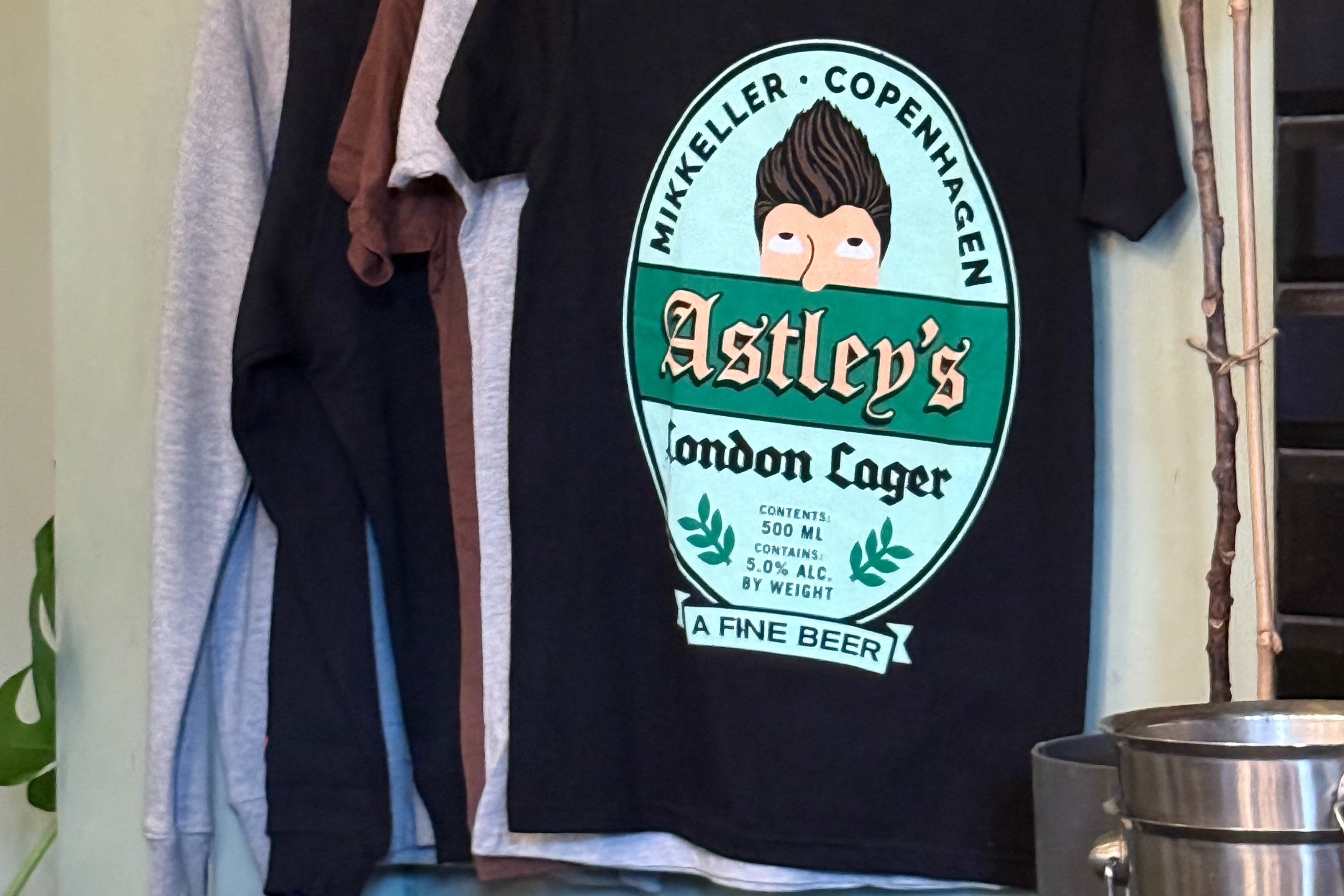
Rick Astley’s Other Hit: A Craft-Beer Bar in Shoreditch
Rick Astley’s Bar in London’s Shoreditch could have so easily been a kitsch ‘90’s throwback. Instead, his collaboration with Mikkeller created a cool bar with great beer and just a tiny nod to his pop career.
He promised he’d never give us up, and he hasn’t. He’s just serving us pilsner instead. Rick Astley’s collaboration with Danish brewery Mikkeller has become a welcome addition to East London’s growing craft-beer scene.
Rick Astley has never really gone away. Alongside regular tours and festival sets — including a crowd-pleasing turn at Glastonbury covering The Smiths — he’s kept his connection with fans alive through good humour and great shows. In 2018, he teamed up with cult Danish brewers Mikkeller to open a bar on Hackney Road, a short walk from Shoreditch High Street.
The site was once the George & Dragon, a colourful local pub known for late nights and drag shows. Astley and Mikkeller turned it into something altogether different: clean lines, pale wood, soft lighting, and twenty taps pouring beers from Copenhagen to Camden. The music still plays, but the atmosphere leans toward Scandinavian calm rather than Camden chaos.
Inside, the room feels balanced and open. The bar counter runs along the right, with light bouncing off copper taps and glazed tiles. There’s a touch of Shoreditch minimalism in the neat branding, simple glassware, and absence of neon slogans. The playlist blends indie and soul with the occasional nod to Astley’s own back catalogue. It’s relaxed, good-humoured, and easy to settle into.
The beers are the main draw. Mikkeller’s Astley’s Northern Hop Lager sits alongside small-batch sours, IPAs, and limited releases from their Copenhagen base. Staff are happy to guide you through the list, often offering a taste before you decide. Prices lean toward the premium end, but the quality makes it worthwhile.
What stands out isn’t the celebrity connection but how little it trades on it. There’s a small bit of merchandise or framed gold discs, but no massive sign above the door. Instead there is great beer and a small plaque on each table with a song lyric, or line. It feels like the kind of bar Rick himself might actually drink in: unpretentious, well-crafted, and just a touch nostalgic.
Astley once said he wanted to create “a proper pub, but with a twist.” He has done just that. Mikkeller Bar London may not make you want to dance on the tables, yet it shows how London’s music and bar culture continue to cross paths in fresh and unexpected ways.
Where is Rick Astley’s Bar?
Mikkeller Bar London
📍 2–4 Hackney Road, London E2 7NS
🚆 Nearest station: Shoreditch High Street
Open daily, with around twenty taps rotating between Mikkeller favourites and guest brews. Try Astley’s Northern Hop Lager, crisp and clean, brewed in partnership with the man himself. The crowd leans local and international in equal measure, often a mix of beer fans, creatives, and curious passers-by. Arrive early if you want a table as it fills up quickly after work.
If you are looking for other London pubs with singer association, do check out our review of Amy Winehouse’s Favourite Camden Pub or the Starman Pub on Heddon Street.
Amy Winehouse’s Favourite Pub in Camden – The Hawley Arms
The Hawley Arms in Camden was Amy Winehouse’s favourite London pub — a place where she poured pints, sang for friends, and found a rare sense of calm. Today, it remains a landmark for music lovers retracing her footsteps.
Tucked behind Camden Market, The Hawley Arms is more than just another North London pub. It’s where Amy Winehouse felt at home, pulling pints, chatting to locals, and ordering her favourite drink, the Rickstasy. Today, it remains a place of modern music history, almost hidden in plain sight, until you go round the back..
Amy’s Local
Just off Camden Lock, on the corner of Castlehaven Road and Hawley Crescent, The Hawley Arms looks like any other old London pub. Black frontage, brass fittings, frosted glass. But inside and you’ll find something closer to a living scrapbook of Camden’s musical years.
This was Amy Winehouse’s local. She drank here, sang here, and often jumped behind the bar to pour a pint. When a fire tore through the building in 2008, she helped raise money to get it open again.
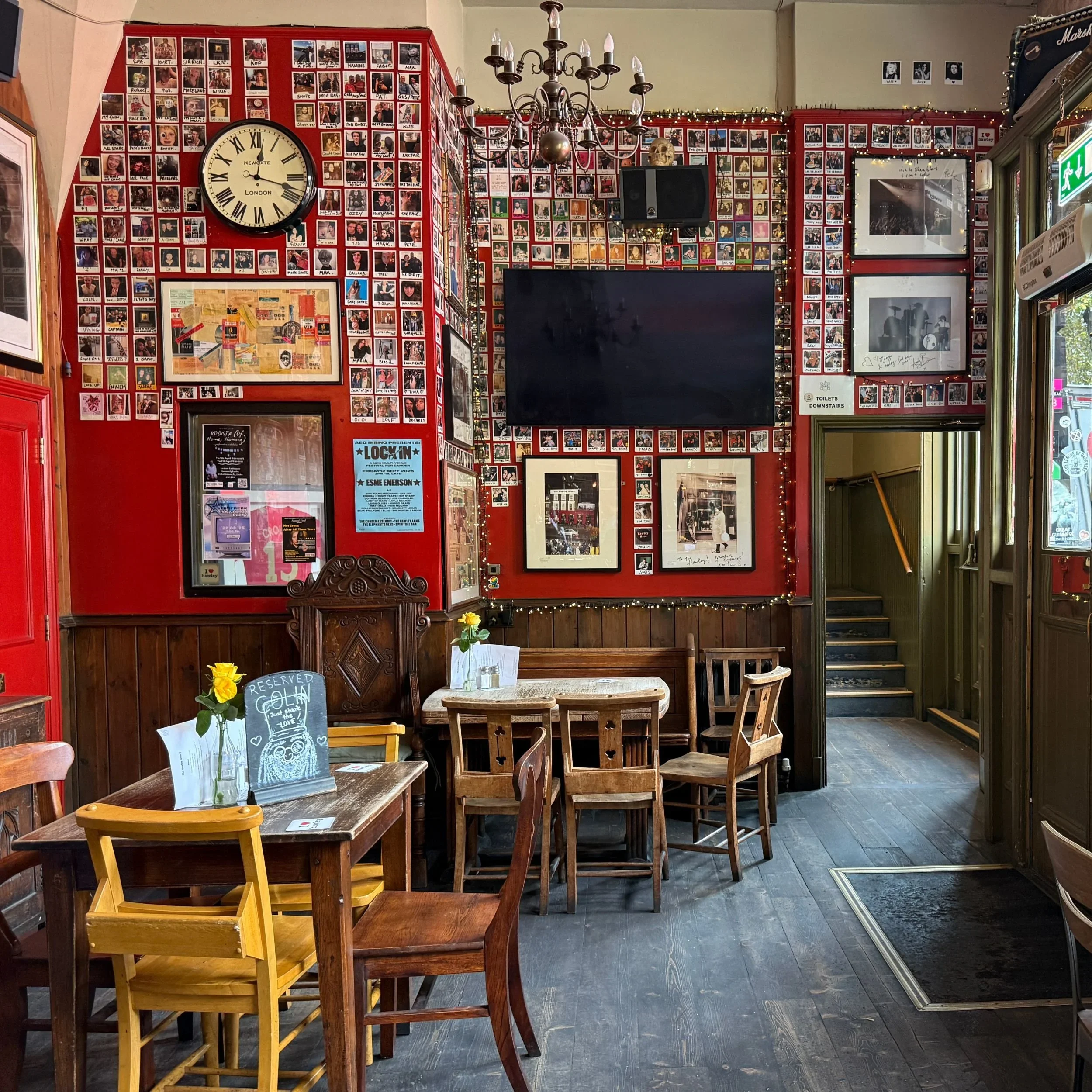
Inside the Hawley Arms pub
Inside, the walls are deep red and lined with photos, gig posters and old set lists. A signed Back to Black sleeve glows behind the bar lights. Nearby hangs a Libertines setlist, framed beside a run of Polaroids and autographs from bands who once called this their spot too. The furniture doesn’t match, the clock over the bar leans a little, and there’s a chandelier that looks like it’s survived a few good nights. It feels unvarnished and genuine like a proper local pub not a memorial or Macabre theme park.
The Rickstasy Cocktail
Amy’s drink of choice was the Rickstasy, a mix as strong and unpredictable as it sounds. It’s made with three parts vodka, one part Southern Comfort, one part banana liqueur, and one part Baileys. Sweet, creamy, and deceptively smooth, it became something of a legend in its own right. Just don’t ask for it a the Haughley Arms as they won’t serve it.
A Place to Remember Amy in Camden
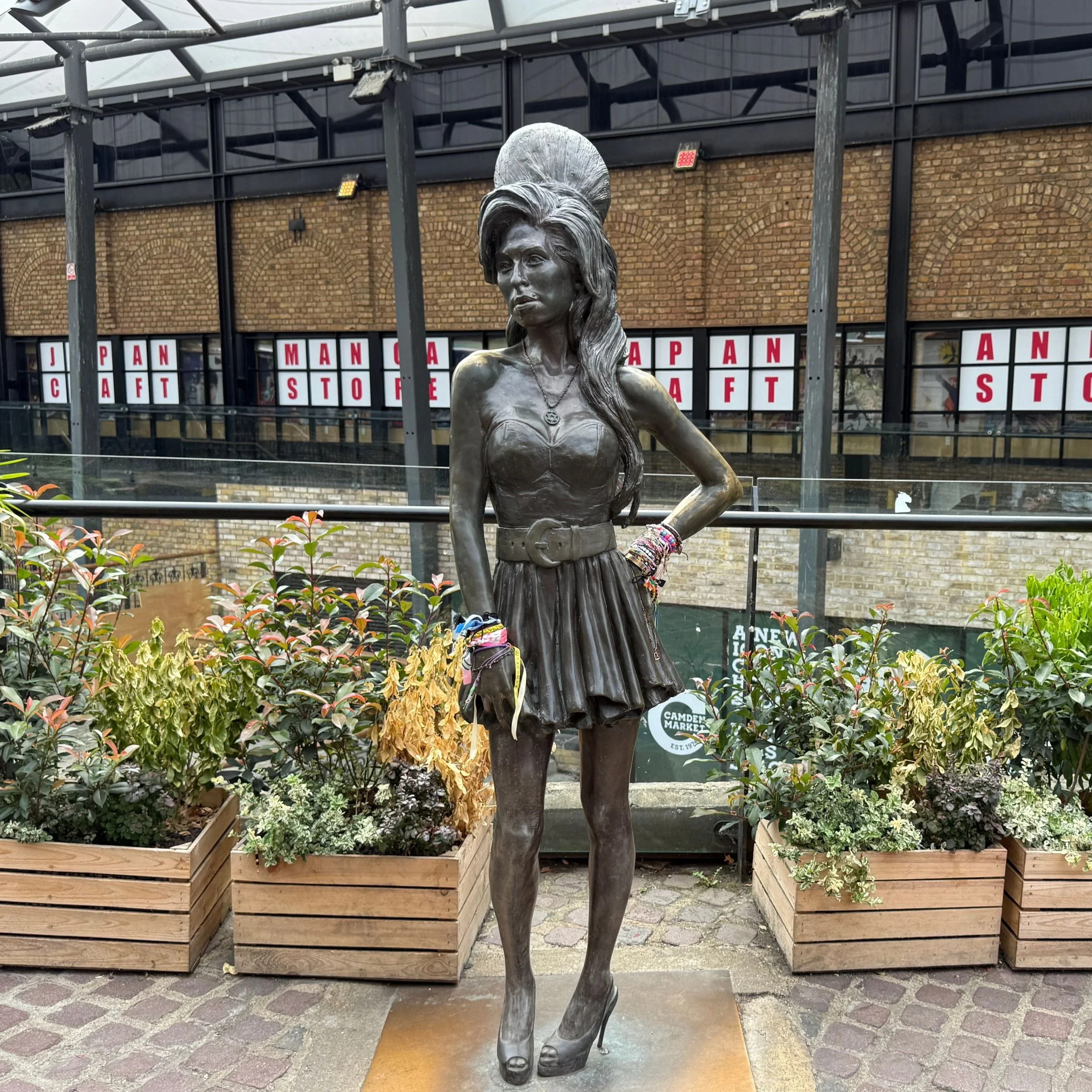
Across the road from the pub, Amy’s bronze statue stands in Camden Market, one hand on her hip, her expression. Fans still leave flowers, lipstick marks and notes.
Upstairs at The Hawley Arms, the small roof terrace looks out over Camden’s rooftops. It’s said to have been one of Amy’s favourite spots to sit and smoke, away from the crowd below. These days it’s busier, but still carries that easy, slightly scruffy charm that defines this part of London.
The Amy Winehouse Mural in Camden
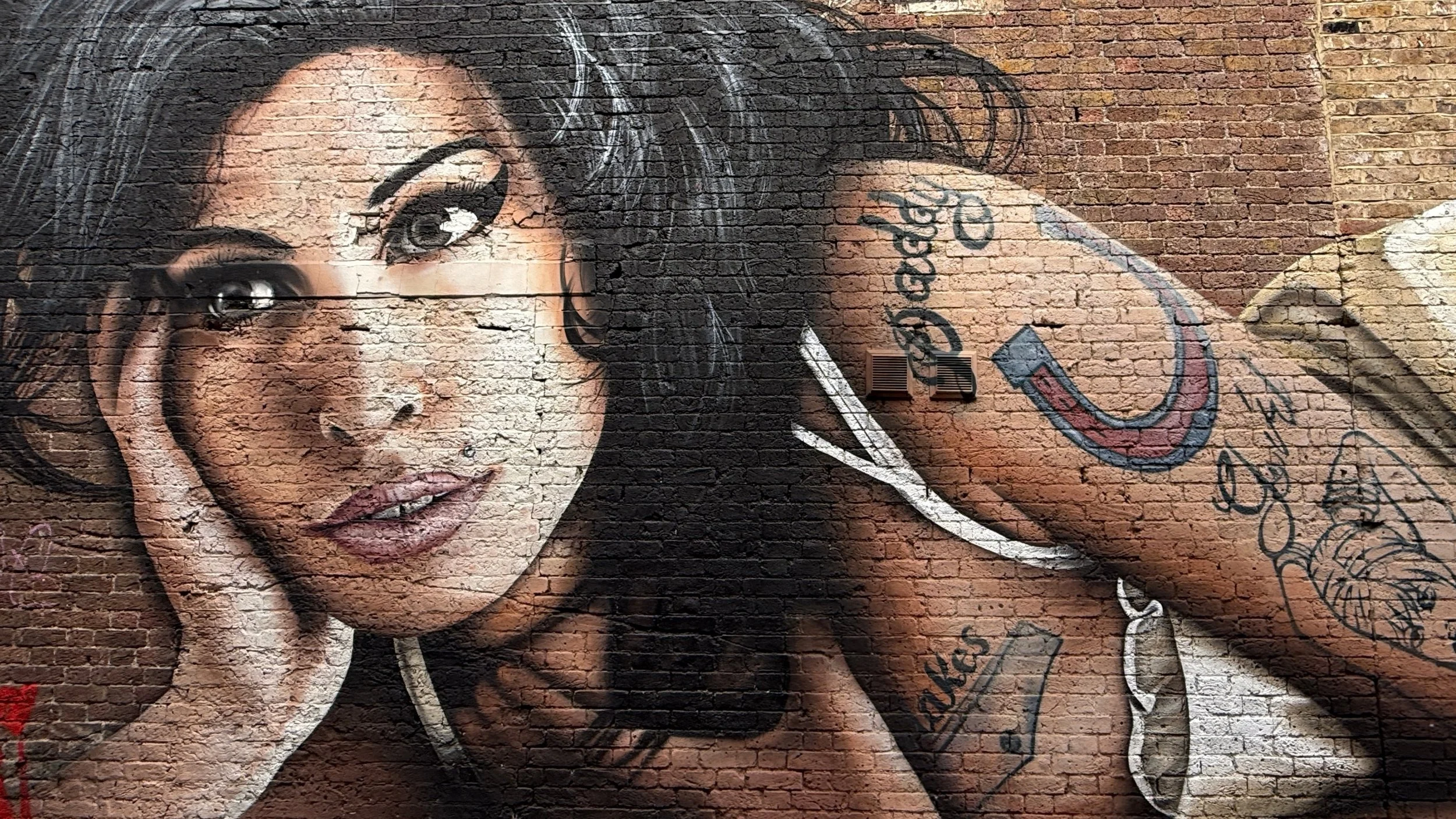
Round the back of the pub, a vast mural stretches across the brick wall. It shows Amy reclining, her hand under her chin, eyes fixed on the street. The detail is extraordinary — the tattoos, the eyeliner, the softness in her face.

The large Amy Winehouse Mural behind the Hawley Arms pub
Visiting Today
You’ll find The Hawley Arms at 2 Castlehaven Road, Camden, London NW1 8QU — just a few minutes from Camden Town Underground. Early afternoons are best if you want to take in the walls and photographs before the crowds arrive. Later in the day, it fills with the usual mix of locals, visitors, and the occasional musician back to see what’s changed.
A Last Toast to Amy
The Hawley Arms is still a working pub, not a museum. That’s what keeps it special. You can walk in, order a pint, and sit under the framed Back to Black sleeve without ceremony. It’s a small corner of Camden where the past hasn’t been polished away.
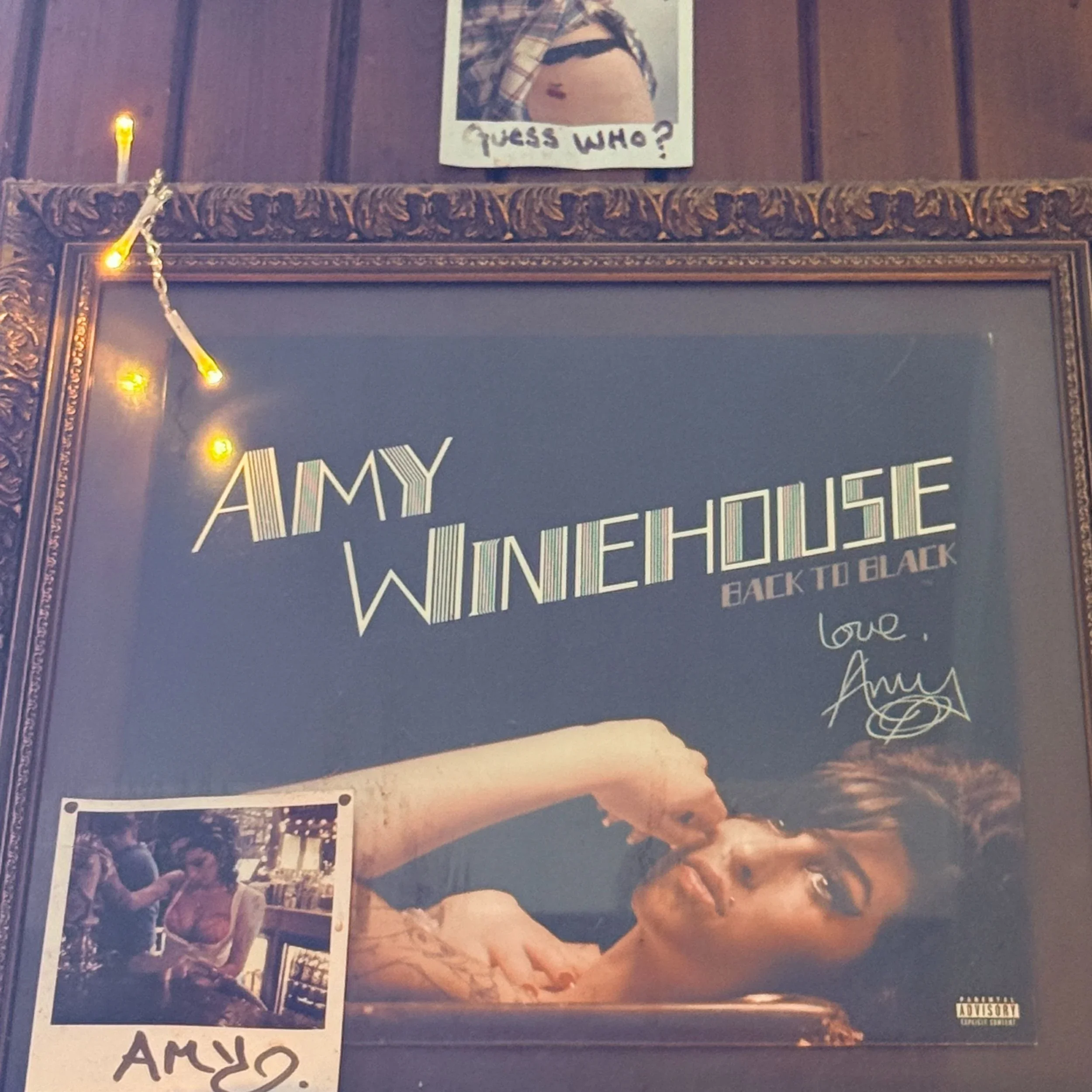
Amy Winehouse memories at the Hawley Arms
You can find The Hawley Arms, along with other stops on London’s musical map, in our guide to the city’s rock and roll landmarks.
If you are looking for more bars with music associations, check out our review of Rick Astley’s Mikkeller Bar in Shoreditch or look out for the Starman, a nod to David Bowie on Heddon Street.
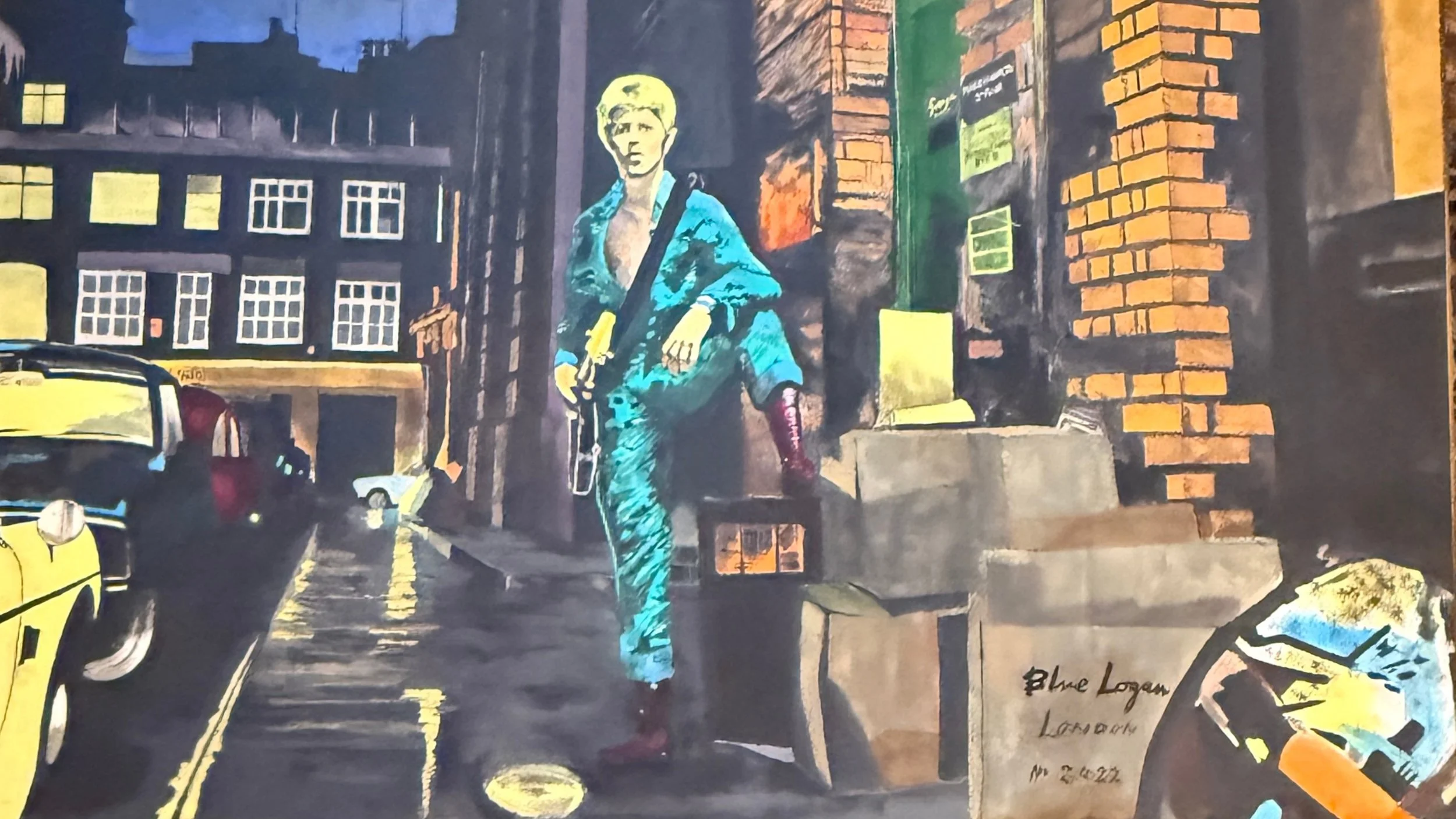
The Starman, Heddon Street: London’s David Bowie Pub
Tucked away just off Regent Street, The Starman brings subtle rock 'n' roll heritage to Heddon Street. Sitting metres from where David Bowie posed for the Ziggy Stardust album cover, it pairs classic pub comfort and great food with an unmistakable nod to London music history.
Just off Regent Street, The Starman brings a touch of Bowie-inspired charm to one of London’s most famous musical streets. Set metres from the Ziggy Stardust album cover location, it’s a stylish, easy-going pub that balances good food, great drinks, and a quiet connection to Bowie’s legacy.
You’ll find The Starman tucked away on Heddon Street, a quiet lane just off Regent Street that has become one of London’s most recognisable music landmarks. Only a few metres from the blue plaque marking the spot where David Bowie posed for the Ziggy Stardust and the Spiders from Mars album cover, this is a pub that wears its inspiration lightly but proudly.
The Starman opened in 2022, taking over the site of the former Strawberry Moon bar and giving the space a far more refined feel. The transformation has turned what was once a late-night club into a relaxed, all-day venue that works just as well for after-work drinks as it does for a Saturday lunch.
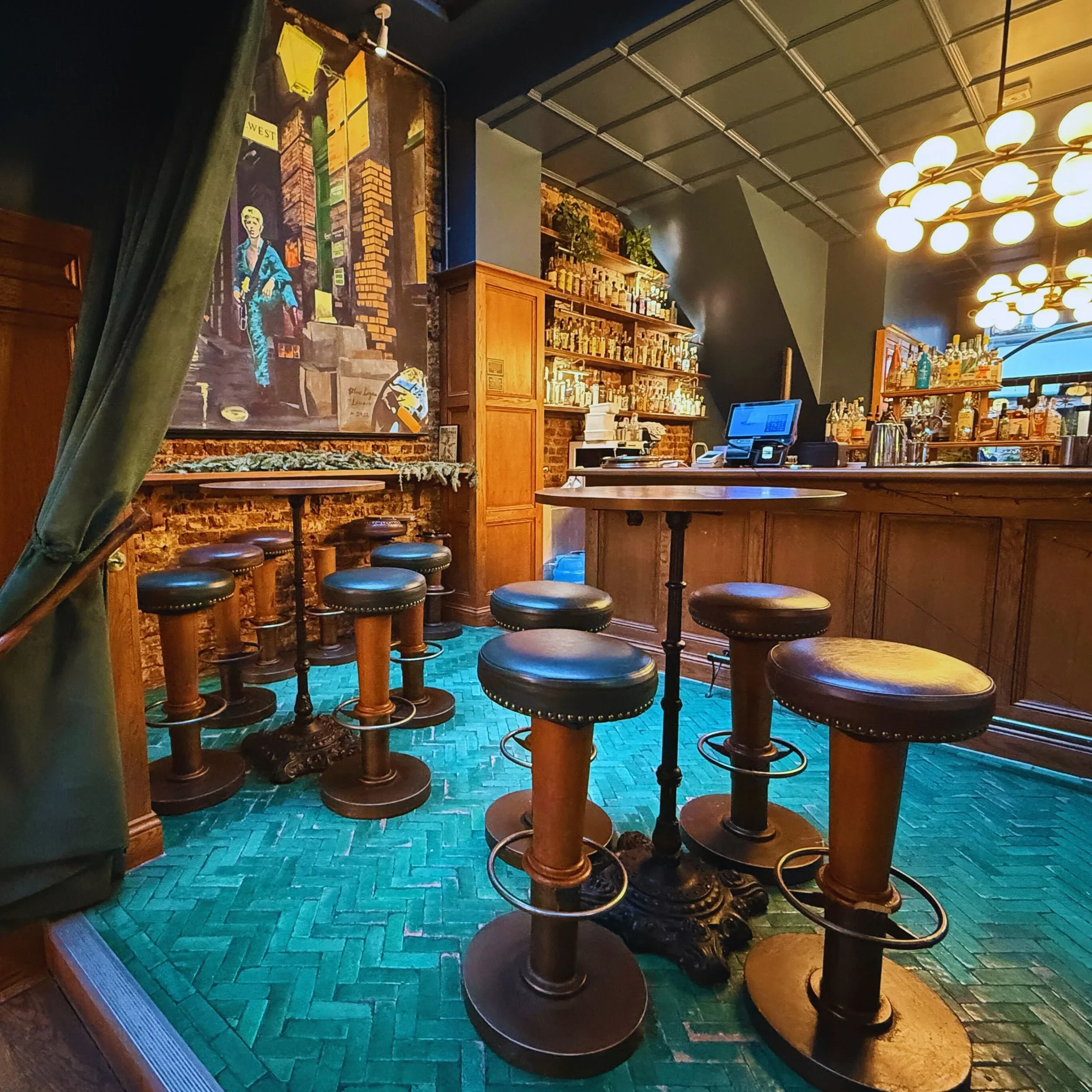
Inside, the nods to Bowie are subtle but unmistakable. A huge painting of the Ziggy Stardust album cover fills one wall, catching the glow of the hanging lamps above. The neon sign over the staircase is the umistakable Aladdin Sane. It’s not a theme bar, nor is it filled with memorabilia, but it’s impossible to miss the connection to the street’s most famous moment.
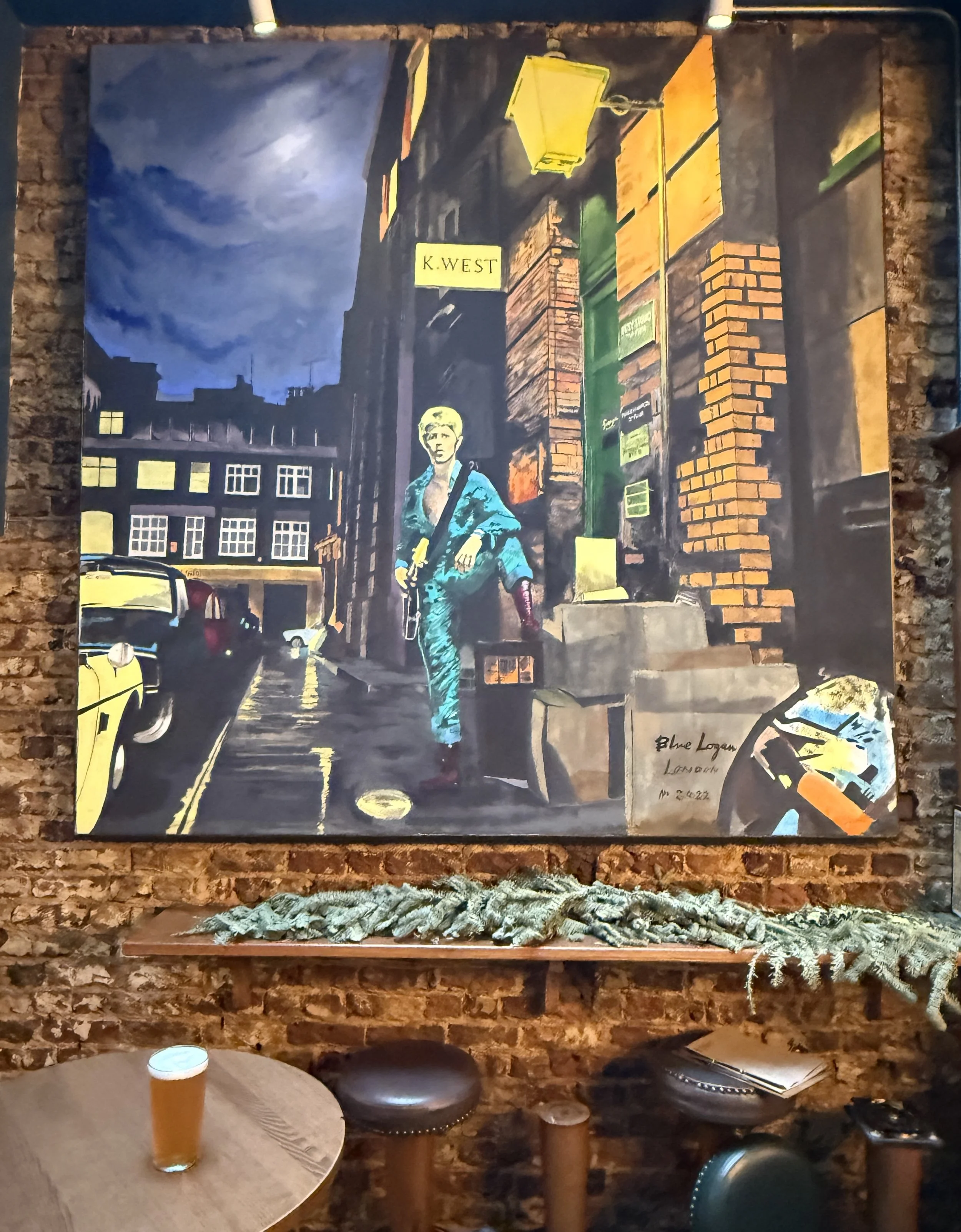
The large Ziggy Stardust mural at the Starman Pub on Heddon Street
The menu is a pleasant surprise. There’s a proper mix of pub classics and lighter dishes, with the lobster roll being a particular highlight. The bar serves a solid range of beers, including ‘no and low’ acohol beers like Lucky Saint alongside well-made cocktails, all at the standard West End price point. The atmosphere feels relaxed, with enough space to sit comfortably whether you’re visiting solo or meeting friends. I often duck in for a quick pint before catching up with friends.
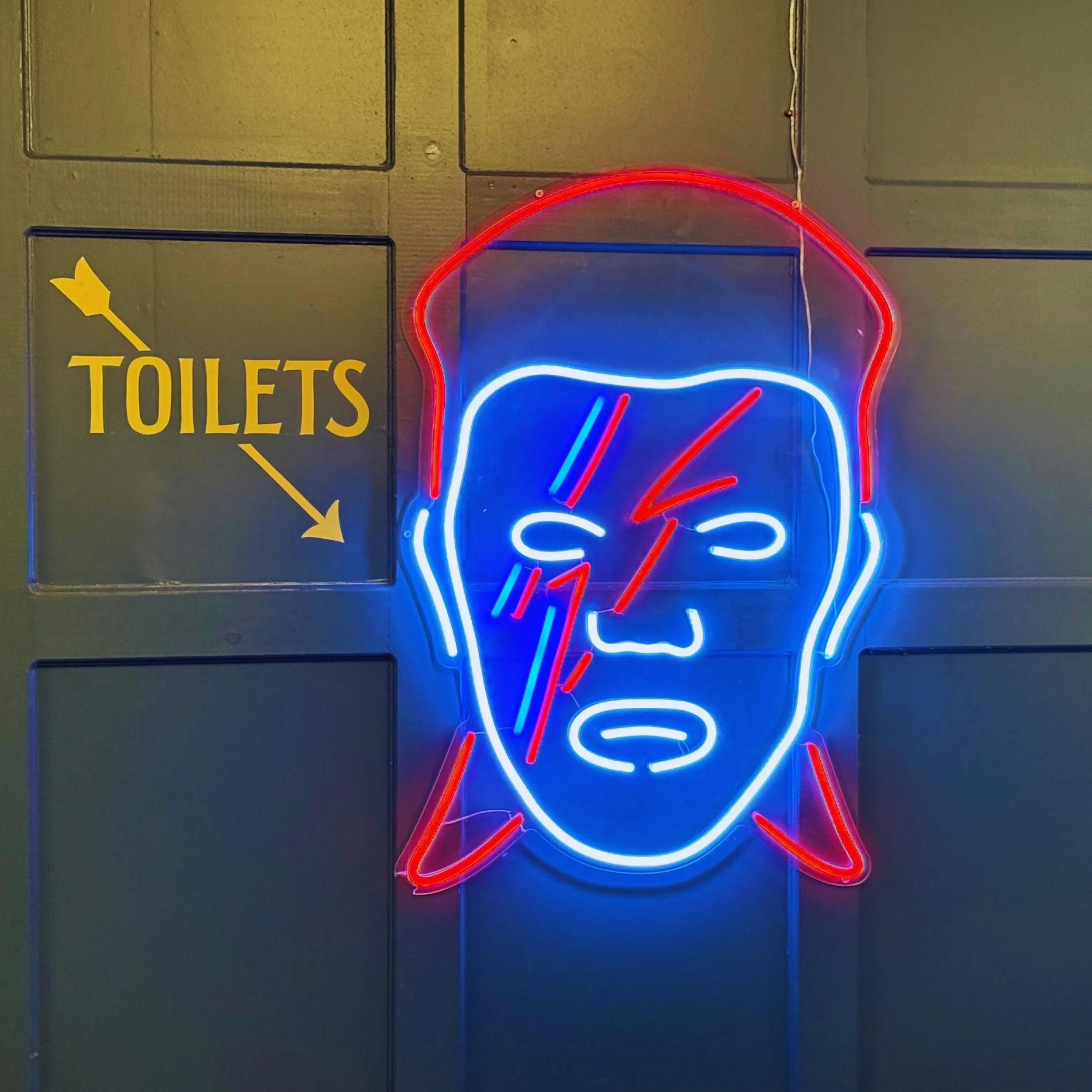
Aladdin lights the way
What makes The Starman work is balance. It’s a genuine London pub first, with a quiet affirmation for its musical setting. You won’t find Tin Machine on the stereo or Ziggy-inspired cocktails, but you will find good food, and friendly service
For Bowie fans, it’s a chance to pause right where it all happened. For everyone else, it’s simply a great spot to escape the bustle of Regent Street.
And as you step back out onto the cobbles of Heddon Street, you’re reminded that this small alley has played its part in music history, only a short walk from Apple HQ on Savile Row, where another band once made history on a rooftop not so far away.
Where to find the Starman Pub
You can find the Starman on ‘Ziggy Green’ at 15 Heddon Street London, W1B 4BF, just metres from his Blue Plaque.
Other London Pubs with Musical Connections
If you are on the hunt for more pubs with musical connections, do check out Rick Astley’s bar in Shoreditch or Amy WInehouse’s favourite pub in Camden.
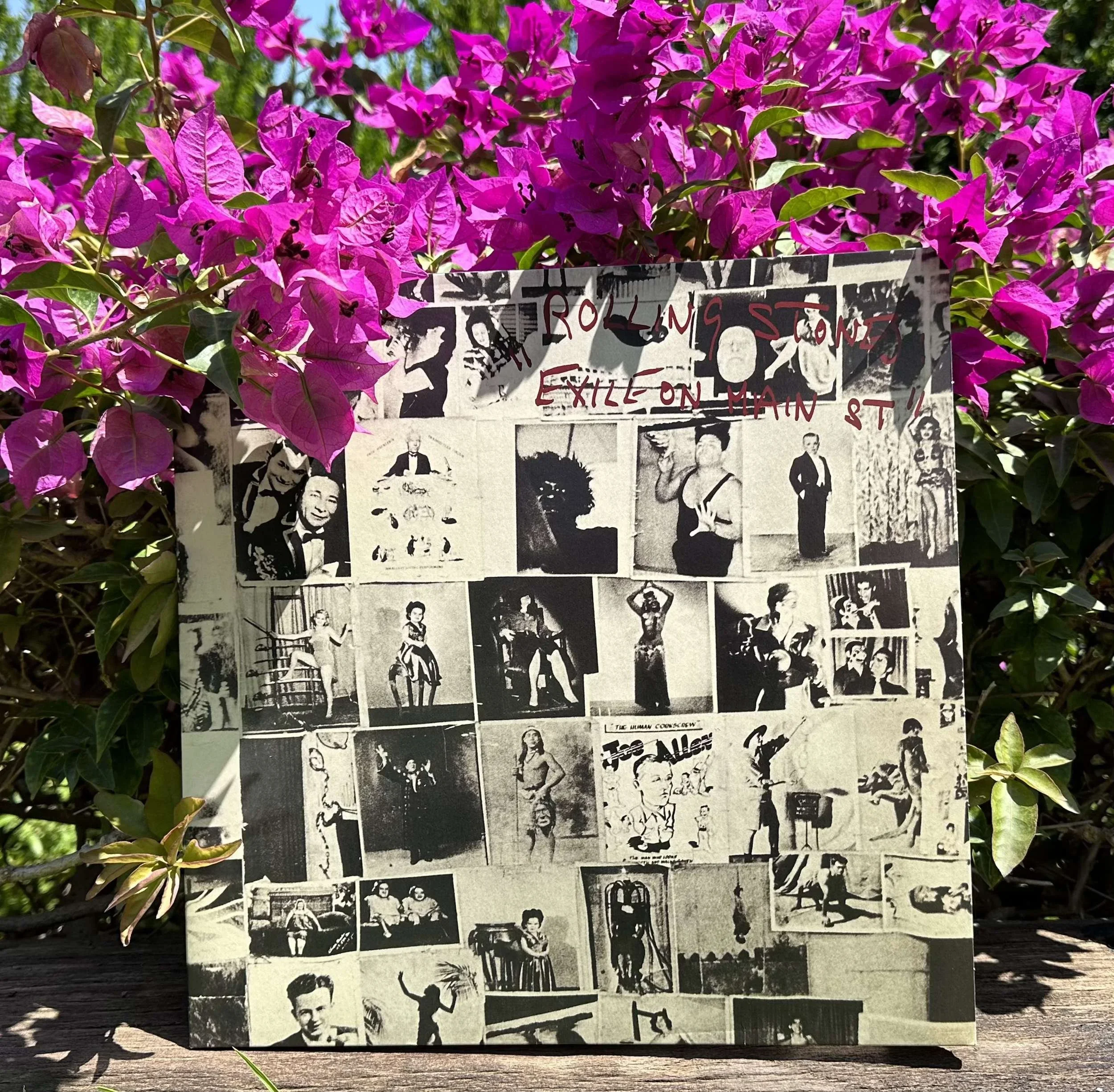
Where is where Exile on Main Street’s Villa Nellcôte ?
This South of France villa became famous as the recording location for Exile on Main Street, the classic Rolling Stones album. See pictures from the location and learn how you can visit (and what you can see) in 2026.
The Villa Nellcôte, in Villefranche Sur Mer has to be one of the most fabled locations in rock n roll history. It was here that Keith Richards moved in October 1971 to avoid high taxes in the UK. It is here where the Rolling Stones would congregate and record their classic album, Exile on Main Street.
“When I first saw Nellcôte, I thought that I could probably handle a spell of exile. It was the most amazing house, right at the base of Cap Ferrat, looking out over Villefranche Bay. ”
"Villa Nellcôte was built in the late 1890s by Eugene Thomas, a former banker. The villa was built imposingly, decorated elaborately framed by iconic columns made from marble. It is in an amazing location on the waterfront, in what has been voted one of the worlds most beautiful bays on many occasions." (thanks HomeHunts.)
Sitting between the sea and the railway line, Villa Nellcôte is just like any other high gated villa in the South of France. For a musical pilgrim like myself it was great to put a location to the many stories that have flown from this villa.
Where was Exile on Main Street recorded?
The Rolling Stones recorded Exile on Main Street primarily at Villa Nellcôte in the South of France. Some tracks had been started earlier during the Sticky Fingers sessions at Stargroves, Mick Jagger’s English country home, in 1969. The Rolling Stones’ mobile studio was later driven down to the Riviera so the band could record directly at the villa.
Overdubs and production were completed at Sunset Sound in Los Angeles.
As tax exiles, the band immersed themselves in a hedonistic lifestyle while crafting a raw, bluesy sound that captured the spirit of the times. Released in May 1972 the album is a bonafide classic album and for many the very best album released by the Stones. I personally prefer Sticky Fingers but that's another story.
Exile is one of a handful of classic albums recorded in the South of France.
Whilst the stories from this time are legendary, and mostly true it is amazing to think some of my idols walked these paths, and possibly drank in some of the local bars or restaurants that are still here today.
Where did the Rolling Stones live during their Tax Exile?
Villa Nellcôte was rented by Keith Richards, and while it became the unofficial headquarters for the band and assorted hangers-on, it was not where the other Stones chose to live during their exile in France. Charlie Watts moved his family to Arles, north-west of Marseille. Bill Wyman was a little closer, settling in Vence, north-west of Nice, while Mick Taylor lived in Grasse, just inland from Cannes. Mick Jagger divided his time between Paris and Biot, a small town between Nice and Cannes.
How to find Villa Nellcôte
The villa address is 10 Av. Louise Bordes, 06230 Villefranche-sur-Mer, France. Whilst the address is in Villefranche, it is closer to Beaulieu. I walked down from Beaulieu to get my pictures.
You can drive past the gates but there isn't anywhere to park up. Alternatively you can walk to the villa in around 20 minutes from the Beaulieu-sur-Mer train station (with regular trains to and from Nice and Monaco.) It's around 30 minutes from the Villefranche SNCF railway station.
It is also less than 10 minute walk from the Royal Riviera Hotel.
Do remember this is a private residence if you visit.
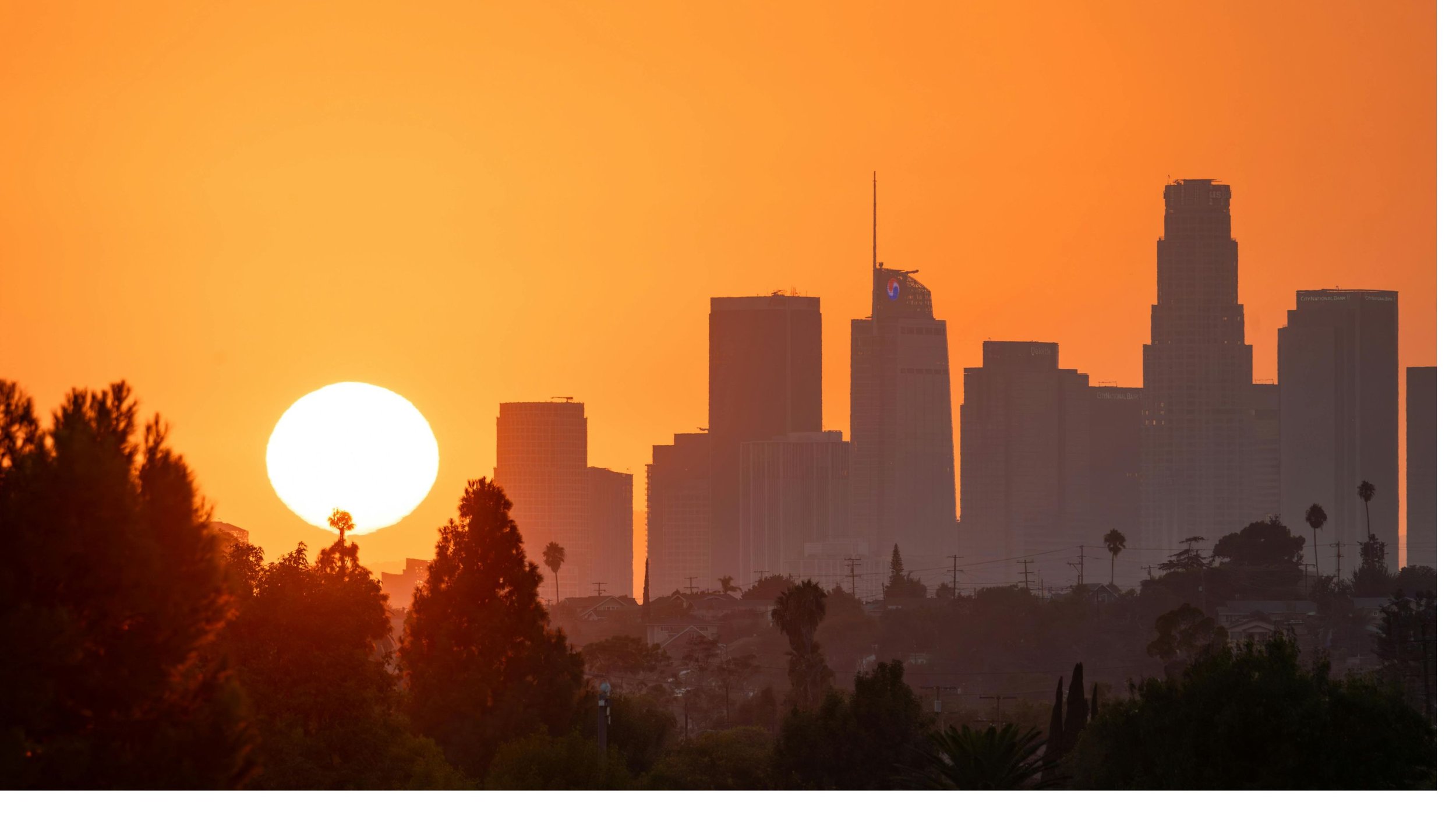
Mapping the Myth: The Definitive Los Angeles Rock n' Roll Landmarks
Los Angeles exists as a living archive of rock folklore, where physical geography directly shaped the soundtrack of our lives. It is a sprawling landscape where legendary sounds took form across hidden hillsides, isolated canyons, and neon-lit boulevards—leaving behind a tangible trail of monuments you can still visit today. To truly understand the music of the Vinyl Era, you must explore the concrete and corners where it was captured. This is the definitive map to the Los Angeles music landmarks.
Los Angeles exists as a living archive of music history, where legendary sounds took shape across sun-drenched hillsides, hidden studios, and iconic streets. From the bohemian retreats of Laurel Canyon to the grit and glamour of historic music venues along the Sunset Strip, these locations formed the vivid backdrop to the soundtrack of our lives. They are the spaces where masterpieces were written, performed, and captured on timeless album covers—leaving behind a map of cultural landmarks you can still stand in front of today. This guide explores the most important rock and roll landmarks in Los Angeles, supported by links, videos, songs, and maps to help you navigate the city’s musical past.
But where did it happen, and where can you still see it? This guide explores the rock and roll landmarks of Los Angeles you can visit today, supported by links, videos, songs and maps to help you navigate the city’s musical past. We recommend saving these locations to Google Maps before exploring Los Angeles, as many of the most important rock landmarks are spread across the city.
Historic Rock n' Roll Hotels and Neighborhoods of LA
Not every rock star lived permanently in Los Angeles. Some passed through for recording sessions or tours, while others, including John Mayall, Graham Nash, Neil Young and Joni Mitchell, made the city their home. Few addresses are more closely associated with this period than Laurel Canyon.
Laurel Canyon
No place captures the spirit of the Sixties and Seventies LA scene quite like Laurel Canyon. Nestled in the Hollywood Hills, this quiet neighbourhood once housed the likes of Joni Mitchell, Jim Morrison, Frank Zappa, and the members of Crosby, Stills, Nash & Young. It is where Joni met Graham Nash who met David Crosby and Stephen Stills. It is where Nash would later write “Our House” about his time living with Joni at her house on 8217 Lookout Mountain. It is also where one of the most famous pictures of Joni was taken by friend and Canyon neighbour Henry Diltz.
You might know some of the other addresses in Laurel Canyon, like Blue Jay Way where not one, but two classic songs were written. Two classic songs, both recorded in the same house on Blue Jay Way in LA's Laurel Canyon.
John Mayall visited the Canyon in 1968 and ended up staying, living at 8353 Grandview Drive. He wrote a full album about the place, Blues from Laurel Canyon (1968), which includes song titles like “Walking on Sunset” and “Laurel Canyon Home”.
And how about another song from the Canyon? This time from another resident, Jim Morrison. “Love Street” was written about the street behind the Canyon Country Store about half way down Laurel Canyon Boulevard. The store is also a cool place to check out. It was the go-to place for the Canyon-dwelling rock stars and still has a distinct feel to it today. Pop in for some snacks and check out the pictures on the walls. Who can you spot?
There are too many stories and stars from Laurel Canyon to mention here but we do recommend following this great Instagram account for more tales like this one.
Topanga Canyon: Eagles and Young in the Hills
Head west from Los Angeles and you’ll eventually reach Topanga Canyon, a winding road that cuts up from Pacific Coast Highway at Malibu through the rugged Santa Monica Mountains. Unlike Laurel Canyon—minutes from Sunset Boulevard and the Hollywood Strip—Topanga always felt a little further out, a little wilder.
In the late sixties and early seventies, this remoteness made it a magnet for musicians, poets, and artists chasing a freer way of life. Rustic cabins, dirt roads, and an anything-goes atmosphere gave Topanga a different character to its more famous neighbour.
For the Eagles, it was an early base. Glenn Frey and Don Henley both spent time here during the band’s formative years, part of a scene that also included Neil Young and members of Crosby, Stills & Nash. This location inspired much of Young’s After the Gold Rush (1970) period. There is a story that David Crosby was inspired by the view from Young’s Topanga Canyon home to write the classic “Wooden Ships” with Paul Kantner from Jefferson Airplane. There seems to be a few differing stories on the writing location so take that with a pinch of salt.
That mix of rural seclusion and West Coast cool seeped into the Eagles’ first records. The canyon’s wide-open feel can be heard in songs like “Take It Easy”, while the band’s harmonies were sharpened in the same hillside cabins that echoed with so much music of the era. What looked like a peaceful, easy feeling was anything but.
Drive Topanga today and you’ll still catch glimpses of that spirit—weathered shacks, hand-painted signs, and sudden views out to the Pacific. It remains one of LA’s most evocative rock landmarks: a canyon where the Eagles quietly found their wings.
Venice Beach
Venice Beach deserves a mention as the spiritual birthplace of The Doors. It was here that Jim Morrison and Ray Manzarek first shared the idea of starting a band, their conversations drifting between poetry and possibility. They took their name from The Doors of Perception by Aldous Huxley—itself a nod to opening the mind.
Head to Speedway & 18th Place Venice, CA 90291 to see this huge mural to Jim Morrison. A few years back the mural was updated, changing the colour from blue to red but it still looks cool!
Chateau Marmont
A true rock and roll refuge. Possibly no greater rock n' roll landmark exists in Los Angeles. As Harry Cohn of Columbia Pictures once said, "If you must get into trouble, do it at the Chateau Marmont." This West Hollywood hideout has seen it all—Jim Morrison dangling from windows, John Belushi’s final days, and countless band breakups, makeups, and misadventures. Michael Hutchence was a regular guest.
It was also the home for Daisy Jones for a while. If you haven’t seen it yet, Daisy Jones & The Six delivers a brilliant story, great songs and plenty of LA landmarks on screen! The Chateau is a blank canvas for rock stars to make their own, but you can stay there too. Headed note paper for guests of the Chateau is a timeless touch.
The Riot House (Andaz West Hollywood)
Keith Richards threw a TV out the window here whilst Led Zeppelin allegedly rode motorbikes through the corridors. It's rock mythology mapped to a single, historic West Hollywood zip code. While the balconies have been enclosed and the wildness tamed, the echoes still linger. Today, you can stay here and look out toward the Whisky, the Rainbow, and the Roxy just across Sunset. This is where Robert Plant proclaimed, “I am a Golden God!” This was the ultimate snapshot of rock at its dangerous peak.
The Beverly Hills Hotel
Immortalised on the cover of Hotel California (1976), the Beverly Hills Hotel is more than just a pink stucco landmark—it’s a symbol of LA’s seductive promise. While the Eagles used it as a metaphor for excess and illusion, the hotel itself has long been a real-life playground for the rich and recognisable. These days you’re more likely to spot Hollywood royalty beneath the palms, but the aura of stardom remains. For Eagles fans, standing beneath the palm-lined portico offers a surreal sense of déjà vu—like stepping inside the album jacket.
Where Rock History Was Photographed: Iconic LA Album Cover Locations
Album covers have played a quiet but important role in turning parts of Los Angeles into rock and roll landmarks. From the doorway used for The Doors’ Morrison Hotel (1970) to the twilight shot of the Beverly Hills Hotel for the Eagles’ Hotel California, these images fixed specific locations in the collective memory, transforming ordinary buildings into places fans still seek out today.
Crosby, Stills & Nash – Crosby, Stills & Nash (1969)
Location: 815 Palm Avenue, West Hollywood
The Story: The sofa, the shack, the photo mix-up. Photographed by Henry Diltz, this now-legendary cover was taken in West Hollywood. The building was torn down the day after the shoot, leaving us with a beautiful, unrepeatable fragment of time.
The Eagles – Hotel California (1976)
Location: The Beverly Hills Hotel, Sunset Boulevard
The Story: Shot at twilight using a cherry picker to capture the hotel’s domes in golden light. It’s one of rock’s most iconic images—mysterious, alluring, and loaded with meaning. The real hotel still stands on Sunset Boulevard, palm trees and all.
The Doors – Morrison Hotel (1970)
Location: 1246 S Hope Street, Downtown LA
The Story: Another Henry Diltz classic. The band slipped into the lobby for a quick, guerrilla-style shoot that captured them framed behind the motel’s gritty window. The hotel is long gone, but the image—and the album—are pure LA. This wasn’t the only album cover they shot in LA; the cover of Waiting for the Sun (1968) was taken up on Laurel Canyon.
The Byrds – Untitled (1970)
Location: Griffith Observatory, Hollywood Hills
The Story: Shot on the stairway up to the Griffith Observatory, with the Hollywood Hills swapped for a desert vista in post-production. The cover shows the band at a transitional moment—somewhere between past glories and a new sound.
Pink Floyd – Wish You Were Here (1975)
Location: 3400 Warner Blvd, Burbank
The Story: The classic “burning man” cover was shot on the backlot of Warner Brothers Studios just over the way in Burbank. The album designers Hipgnosis (Storm Thorgerson and Aubrey ‘Po’ Powell) hired two stuntmen to perform the handshake for real whilst Po took as many photos as possible.
The Legendary Rock and Roll Venues of the Sunset Strip and Beyond
Live music venues have been central to Los Angeles’ rock and roll story, often serving as testing grounds where careers were shaped in front of small, local audiences. From Sunset Strip institutions like the Whisky a Go Go and the Troubadour to large-scale venues such as the Hollywood Bowl, these places remain some of the most tangible rock and roll landmarks in the city, many of them still hosting live music today.
The Roxy: Owned by Lou Adler and briefly David Geffen, it hosted everyone from Neil Young to Genesis. Frank Zappa recorded his live album Roxy & Elsewhere (1974) here in 1973, capturing the club's gritty, energetic atmosphere.
The Troubadour: Perhaps the most important singer-songwriter venue in LA. This is where Elton John played his first US performance in 1970—an electric night that earned him instant acclaim. The club also nurtured the careers of Linda Ronstadt, Jackson Browne, the Eagles, and Joni Mitchell.
The Rainbow Bar & Grill: A short walk from the Whisky and just across the street from The Viper Room, the Rainbow has always been more than a bar. It was Lemmy's second home, John Belushi’s last supper, and the backdrop for countless rock stories. From its walls of memorabilia to the heavy metal heyday of the 1980s, the Rainbow remains a living landmark. From here, look up to see The London West Hollywood Hotel—a modern vantage point with a view across rock history. (Read more about our stay at The London West Hollywood).
Hollywood Bowl: Not far from the Strip, this open-air amphitheatre has hosted everyone from The Beatles to The Rolling Stones, Monty Python and more recently David Gilmour’s Luck and Strange Tour. It’s a bucket-list venue for performers and fans alike—and worth a detour if you’re in town for a show.
Legendary Los Angeles Recording Studios
Recording studios are often hidden from view, but in Los Angeles some have become landmarks in their own right. These are places where albums were recorded, ideas took shape and careers were defined. No studio better represents that legacy than Capitol Records, whose distinctive tower on Vine Street remains one of the most recognisable recording studios in the world, rivalled only, perhaps, by Abbey Road.
Inside the Capitol Records Tower, the acoustics are flawless, the ghosts of sessions past hang in the air, and the house band was none other than the Wrecking Crew—an elite group of session musicians who quietly played on countless hits from the ’60s and ’70s. Artists came for the sound, but they stayed for the myth. From The Beach Boys' Pet Sounds (1966) to Prince's Purple Rain (1984), so much of LA’s musical soul was laid down in these rooms.
Sunset Sound: Where The Doors laid down their first two albums, The Doors (1967) and Strange Days (1967). The Rolling Stones also completed tracking for Exile on Main Street (1972) here. Prince, Zappa, and the Beach Boys all followed.
The Record Plant: The legendary birthplace where classics like Hotel California (1976), Fleetwood Mac's Rumours (1977), and Guns N' Roses' Appetite for Destruction (1987) were tracked.
EastWest Studios: From The Mamas & the Papas' “California Dreaming” to Michael Jackson's Thriller (1982), the walls of this place have heard it all.
Street-Level Music Landmarks and Visual History
Not every rock and roll landmark in Los Angeles is a studio or a stage. Some of the city’s most memorable music moments happened in ordinary places—rooftops, street corners and intersections that became landmarks through a single performance, photograph or filmed moment.
Republic Liquor – U2
On March 27, 1987, U2 took to the rooftop of a downtown liquor store at 7th and Main to film a live video for “Where the Streets Have No Name.” The impromptu performance stopped traffic, drew a crowd, and paid homage to The Beatles’ rooftop farewell. Today, the building houses Margarita’s Place, but for any music lover standing on the pavement at 7th and Main, you are looking up at the exact spot where a single performance halted a city.
Heart Attack & Vine – Tom Waits
A rough, poetic corner of Hollywood, immortalised in song by Tom Waits. The phrase—a twist on the intersection of Hollywood and Vine—became the title of the track “Heartattack and Vine” from the album Heartattack and Vine (1980), later covered by Screamin’ Jay Hawkins and used in a Levi’s ad. More than a location, it’s a mood: all neon buzz and late-night regret.
Griffith Observatory
This iconic LA landmark has deep musical connections. Beyond the silver screen, it serves as a serene spot for reflection. There is a bust of James Dean and a tree planted in honour of George Harrison. Sadly the original tree was killed by beetles and had to be replaced in 2014. The Mt. Hollywood Tunnel up to the top is also the entrance to Toontown, but that’s another story.
—
Los Angeles is a city layered with stories, and this barely scratches the surface. From doorways and street corners to studios and stages, many of these places are still standing, quietly carrying the weight of what happened there. For anyone travelling with music in mind, Los Angeles remains a city best explored through its locations. If there’s a landmark we’ve missed, let us know.
London Calling: A Guide to London’s Music Landmarks
Walk the streets where music history was etched into wax and captured on film. From the subterranean rooms of Trident Studios to the pavement of Savile Row, this is the definitive geographic registry of London’s most iconic music landmarks. Grab your headphones—your pilgrimage begins here.
"Winding your way down on Baker Street, light in your head and dead on your feet"...
London has always been one of the world’s great music cities. Bands were formed here, classic albums were recorded here, and some of the most famous album covers in history were shot on these streets. As a local music fan, I have spent years walking these London music landmarks, always looking for the stories behind the studios, pubs and corners that appear in songs and on sleeves.
This guide is for anyone looking for historic music locations in London or navigating the capital's rich musical past. We map the exact coordinates of Beatles landmarks, Pink Floyd locations, David Bowie’s London, and Led Zeppelin sites, providing the precise geographic details to help you find each historic space yourself.
1. Soho: The Historic Engine Room
Soho remains the undeniable engine room of London's musical legacy, with historic venues and recording studios woven into the fabric of almost every corner.
Historic Streets: Denmark Street (Tin Pan Alley)
Throughout the twentieth century, this narrow strip housed a dense ecosystem of songwriters, instrument shops, music publishers, and visionary designers. It was here, in a local publisher's office, that a young Elton John first met lyricist Bernie Taupin.
The street’s musical output spanned all genres; a young Paul Simon once walked these pavement blocks trying to pitch his early acoustic material, only to be rejected as "uncommercial." Undeterred, he later returned with Art Garfunkel to track songs at Regent Sounds Studio at No. 4.
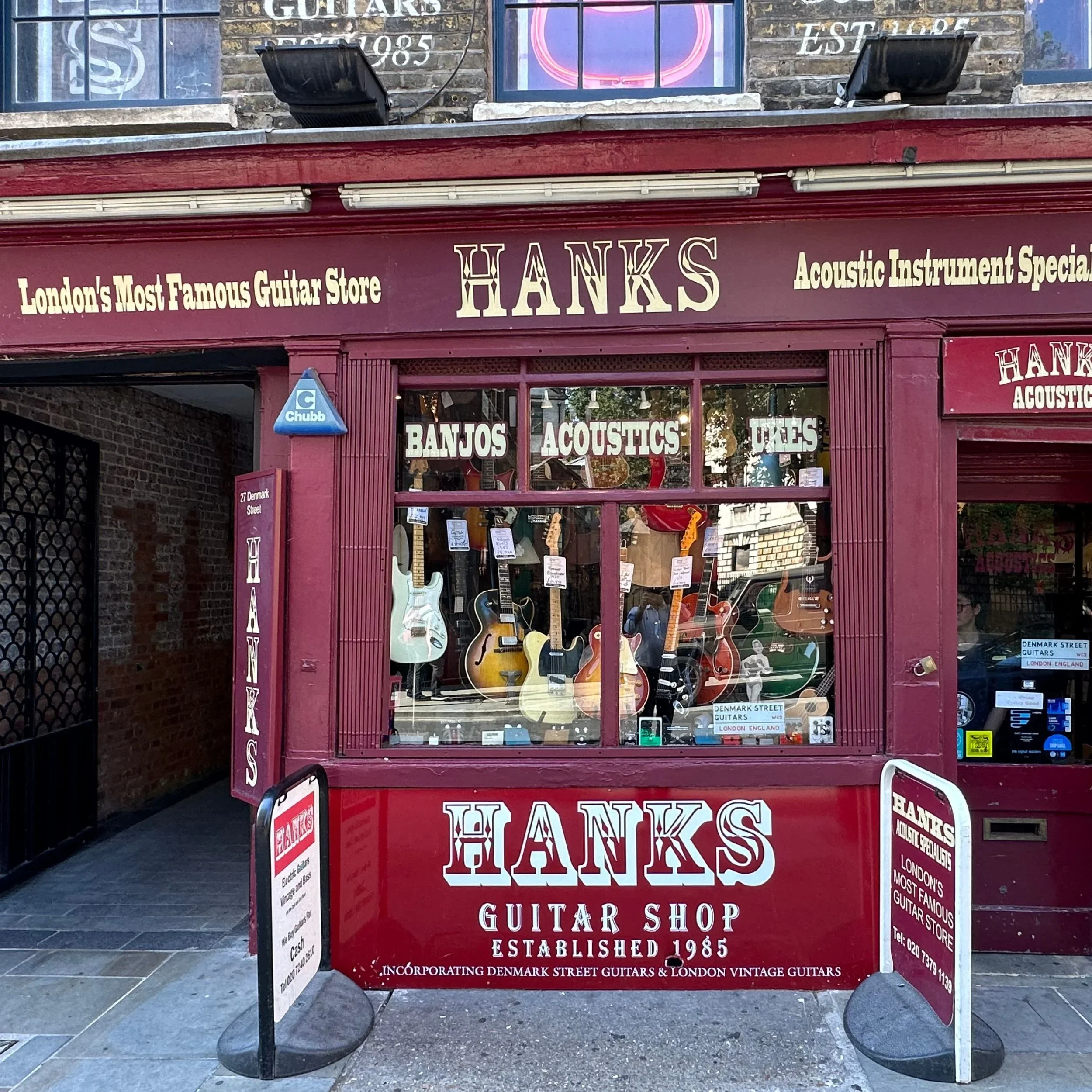
one of the few guitar shops left on Denmark Street
Album Cover Design: Hipgnosis (No. 6 Denmark Street)
Just down the street at No. 6, designers Aubrey Powell and Storm Thorgerson established their legendary studio, Hipgnosis. It was within these walls that they conceptualised iconic album art for Pink Floyd's The Dark Side of the Moon (1973) and Animals (1977), alongside seminal covers for Led Zeppelin.
Historic Venues: Ronnie Scott’s Jazz Club (Frith Street)
Turning down Frith Street reveals Ronnie Scott’s Jazz Club, an institution that has anchored London’s late-night jazz and avant-garde scenes since 1959 (moving to its current location at No. 47 in 1969). The basement room has welcomed global icons including Miles Davis, Nina Simone, Ella Fitzgerald, Prince, and Charlie Watts.
Recording Studios: MPL Communications (No. 1 Soho Square)
Just a short walk away lies Soho Square, the tranquil green space that serves as the administrative heart of Paul McCartney’s publishing empire, MPL Communications, located at No. 1. The private townhouse features an occasional apartment at the top and a recording studio in the basement where tracks for Back to the Egg (1979) were laid down.
Cultural Landmarks: Bar Italia (22 Frith Street)
Further down at 22 Frith Street, Bar Italia has been serving authentic coffee to Soho’s midnight crowd since 1949, drawing artists, musicians, and subcultural figures through its doors.
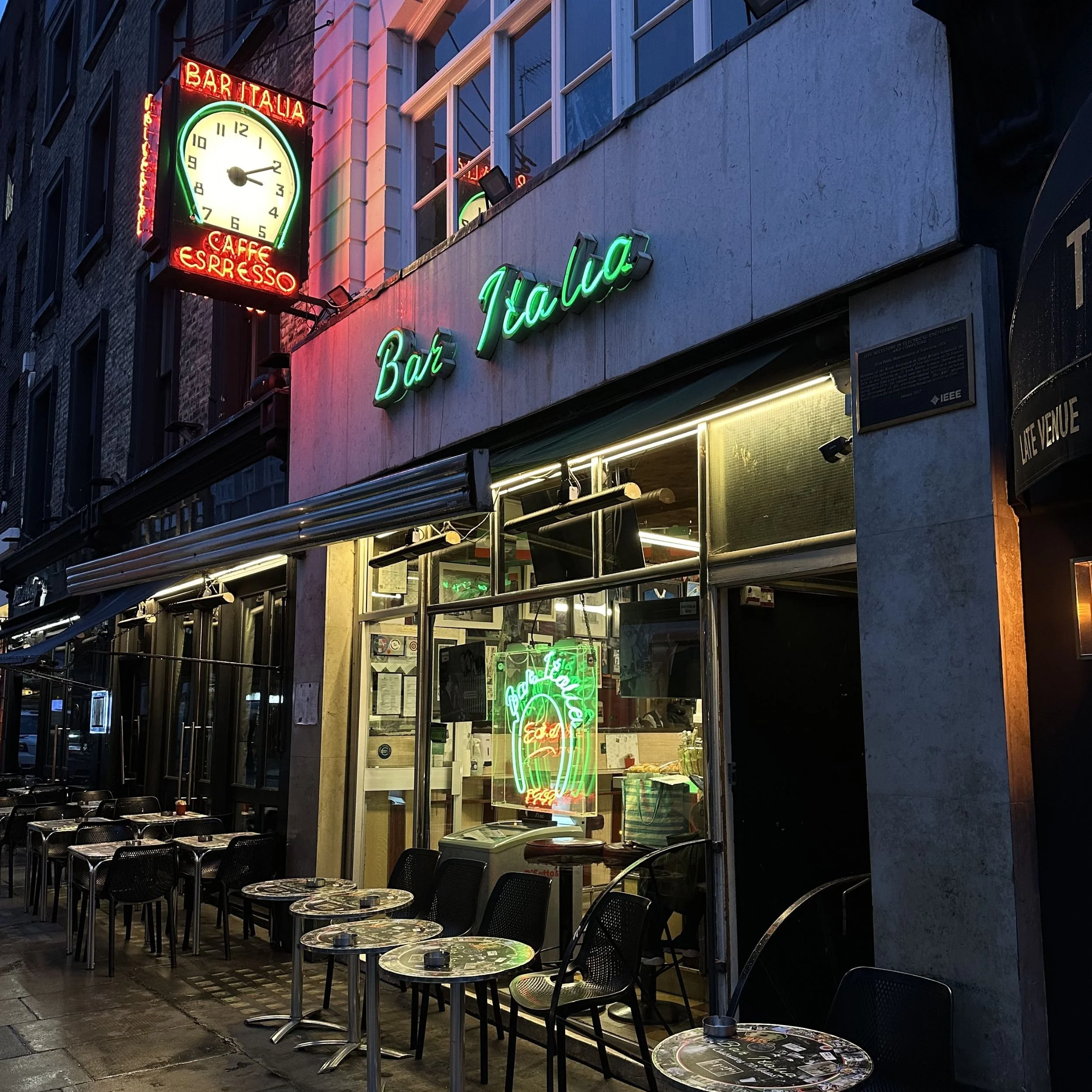
Pulp’s track “Bar Italia” captures the raw atmosphere of a post-rave comedown, while the café appears in the video for Sade’s “Smooth Operator”. Sade herself belonged to the earlier Blitz scene, a subcultural incubator that heavily shaped the style and electronic sound of the capital during the late 1970s and early 1980s.
Recording Studios: Trident Studios (St Anne’s Court)
Tucked away in St Anne’s Court sits the former site of Trident Studios. This subterranean room was a crucible for groundbreaking records, acting as the physical birthplace for The Beatles’ “Hey Jude”, David Bowie’s The Rise and Fall of Ziggy Stardust and the Spiders from Mars (1972), Carly Simon’s No Secrets (1972), Elton John's Tumbleweed Connection (1970), and Lou Reed’s Transformer (1972).
Historic Venues: The Marquee Club (Wardour Street)
On nearby Wardour Street, the legendary Marquee Club (now converted into apartments) evolved from its early jazz and skiffle roots into the ultimate launchpad for emerging talent. The Rolling Stones performed their first gig here, and many of the emerging blues bands of the sixties would play here including Alexis Korner, Long John Baldry, and the Yardbirds. In subsequent eras, Mark Knopfler and Dire Straits, U2, REM, and Guns N’ Roses would grace the stage.
Album Cover Locations: Berwick Street
Finally, no visual documentation of Soho is complete without a look down Berwick Street. This vibrant market street was chosen by Oasis as the exact setting for the iconic album cover photography of What’s the Story Morning Glory (1995).
2. Mayfair & the West End: Glamour, Tragedy, and Rooftop Concerts
Album Cover Locations: Heddon Street & Piccadilly Circus
Piccadilly Circus sits as one of the capital's most visible transit landmarks, famously serving as the backdrop for early, surreal promotional photographs of Pink Floyd in 1967. A five-minute walk from the neon screens leads into the quiet cul-de-sac of Heddon Street, a site of global musical pilgrimage.
This is the exact alleyway where photographer Brian Ward captured David Bowie in the rain for the front cover of The Rise and Fall of Ziggy Stardust and the Spiders from Mars. Visitors today can still spot the architectural lines of the street and look for the location of the famous "K. West" sign that hung above the doorway.
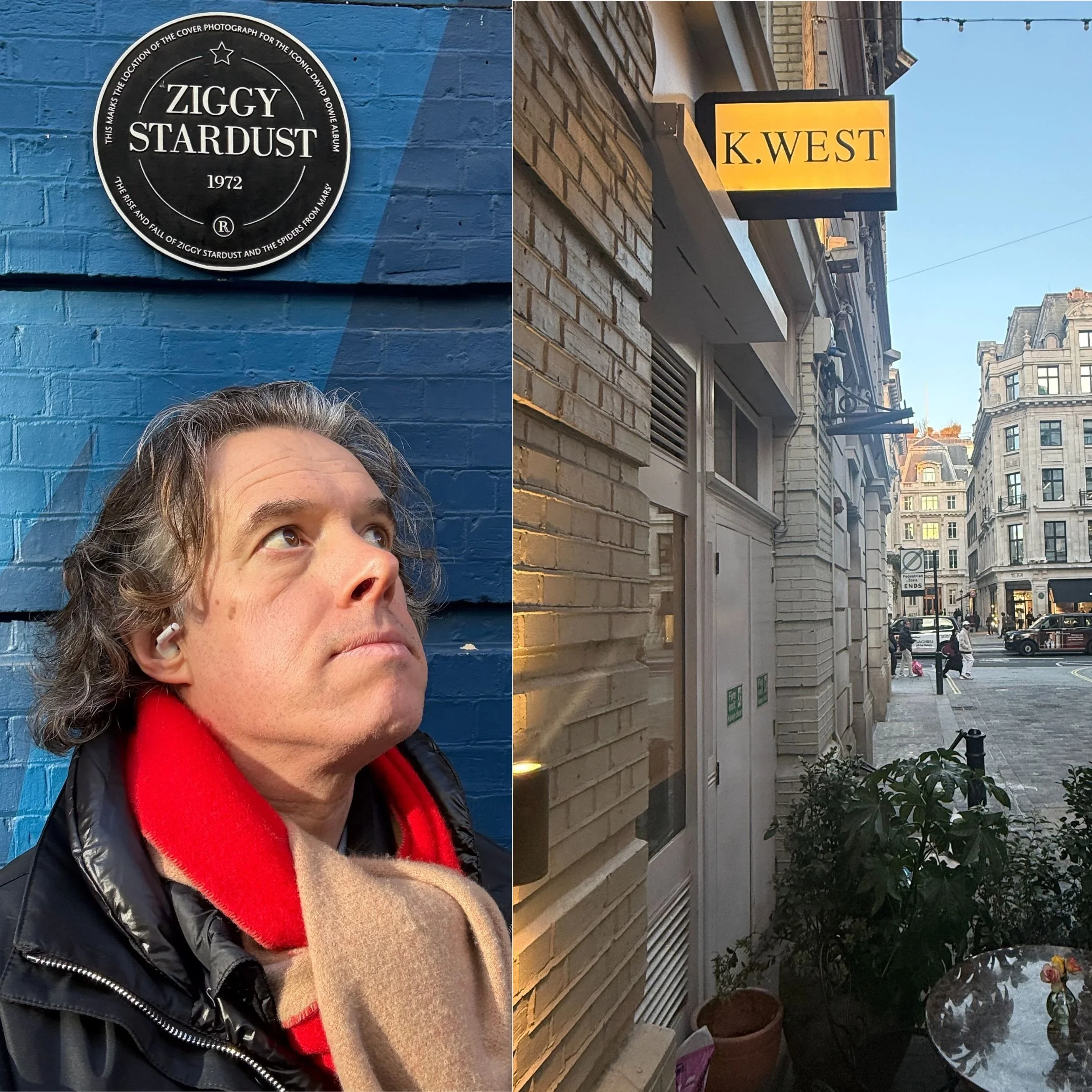
Heddon Street for Bowie fans
After capturing your photographs, stop for a drink at theStarman pub, which pays tribute to Bowie's chameleonic career with beautifully curated artwork and memorabilia.
Historic Residences: The Jimi Hendrix Flat (23 Brook Street)
At 23 Brook Street in the heart of Mayfair, Jimi Hendrix lived for a brilliant, highly creative spell between 1968 and 1969, in the flat that now forms a core part of Handel Hendrix House. The address holds a unique historical novelty: the German baroque composer George Frideric Handel lived and composed next door at No. 25 over two centuries earlier. For music lovers, the Hendrix flat offers a rare, intimate look at the guitarist away from the glare of concert amplifiers—a domestic space where he wrote new material, entertained fellow musicians, and conducted legendary press interviews.
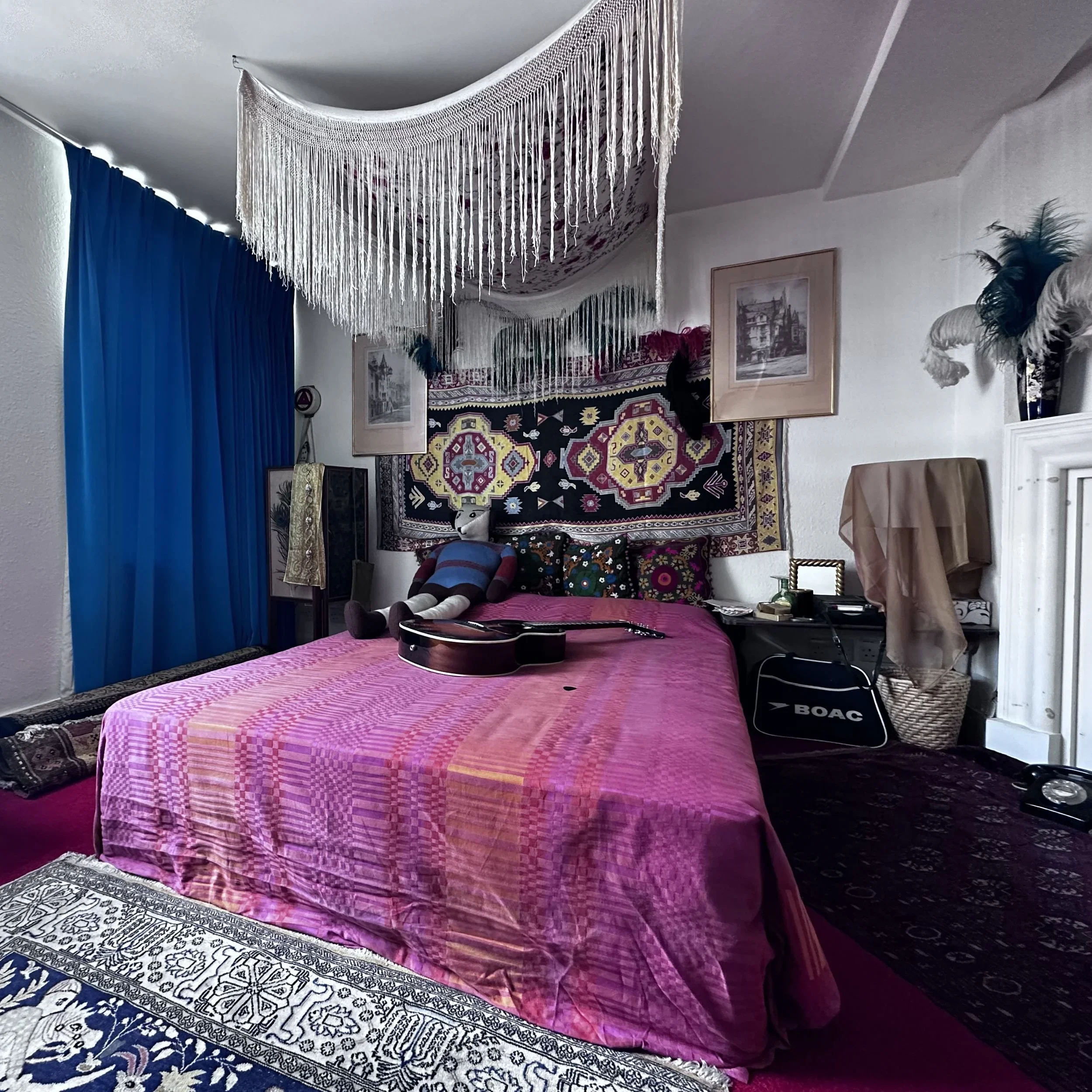
The neighbourhood holds another deeply poignant Hendrix connection near Marble Arch. The guitarist was a regular resident at The Cumberland Hotel, and it was from his room here that he granted his final interview to Keith Altham of the NME on September 11, 1970, just days before his tragic passing. Today, the hotel honours this profound connection with a dedicated Hendrix-themed suite and its vibrant Sound Cafe, keeping his stylistic legacy alive opposite theMoco Museum.
Historic Venues: Savile Row & The Apple Corps Rooftop
While Savile Row is universally renowned as the global home of bespoke tailoring—frequently dressing style icons like Charlie Watts—it also hosted one of the most significant moments in pop culture history.
The elegant townhouse at 3 Savile Row served as the headquarters for Apple Corps, The Beatles’ eclectic multimedia company and record label. If you had stood on this pavement on a freezing January day in 1969, you would have looked up to hear an unannounced live performance echoing across the rooftops. This was, of course, The Beatles’ legendary final public concert, beautifully documented during the Let It Be (1970) sessions. Looking forward, the building’s musical lineage is set to be permanently preserved, with plans underway to transform the site into a dedicated Beatles museum by 2027.
Historic Venues: Old Marylebone Town Hall & The London Palladium
For more Beatles landmarks, head further north to Marylebone, where the Old Marylebone Town Hall (Registry Office) stands as a quietly iconic site for Beatles folklore, having hosted the weddings of John and Yoko, Paul and Linda, and later Ringo and Barbara Bach. Just around the corner sits 34 Montagu Square, a basement flat leased by Ringo Starr that briefly served as a creative sanctuary for John and Yoko in 1968, marked today by a blue plaque.
To see where the madness truly spilled into the public eye, head toward Oxford Circus to find The London Palladium—the historic theatre where the band’s legendary 1963 appearance on Sunday Night at the London Palladium caused such massive crowds that the British press coined the term “Beatlemania” as a national front-page headline.
Cultural Landmarks: The Hard Rock Café London on Park Lane
While a modern iteration of the Hard Rock Café sits near Piccadilly Circus, the global music-themed chain actually traces its entire lineage back to the opposite end of the boulevard. The original Hard Rock Café at 150 Old Park Lane is where the global phenomenon truly began. Beyond dropping in for a meal, visitors can request a guided descent into "The Vault" located in the basement. This highly secure room protects a museum-grade collection of music history, including foundational instruments, iconic stage props, and original, handwritten contracts signed by The Beatles.
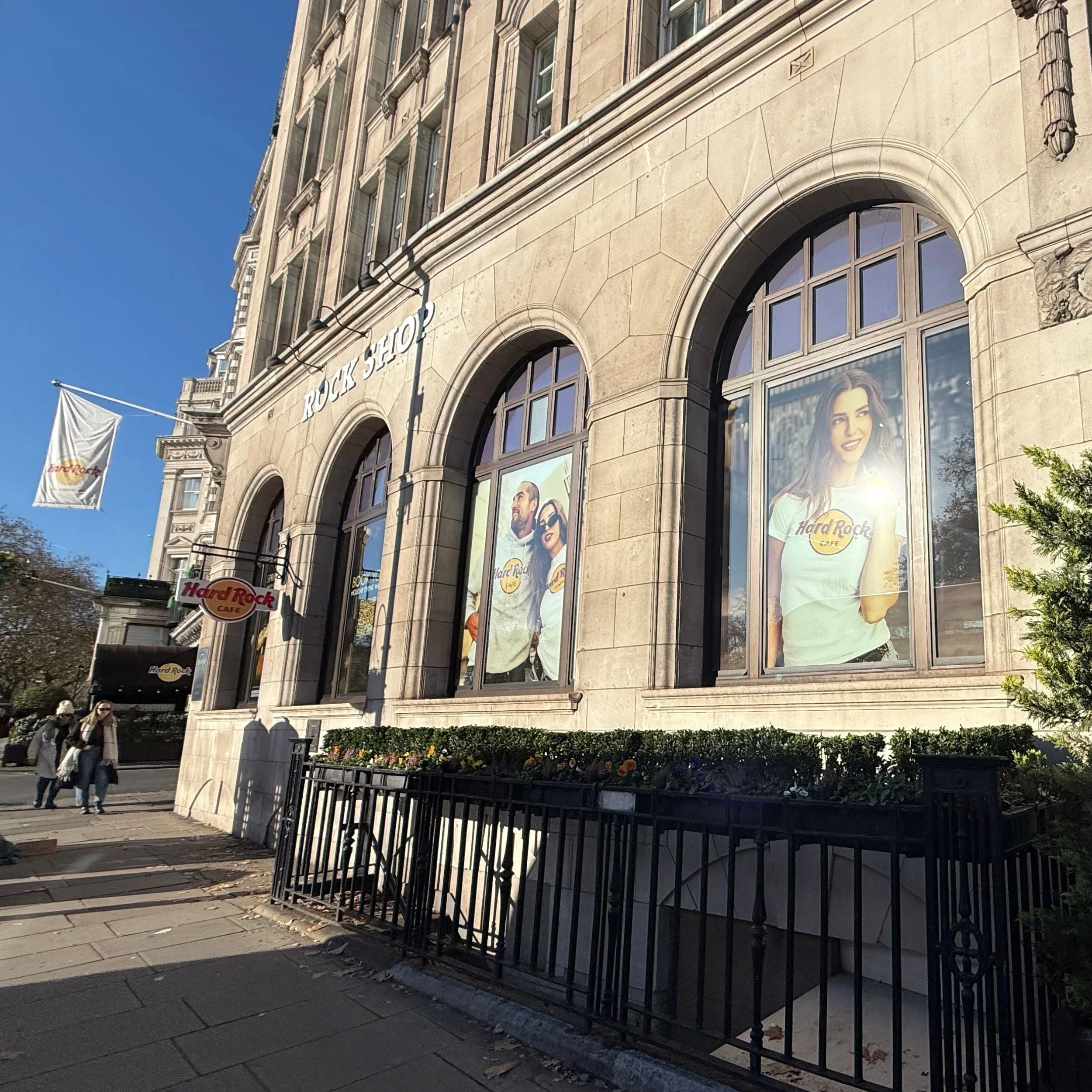
The original Hard Rock cafe in London
Cultural Landmarks: Carnaby Street (RS No.9)
Renowned globally as the epicentre of cutting-edge fashion shops in the 1960s, Carnaby Street shares a history inextricably tied to the emergence of British rhythm and blues. Today, that connection is permanently anchored at No. 9 Carnaby Street by RS No.9, the official flagship retail and exhibition space for The Rolling Stones. Regularly updated with exclusive album promotions, art installations, and new apparel lines, the storefront features an unmistakable tongue sculpture in the window.
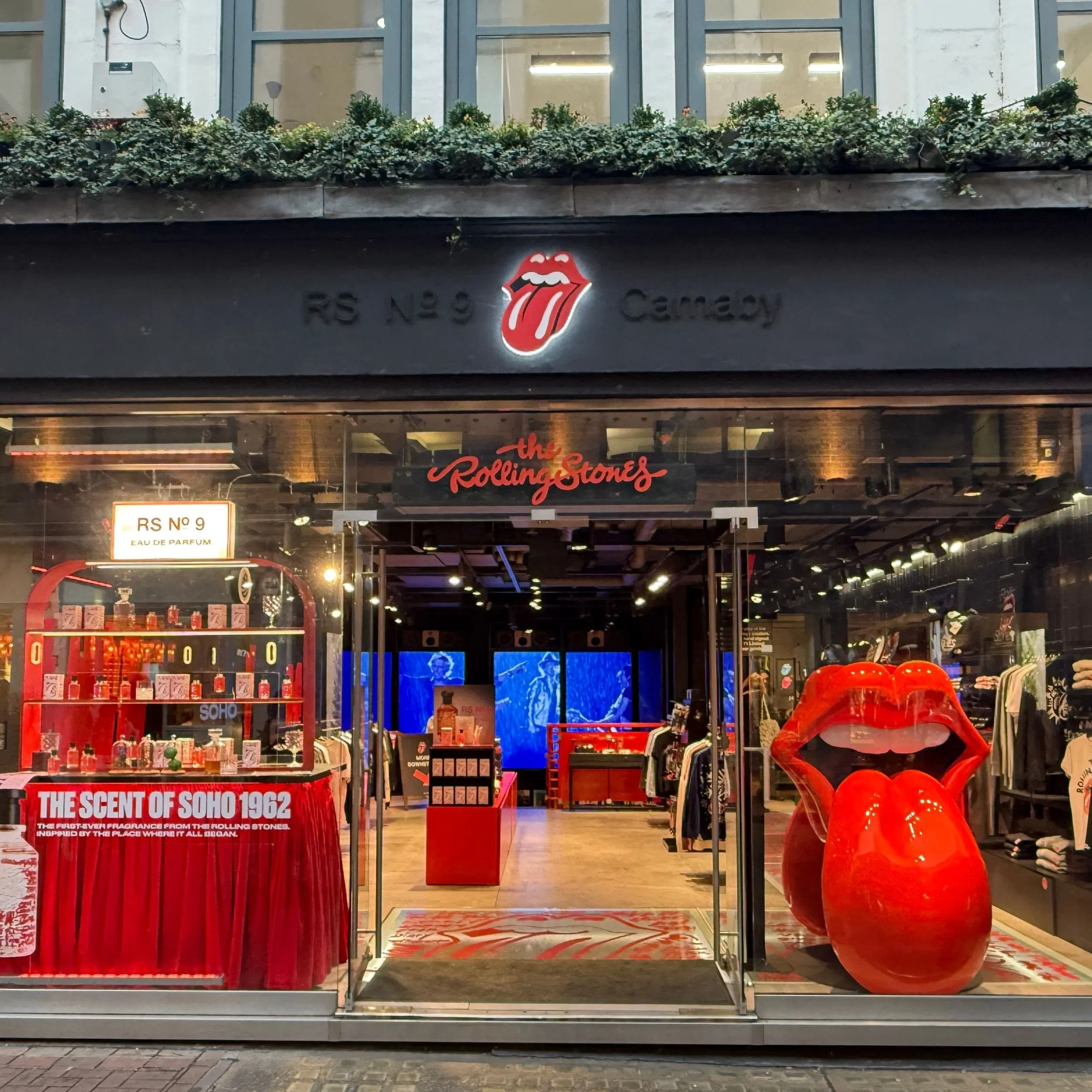
RS9 the Rolling Stones shop on Carnaby Street
3. St John’s Wood: The Path to Abbey Road
Album Cover Locations: Abbey Road Studios & Crossing
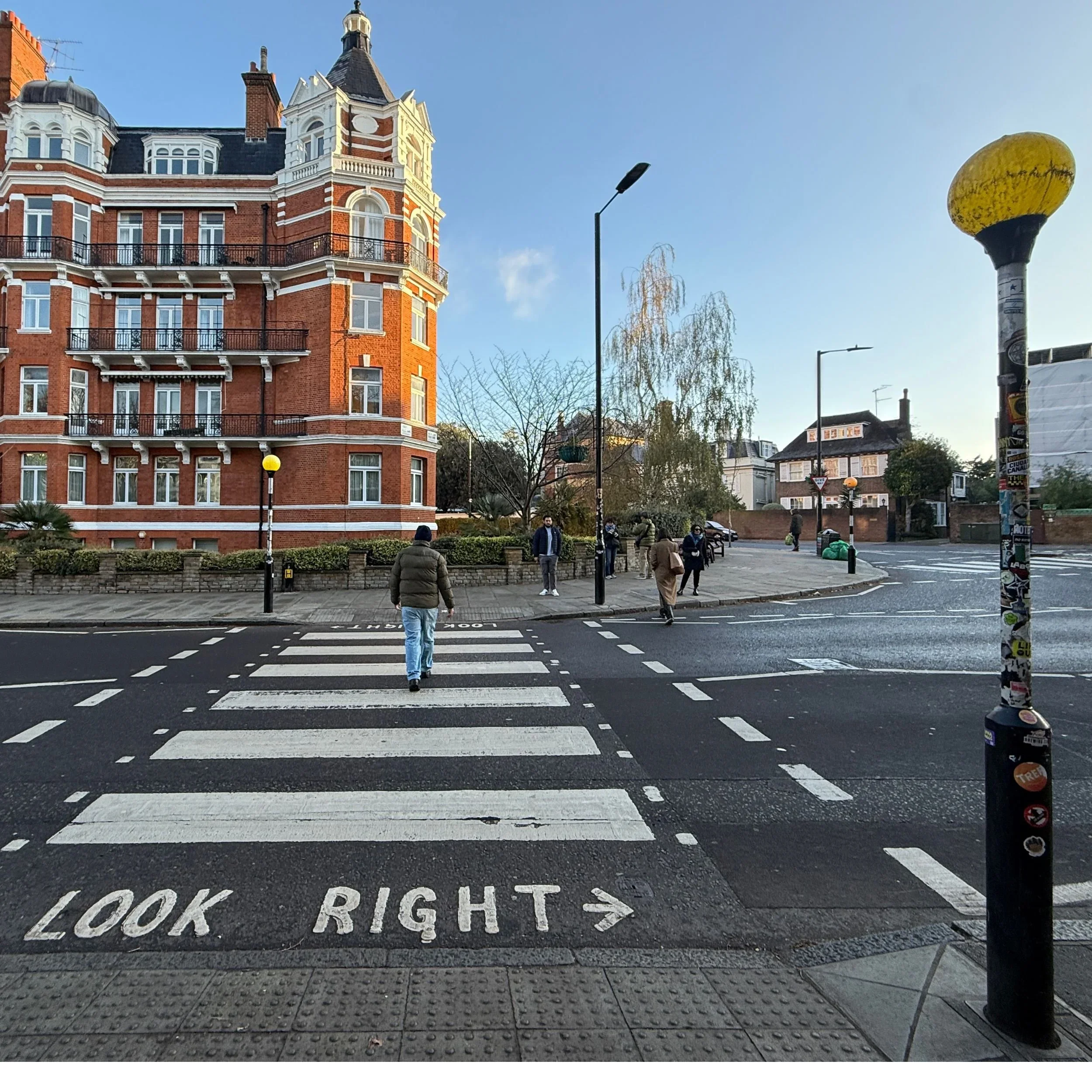
Arguably the most universally recognised location in global music history, the Abbey Road zebra crossing in St John’s Wood remains a primary site of pilgrimage. Featured on the cover artwork for The Beatles' penultimate studio album, Abbey Road (1969), the crossing draws thousands of fans looking to step into the footsteps of the Fab Four. How to find Abbey Road
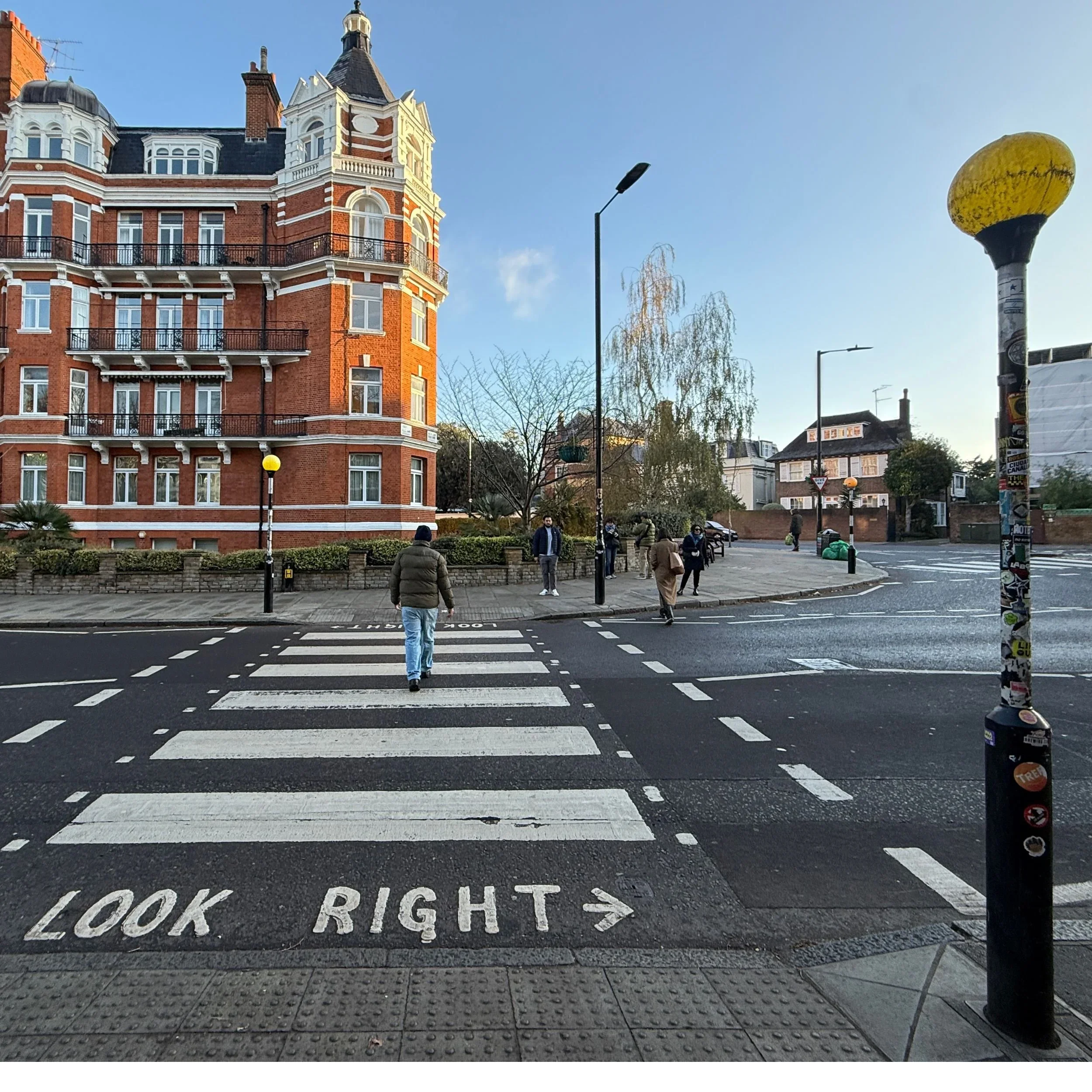
The iconic Abbey Road crossing
4. Battersea & Islington: Pink Floyd’s Industrial Canvas
Album Cover Locations: Battersea Power Station
Second only to Abbey Road in its visual recognition, Battersea Power Station stands as an industrial masterpiece immortalised on the front cover of Pink Floyd’s 1977 album, Animals. The image of the rogue, inflatable flying pig drifting between the towering art deco chimneys permanently stamped the building into rock iconography.
Following a massive architectural restoration, the old power station has been entirely reborn as a premium shopping, dining, and entertainment destination. Inside the cavernous turbine halls, among modern cafes and boutiques, a small historical plaque recalls the structure's profound place in global music folklore.
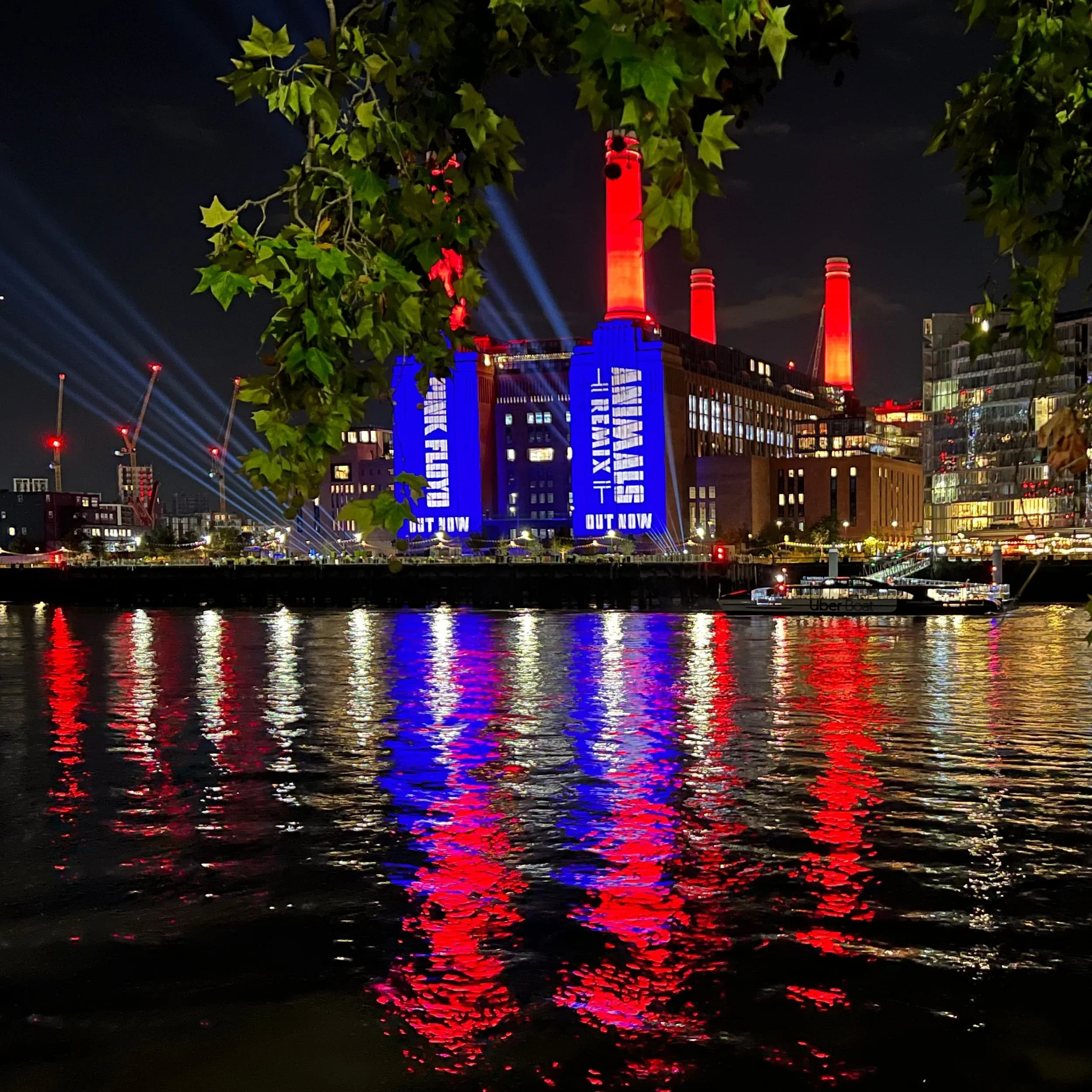
Battersea Power Station lit up for Pink Floyd’s Animals Redux launch
Recording Studios: Ramport Studios (115 Thessaly Road)
Just a short distance from the towering art deco chimneys, Battersea's industrial streets held another heavy studio legacy. In 1973, The Who converted an old church hall on Thessaly Road into Ramport Studios specifically to record their landmark rock opera Quadrophenia (1973) This custom quadraphonic space quickly became a legendary tracking base, going on to host sessions for Thin Lizzy's Jailbreak (1976) and Supertramp's Crime of the Century (1974).
Recording Studios: Britannia Row Studios
While Battersea represents the visual identity of Animals, the band took full control of their physical production by building Britannia Row Studios in Islington. Constructed immediately after the release of Wish You Were Here (1975), this private recording base is where the band tracked the entirety of Animals and laid down foundational elements for their magnum opus, The Wall (1979). Sadly there isn’t much to see there today.
5. Camden Town: Counter-Culture & Indie Heritage
Historic Venues: The Dublin Castle & The Hawley Arms
Camden has long maintained a reputation as London's premier counter-culture music hotspot. The historic Dublin Castle pub continues to serve as an active launchpad for rising alternative acts, while The Hawley Arms remains forever linked to Amy Winehouse.
The singer spent countless hours at the pub, and the interior walls still display intimate personal polaroids alongside memorabilia from resident alternative musicians. Directly around the back of the building, a towering painted mural pays tribute to her legacy, mirrored by a bronze statue dedicated to her memory inside the nearby Camden Market.
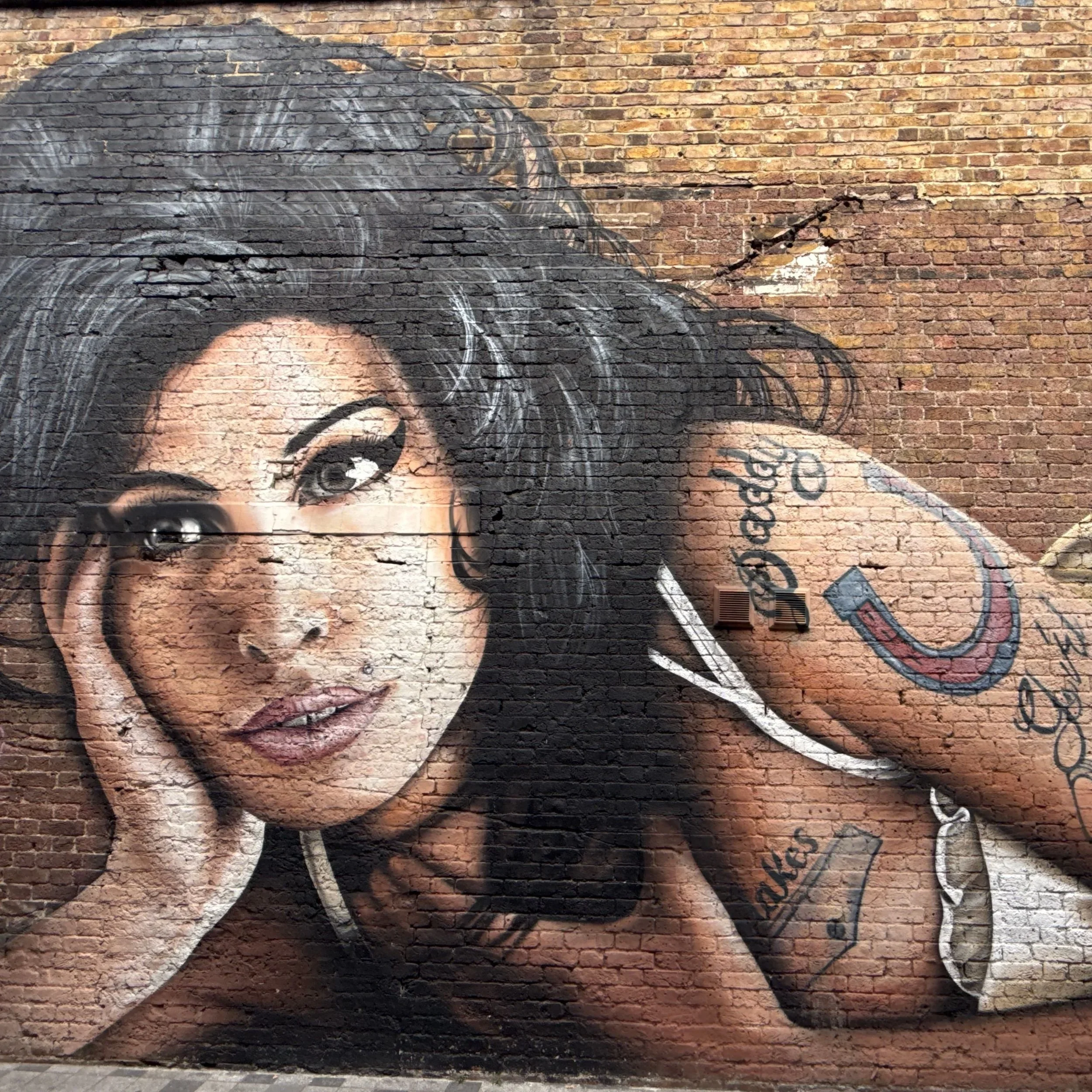
Amy Winehouse Mural on the back of the Hawley Arms pub in Camden
6. Brixton: South London’s Home-Grown Soul
Cultural Landmarks: The David Bowie Mural (Brixton Road)
In South London, the vibrant neighbourhood of Brixton traces deep links to visionary home-grown talent. On Brixton Road, directly opposite the singer's childhood home, the famous David Bowie Mural stands as a magnificent artistic landmark.
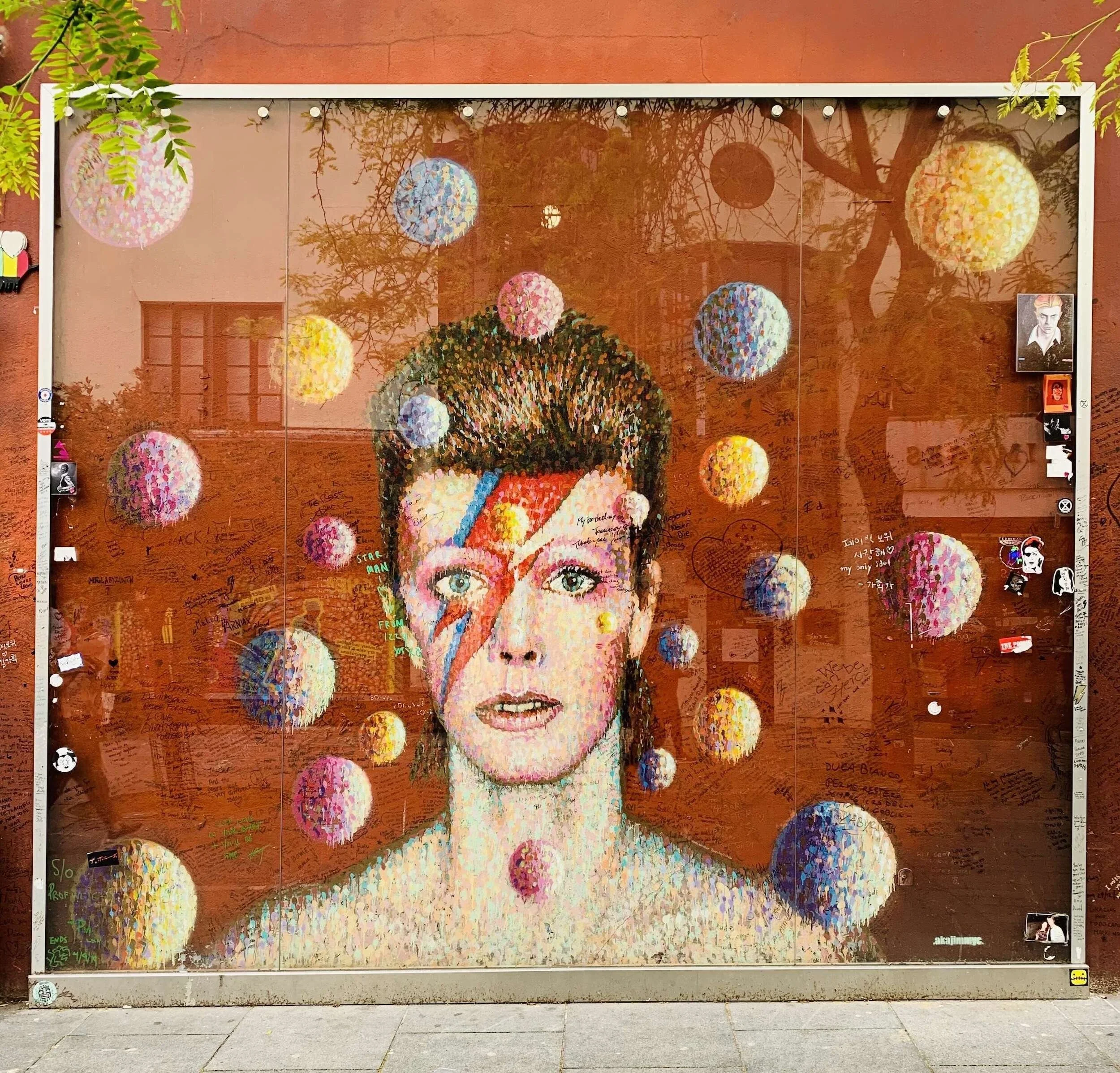
David Bowie mural in Brixton
Following his passing in 2016, the glass-fronted depiction of Bowie's Aladdin Sane (1973) persona instantly transformed into a worldwide, spontaneous memorial space.
Lyrical Landmarks: Electric Avenue
While exploring the neighbourhood, a short walk down Electric Avenue—the historic first market street in London to receive electric street lighting—connects visitors to the message behind Eddy Grant’s foundational 1980s reggae-pop track.
Historic Venues: O2 Academy Brixton
Closer to the station, the O2 Academy Brixton has reigned as a definitive concert hall since 1983. Featuring a unique, gently sloping floor structured like a shallow indoor amphitheatre, the space offers an unparalleled live viewing experience. The stage holds a poignant place in alternative history as the exact venue where The Smiths delivered their final live public performance.
7. Kensington, Chelsea & Hammersmith: Folk Cellars & Grand Arenas
Historic Venues: The Royal Albert Hall
For a grander concert experience we look to the Royal Albert Hall in Kensington. An iconic entertainment venue, it recently played host to a sell-out week from David Gilmour. This beautiful building first opened in 1871 and has remained a popular venue ever since. Eric Clapton is the artist with the most concerts at this one location, headlining over 180 concerts across his career.
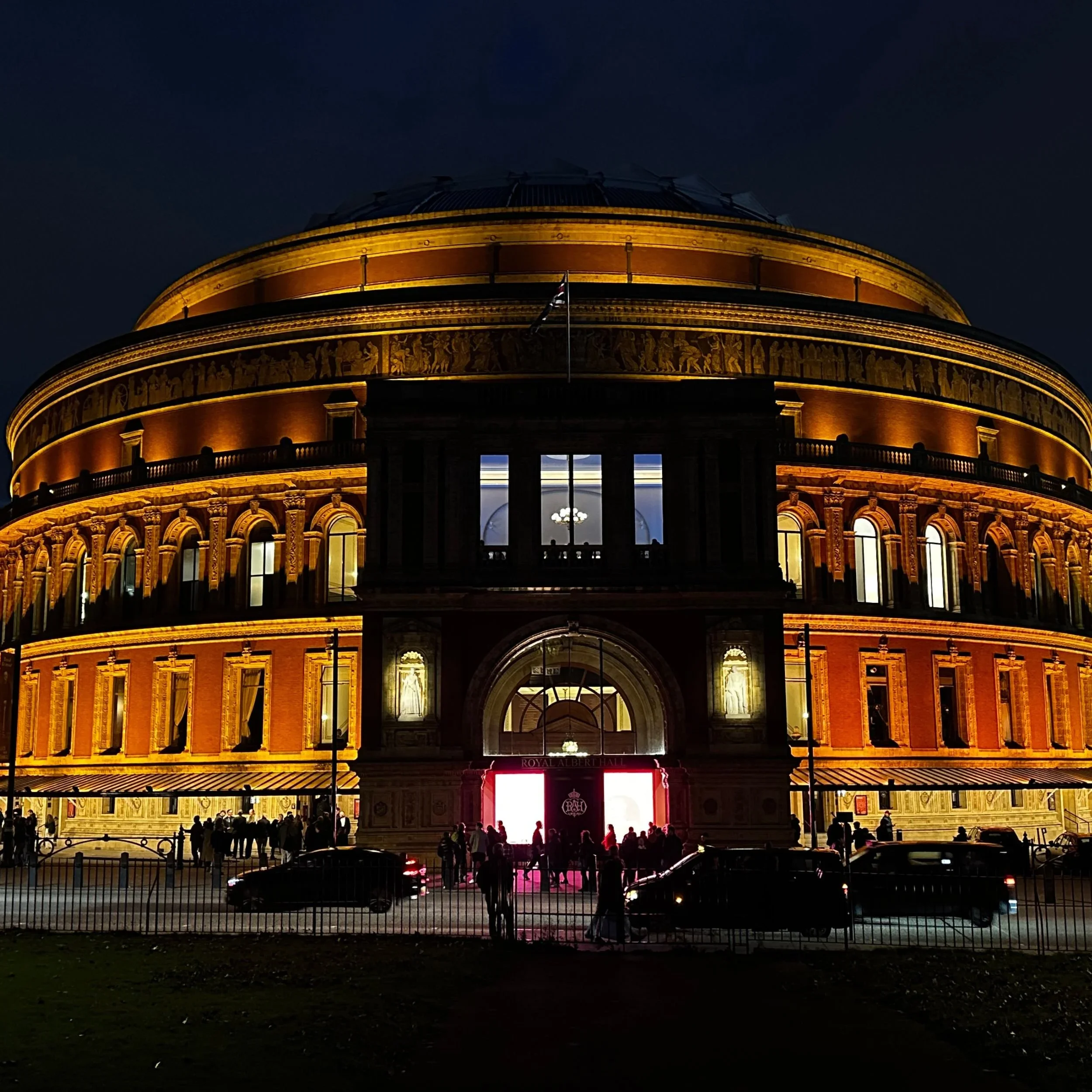
The Royal Albert Hall lit up at night
Historic Venues: The Hammersmith Odeon (Eventim Apollo)
The legendary Hammersmith Odeon (now operating as theEventim Apollo) ranks as one of the capital's largest and most atmospheric concert venues. The room acts as a sacred space for David Bowie devotees, serving as the setting for the final, shocking Ziggy Stardust performance in July 1973, where Bowie announced the permanent retirement of his chameleonic stage persona.
In 2014, the art deco venue hosted Kate Bush for her historic Before the Dawn residency, marking her return to the live stage for 22 consecutive nights after a twenty-year absence. The building's beautiful exterior and classic marquee sign are also immortalised on the sleeve photographs of The Who's landmark rock opera, Quadrophenia (1973).
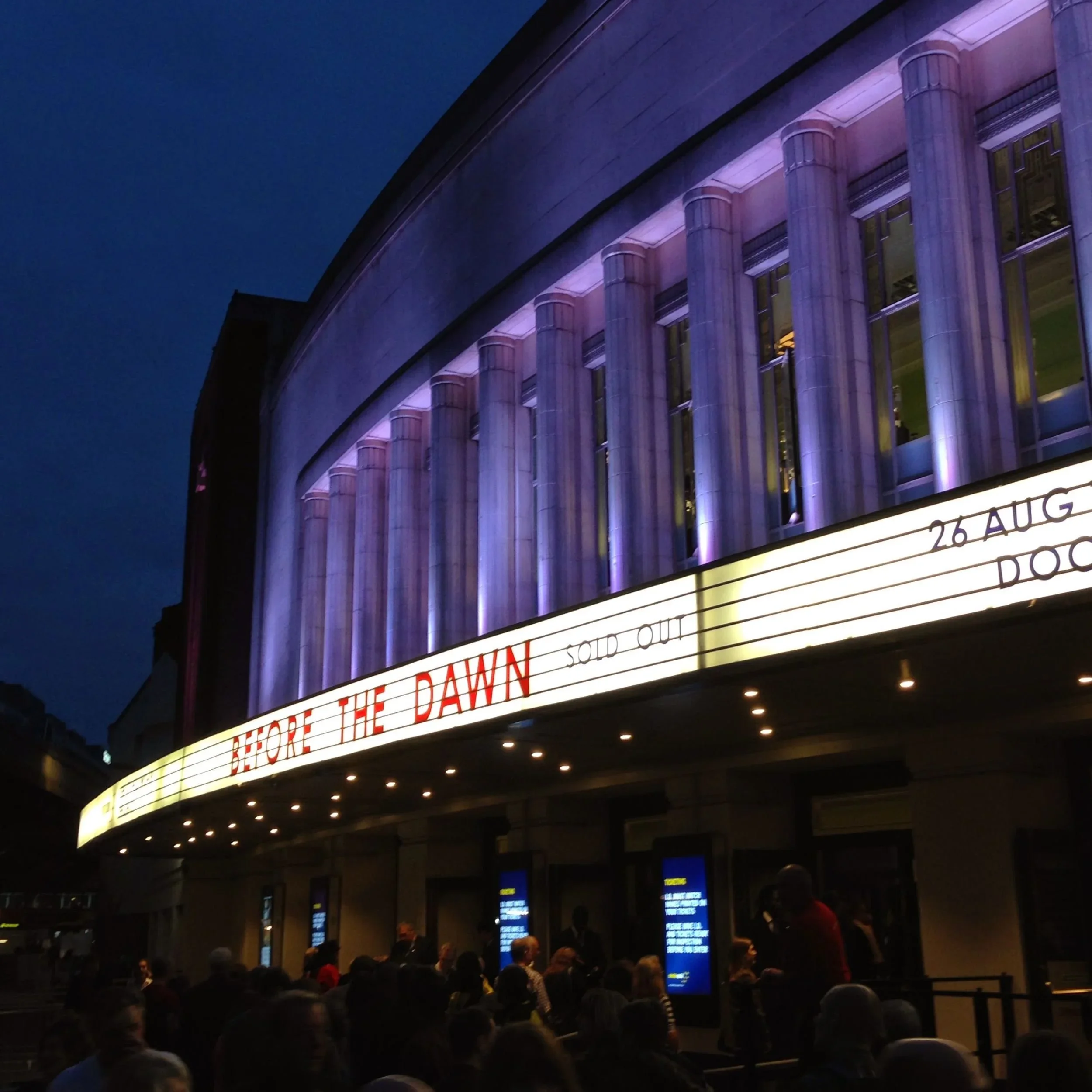
The iconic marquee promoting the Kate Bush concerts
Historic Venues: The Troubadour Club (Old Brompton Road)
London's musical history is so dense that crucial landmarks frequently hide in plain view across diverse residential boroughs. In West London, the historic Troubadour Club on Old Brompton Road has hosted intimate acoustic and rock sets since 1954. It anchored the sixties folk boom, welcoming performances from John Martyn, Joni Mitchell, Led Zeppelin, and a young Bob Dylan performing under the pseudonym “Blind Boy Grunt” in 1962. The room was so influential that a visiting promoter from Los Angeles was incredibly impressed by the club, taking the name back to California to establish his own iconic West Hollywood venue.
Historic Residences: 102 Edith Grove (Chelsea)
To understand the grit that fuelled the early British rhythm and blues movement, a trip south of the river to 102 Edith Grove in Chelsea reveals the infamous, squalid flat shared by Mick Jagger, Keith Richards, and Brian Jones in 1962. While there is little to see from the pavement today, this flat serves as the undisputed birthplace of the band's identity.
Recording Studios: Sound Techniques (Chelsea Manor Street)
Chelsea holds even stranger chapters of pastoral music history just off the main drag; up until the mid-twentieth century, cows were still kept at the old Wright’s Dairy on Chelsea Manor Street to supply fresh milk to the King's Road. That very same dairy building was later transformed into the legendary Sound Techniques Recording Studio.
Bypassing the more clinical commercial spaces of the era, the studio's warm acoustic rooms became a sanctuary for acoustic innovators and underground legends, capturing the fragile, timeless recordings of Nick Drake, early Pink Floyd, and Vashti Bunyan. You can read the full, fascinating history of thecows of King's Road and Sound Techniques over on The Vinyl Historian.
8. Chinatown & The Thames: Lyrical Landscapes
Lyrical Landmarks: Lee Ho Fook (Chinatown)
The city's geography even shapes the literary and lyrical landscape. Fans of classic track references can track down the former location of the Lee Ho Fook restaurant in Chinatown—immortalised by Warren Zevon in the track “Werewolves of London” as the place where a werewolf was spotted with a Chinese menu in his hand. The site now operates as Dumplings Legend, located directly across the street from the original Ronnie Scott's jazz club plaque.
Lyrical Landmarks: Trader Vic's (Park Lane)
Similarly, the basement of the Hilton Hotel on Park Lane once housed the original Trader Vic's, where the chameleonic characters of Zevon's lyrics were spotted sipping piña coladas with their hair perfectly in place.
Lyrical Landmarks: Waterloo Bridge
To bring a music tour of the capital to a perfect close, wait until the daylight starts to fade and walk out across the concrete span of Waterloo Bridge. As the sun dips below the Westminster skyline, you can look down upon the Thames, gaze on a Waterloo sunset, and experience the exact, timeless atmosphere captured in The Kinks' masterpiece.
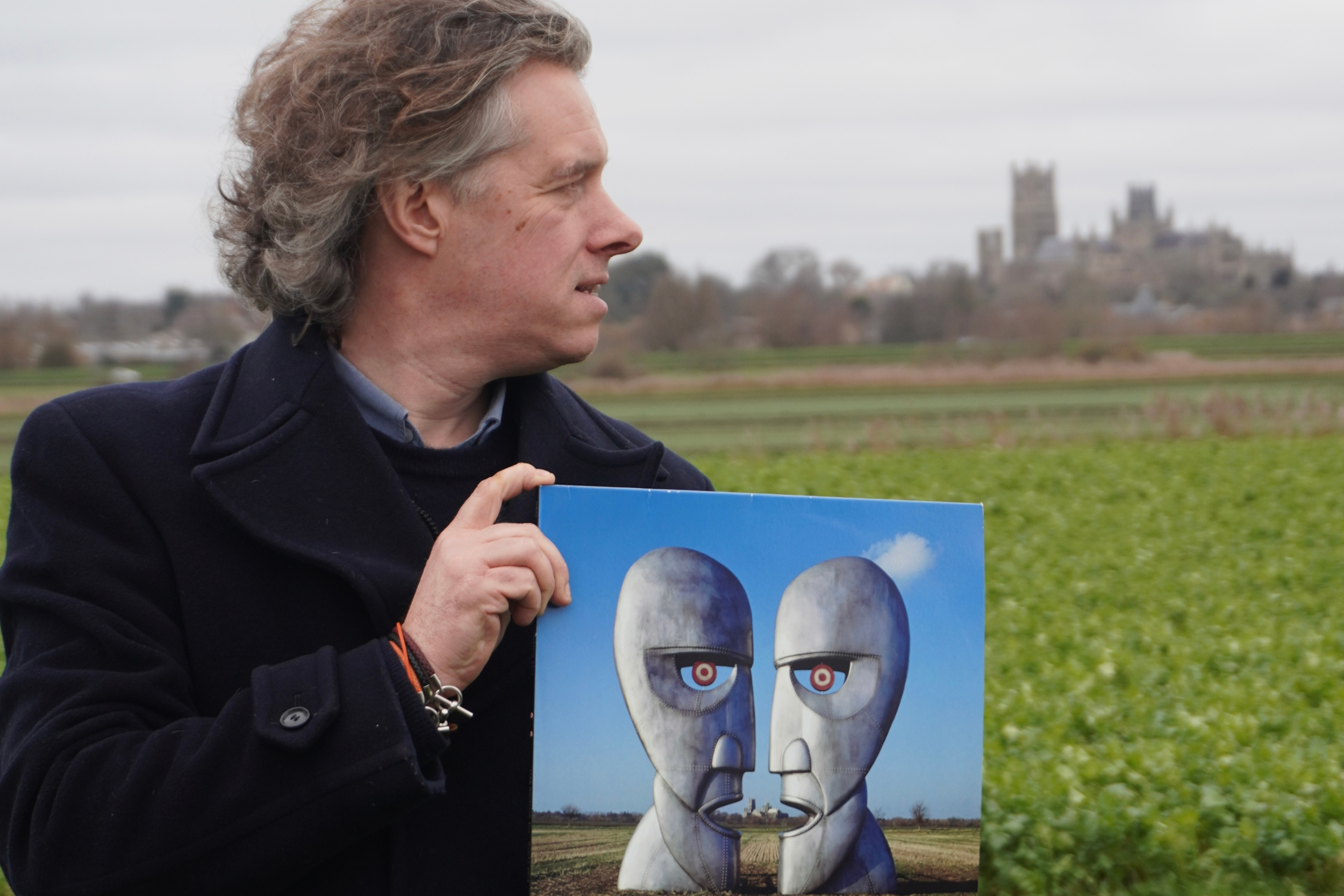
Where Was The Division Bell Album Cover Taken? Pink Floyd & Ely Cathedral
For Pink Floyd’s penultimate masterpiece, Storm Thorgerson built something physical and wonderfully absurd. We journeyed into the freezing Cambridgeshire Fens to find the exact lane where the iconic monoliths of The Division Bell stood.
Released in 1994, The Division Bell marked the second Pink Floyd album since their fractured split with Roger Waters. The record’s heavy, melancholic themes of distance, communication, and fragile, bruised hope demanded a sleeve that felt just as massive. Rather than turning to the digital manipulation beginning to dominate the nineties, designer Storm Thorgerson did what he always did: he built something physical, real, and wonderfully absurd.
To give this new era of the band a monument, Thorgerson commissioned sculptor John Robertson to build two colossal heads—two carved from rough-hewn stone, and two welded from cold, riveted sheets of industrial iron. These giant, multi-tonne faces were hauled into an active agricultural field and meticulously aligned so that the distant, limestone silhouette of Ely Cathedral was perfectly framed in the quiet gap between their lips.
Intrigued by the sheer scale of the project, we packed a vinyl copy of the album and set off on a winter pilgrimage into the grey, wind-swept flatlands of the Cambridgeshire Fens to find the exact spot where this historic photo was taken.
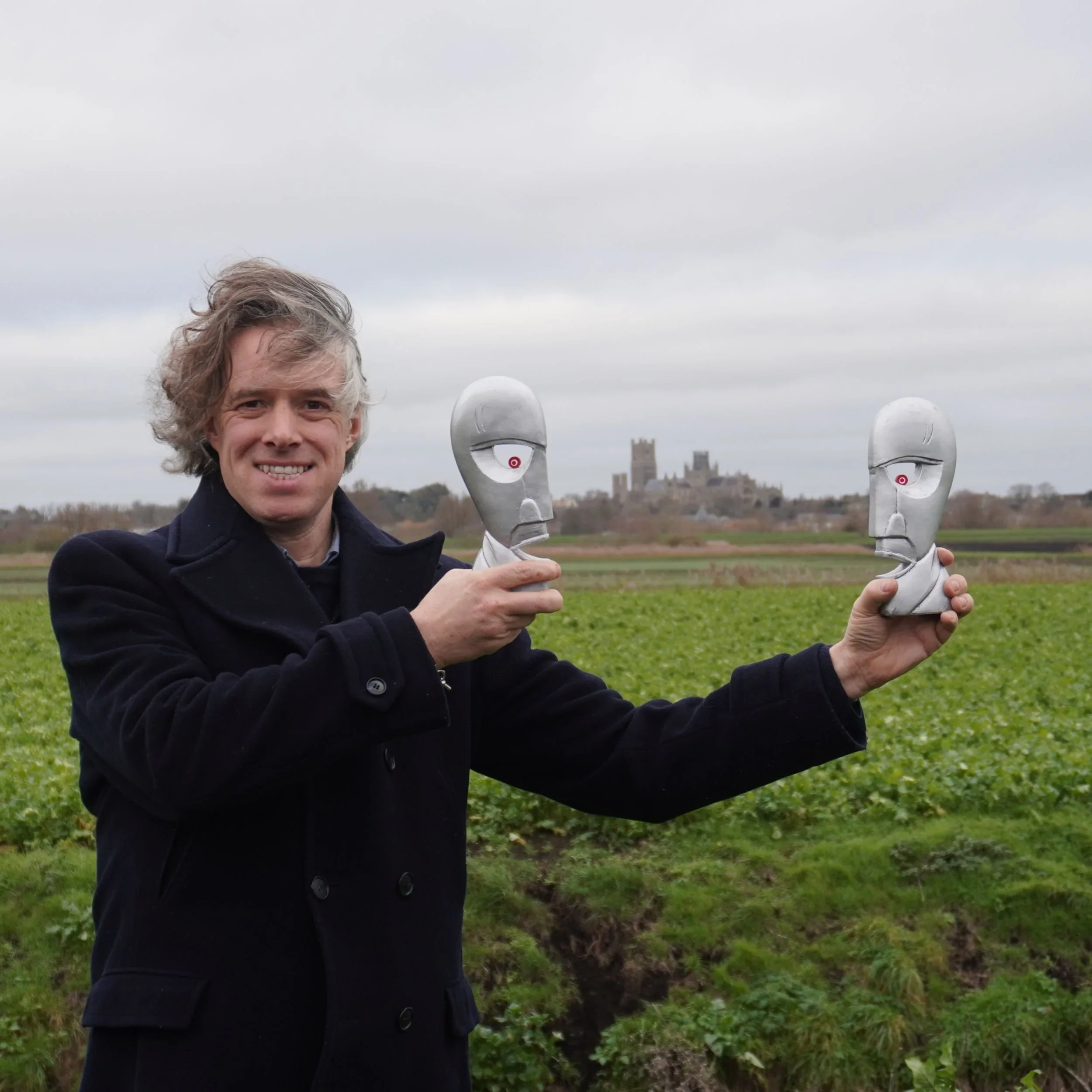
Replica Division Bell heads in Ely
The Album Cover Location: Quanea Drove
The true The Division Bell album cover location is found on the western outskirts of Ely, tucked away off a quiet, sodden agricultural lane called Quanea Drove.
Unlike the busy, modern bypasses that lead into the city, Quanea Drove immediately pulls you into a silent, timeless landscape of dark earth and massive skies. Driving down this single-track road on a freezing morning, the noise of the modern world dropped away entirely, leaving only the damp smell of the soil and the haunting shape of the cathedral on the horizon.
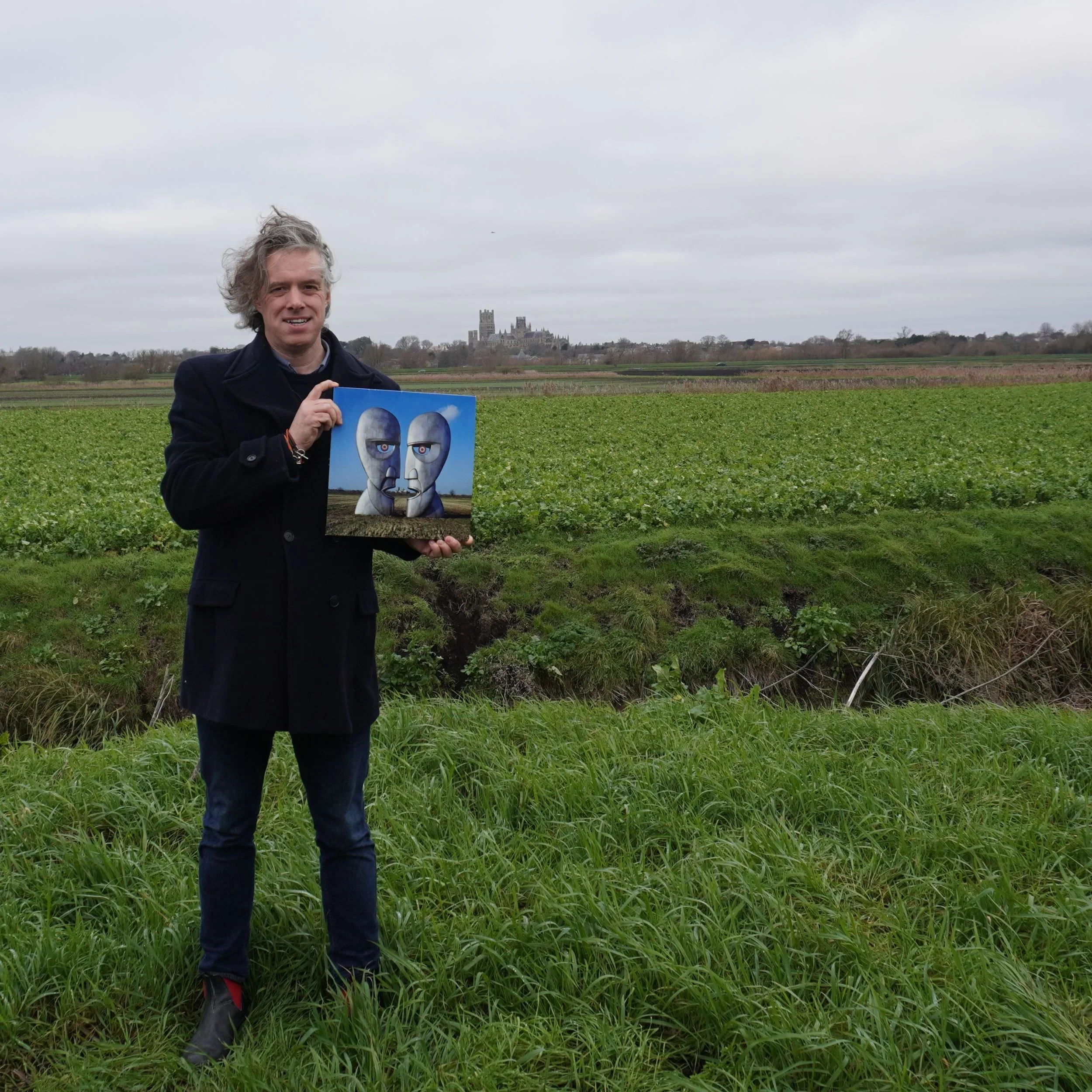
In search of the Division Bell
There are no power lines or pylons here to break the spell. Standing on the frozen verge, the visual weight of the landscape is breathtaking. The cathedral is positioned far enough away to look like a ghostly, fragile memory, yet close enough to retain its immense physical presence, scaling beautifully against the vastness of the empty fields.
Once you stand on the bend of Quanea Drove and see how the landscape opens up, earlier guidebook theories—like David Roberts’ Rock Atlas, which pointed fans toward a cluttered, distant stretch of the A1122 near Stretham—are instantly revealed as wrong.
Why This Specific Landscape Represented the Music
Thorgerson’s choice of this lonely fenland field was not accidental; it was a physical manifestation of the music itself. The Division Bell is a record haunted by the slow breakdown of human relationships. It is a bruised, quiet commentary on the fractured brotherhood between David Gilmour, Nick Mason, Richard Wright, and their long-departed partner Roger Waters.
There is also a deeper, almost biological pull to this flat, watery landscape. This fenland horizon was not selected merely for its desolate aesthetic; it was a quiet return to the soil that birthed the band. Ely sits just fifteen miles north of Cambridge, the ancient city where David Gilmour, Roger Waters, and Syd Barrett first met, dreamed, and walked as schoolboys.
Indeed, the album’s closing masterpiece, “High Hopes”, is a direct, aching look back at those formative Cambridge years—gazing at the horizon of the place they lived when they were young, watching the dawn mist glow along the River Cam. By placing the massive sculptures here, looking back across the flat margins of their youth, the band closed a creative circle.
How to Visit the Location
If you want to make your own pilgrimage to stand in the footprint of Pink Floyd's monoliths, the site is easy to find, provided you treat the rural landscape with care.
The Approach: Take the A142 toward the outskirts of Ely, and turn off directly onto Quanea Drove.
The Vantage Point: Follow the quiet, single-track lane until you hit the first sharp bend. There is a small field opening here with just enough space to safely pull your car onto the hard-standing verge and turn around.
Precise Coordinates: To stand in the exact spot where the sightlines lock onto the cathedral towers, use the What3Words location: ///climber.awkward.indicated
A Note for the Journey: These fields are private, working agricultural farmland. Please remain on the public roadside verge. Do not attempt to cross the deep, wide drainage ditches that border the lane, as they are essential, watery boundaries of the local Fenland landscape.
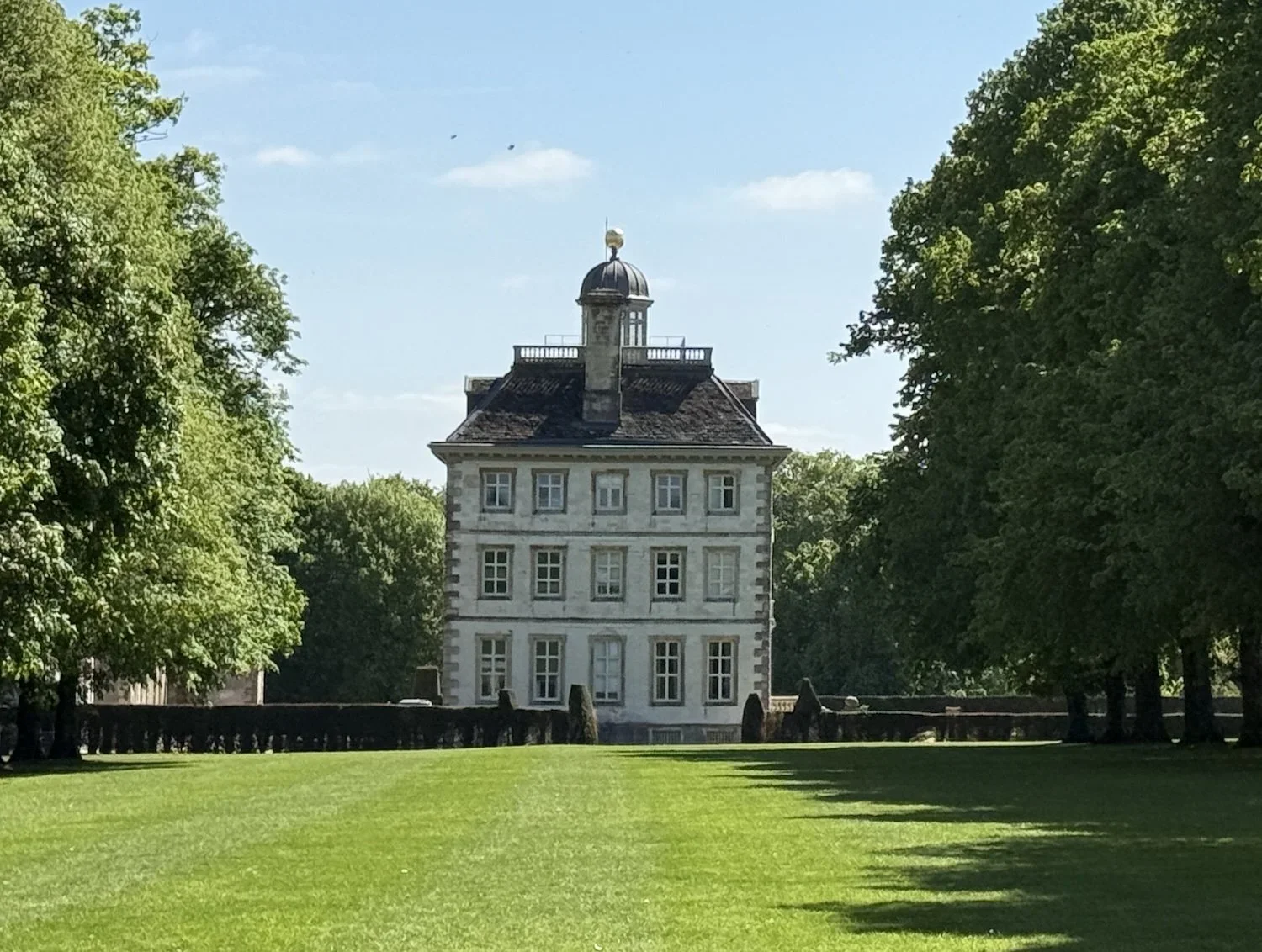
Rock Star Houses: The Legendary Country Estates of Rock Royalty
Long before reality TV, the biggest names in rock sought solitude behind high hedges and moated manors. From Friar Park to Stargroves, these grand country houses were far more than simple retreats; they were the legendary physical sanctuaries where rock royalty escaped the heat of the limelight, parked their mobile studios, and rediscovered their creative core.
Long before reality TV and commercial wellness retreats, the biggest names in rock sought solitude behind high hedges and moated manors. From Friar Park to Stargroves, these were the spaces where legends escaped the exhausting heat of the limelight, and sometimes rediscovered their creative core.
There is something quietly poetic about a rock star retreating to a grand country mansion. After years of gruelling touring, screaming fans, and the predictable ritual of hotel destruction, the lure of high hedges, sweeping lawns, and Grade II-listed peace became impossible to resist. For some, these properties were a sanctuary; for others, a blatant status symbol. For most, they were both.
By the 1970s, the archetype of the rock star country pile was firmly established. Newly minted British rock stars looked to trade their cramped London bedsits for billiard rooms, swimming pools, and sweeping libraries. As a music fan, I am continuously fascinated by this first generation of rock royalty and the environments that shaped their music.
Author Adrian Tinniswood offers a brilliant answer to this phenomenon in his book about Country houses :
“The old order had crumbled, but the houses remained. And where the dukes and dowagers once held court, now came the rock stars and rebels, buying what their ancestors couldn’t have imagined selling.
”
Rock Star Country Homes: The Rolling Stones Estates
As fame and money came to the Stones, so too came their appetite for a country pile. Yet true to their myth these houses became the scene for new music recordings, scandal and tragedy.
Cotchford Farm (Hartfield, East Sussex)
Brian Jones, the original founder of the Rolling Stones, sought refuge at Cotchford Farm in Hartfield, East Sussex—a property steeped in literary folklore, having once been owned by A.A. Milne. Tragically, the multi-instrumentalist died in the estate's swimming pool in 1969. His passing cast a permanent, mythic shadow over the historic timber-framed home. Though the property has passed through various private hands since—including a period owned by local developer Alistair Johns—its place in rock folklore remains absolute.
Redlands (West Wittering, West Sussex)
Keith Richards purchased Redlands, a beautifully secluded thatched property near West Wittering, in the mid-1960s. The house became a permanent fixture of front-page notoriety following the infamous 1967 authorities' visit. Mick Jagger's single night in jail directly inspired the bruised, trippy beauty of “2000 Light Years from Home”. Yet, beyond the media drama, Redlands was a genuine creative sanctuary where Richards wrote, recorded, and recovered. While his main residence is now in Connecticut, USA, he still owns Redlands to this day.
Stargroves (Newbury, Berkshire)
Mick Jagger’s country estate, Stargroves, was much more than a rural retreat; it doubled as a pioneering recording hub. With the heavy, customised Rolling Stones Mobile Studio parked right outside the manor doors, it became a sprawling workspace not just for the Stones, but for Led Zeppelin and The Who. It was in this cavernous building that early tracks for Exile on Main Street (1972) were captured before the band fled to the humid basement of Villa Nellcôte. The Who recorded the anthemic “Won’t Get Fooled Again” here, and Led Zeppelin utilised the room's unique acoustic resonance for early tracks that would surface on Houses of the Holy (1973) and Physical Graffiti (1975). Jagger sold the estate in the late 1970s—briefly passing it to Rod Stewart—but its sonic legend endures.
Foscombe House & Halsdon Manor
Drummer Charlie Watts initially moved out to the striking Victorian Gothic architecture of Foscombe House in Gloucestershire. He later upscaled to Halsdon Manor, a majestic, 600-acre, 16th-century estate nestled in the Devonshire village of Dolton. Here, Watts established a world-class racehorse stud, creating a peaceful, texturally rich environment to house his vast collections away from the drum stool.
The Wick (Richmond, London)
A later arrival to the band's lineup, Ronnie Wood spent many years at The Wick in Richmond. Perched overlooking the River Thames, this stunning 18th-century Georgian house became a creative base for a wide circle of musicians. Though strictly a leafy London suburb rather than a deep countryside estate, it carried that exact same romantic air of escape. Wood also owned Sandymount House in Kildare, complete with an indoor recording studio and a mock Irish pub where the band laid down foundational tracks for Voodoo Lounge (1994).
Historic Rock Star Houses: Led Zeppelin & Page’s Palaces
Plumpton Place (East Sussex)
Guitarist Jimmy Page was an avid collector of historic property. In the late 1970s, he added Plumpton Place to his portfolio—a moated Elizabethan manor in East Sussex that had previously been considered, but passed over, by George Harrison. The estate boasted an incredible architectural lineage, redesigned by Sir Edwin Lutyens with wild, sweeping gardens sculpted by Gertrude Jekyll.
Headley Grange (Hampshire)
Though Page never actually owned Headley Grange in Hampshire, the Victorian workhouse-turned-manor remains inextricably linked to his legacy. Used as a temporary rehearsal and recording site, its cold, damp stone floors gave Led Zeppelin the physical room to experiment. It was here that the monstrous drum echo in the hallway birthed “When the Levee Breaks”, and where the band tracked “Stairway to Heaven” and “Black Dog”. Even Genesis checked in to record parts of their double-album masterpiece The Lamb Lies Down on Broadway (1974).
Beatle Boltholes: From Neo-Gothic Fantasy to Farmhouse Peace
Tittenhurst Park (Sunninghill, Berkshire)
John Lennon famously bought Tittenhurst Park, a grand, stately Georgian mansion. It was inside this white-walled space that he recorded the definitive Imagine (1971) LP and filmed its iconic, minimalist music video. The estate also serves as a historical milestone: its grounds were where all four members of the Beatles gathered for their final photographic session together. Ringo Starr later purchased the property from Lennon, keeping it in the creative circle of the band's history.
Friar Park (Henley-on-Thames, Oxfordshire)
George Harrison went one step further into English eccentricity by purchasing Friar Park, a sprawling, 65-acre neo-Gothic fantasy built in the 1890s by the eccentric lawyer Frank Crisp. In The Reluctant Beatle, biographer Philip Norman beautifully describes the house as a terracotta-and-white wonderland filled with spires, turrets, gargoyles, and cathedral-sized windows. The surreal grounds even featured an Alpine rock garden with a miniature version of the Matterhorn.
The Victorian wonderland did more than offer sanctuary; it served as direct creative inspiration for his monumental triple-album statement, All Things Must Pass (1970). Harrison paid loving tribute to the home's eccentric original builder in the cinematic, slow-burning beauty of “Ballad of Sir Frankie Crisp (Let It Roll)”, while the album's famous front cover—with George seated among a collection of Bavarian garden gnomes and wild lawn toadstools—was captured right on the estate's sprawling lawns.
For Harrison, the estate was a necessary antidote to the claustrophobia of the music industry. As he noted in a 1982 interview on Good Morning Australia: “I don't want to be in the business full time, because I'm a gardener. I plant flowers and watch them grow.”
Historic Rock Star Houses: The Who’s Country Piles
Holmshurst Manor (Burwash, East Sussex)
Roger Daltrey embraced the realities of country life in every sense. His brick Jacobean estate, Holmshurst Manor, became renowned for its operational trout lakes and dedicated conservation work. Daltrey famously remarked that the patience required for breeding fish gave him far deeper satisfaction than playing to a packed, screaming stadium.
Ashdown House (Lambourn, Berkshire)
Pete Townshend took a completely different, highly noble approach to property. In 2010, he acquired a 41-year lease of Ashdown House, a breathtaking 17th-century Dutch-style manor managed by the National Trust. Acting as the home's official custodian, Townshend took on personal responsibility for the preservation and upkeep of one of Britain's finest historic architectural treasures.
With the exception of Pete Townshend’s Ashdown House, which opens its grounds to the public via the National Trust, these legendary properties remain private residences. While we can map their locations and admire their architecture from afar, we must respect the privacy of their current owners.
The era of the grand rock star country pile may have evolved, but the stone, brick, and stories of these structures remain permanent monuments to a time when physical space completely dictated the boundary of sound.
Note: Historic recording locations like Headley Grange, The Manor, and Ridge Farm Studios are explored deeply in our future feature, “Getting It Together in the Countryside”.
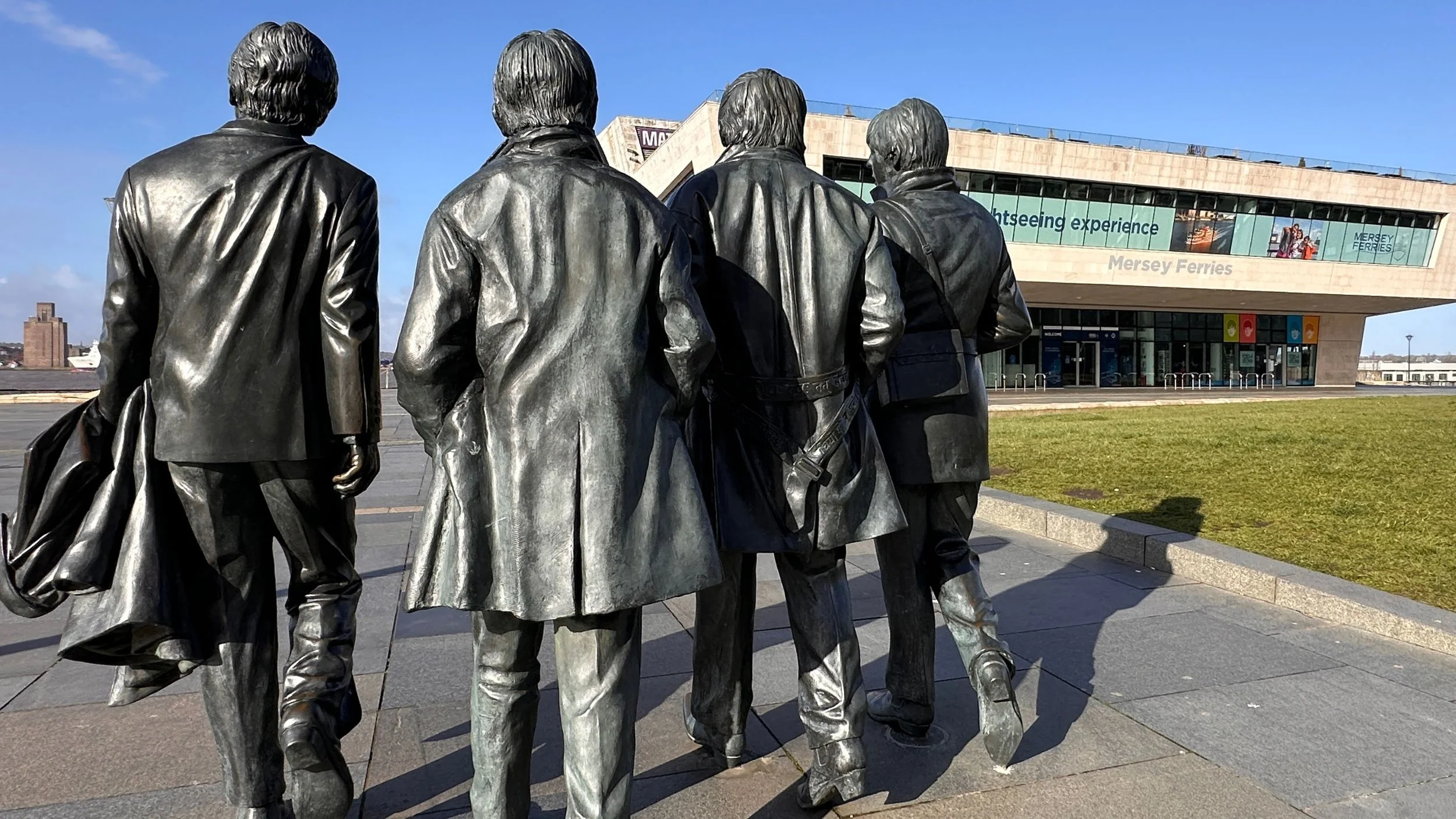
The Definitive Guide to the Beatles Statue in Liverpool
Most visitors pose quickly for a snapshot at Pier Head and walk away, completely missing the physical history cast into the bronze. From George’s hidden Sanskrit mantra to Ringo’s secret postcode, here is the unpretentious insider’s guide to finding—and photographing—the tactile stories hidden on Liverpool’s waterfront.
Since 2015, the Beatles Statue at Liverpool’s Pier Head has stood as a place of pilgrimage and connection for Beatles fans from around the world.
The statue was gifted to the city by the owners of the Cavern Club, who felt the tight confines of Mathew Street, home to the club, were too small and cramped to provide the open space needed for Beatles fans to congregate. Unveiled to mark fifty years since the band’s final historic gig in their hometown, it has rapidly become one of the city’s most popular music landmarks.
I visit the statue every time I’m in the city. There is always another Beatles fan nearby who wants to chat about the monument, often sharing their journey to Liverpool and their favourite Beatle. Yet, most fans don’t realise there is a hidden message on each of the Fab Four statues.
I love sharing these stories as they were shared with me, so if you are thinking of visiting Liverpool, here are the key facts and secrets you need to know about the Beatles Statue.
Key Facts
Location: Pier Head, Liverpool Waterfront (Canada Boulevard)
Sculptor: Andy Edwards
Unveiled: 5 December 2015
Cost: Free to visit
You will find the Beatles Statue standing on Canada Boulevard at Liverpool’s Pier Head, directly framed by the majestic stone façades of the Three Graces: the Royal Liver Building, the Cunard Building, and the Port of Liverpool Building. It sits on a flat, open pedestrian plaza right in front of the Mersey Ferries terminal.
For those exploring Liverpool’s music landmarks map, the monument connects different tracks of the band’s story. It is a scenic ten-minute walk north along the docks from the early years chronicled at The Beatles Story exhibition, and a ten-minute walk west from the historic, basement cradle of Merseybeat on Mathew Street.
Most visitors pose quickly for a snapshot and walk away, missing the small, physical anomalies cast into the figures. These features were designed to be discovered by touch and close inspection, if you know where to look!
Secrets of the Beatles Statue
1. George Harrison’s Coat: The Sanskrit Mantra
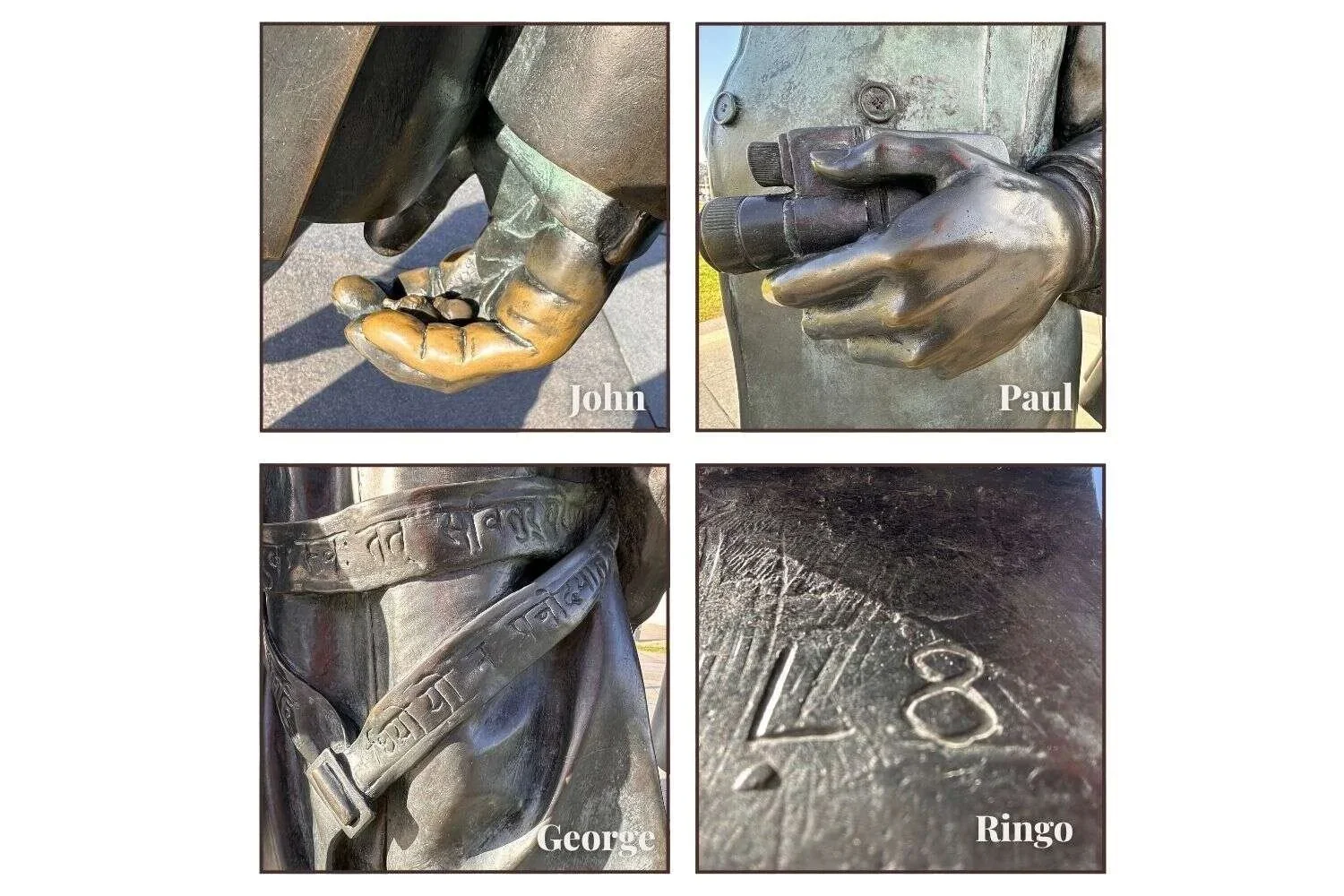
George Harrison’s coat features an intricate Sanskrit mantra etched directly into the bronze fabric along the belt line. Look closely at the back of his heavy winter coat to find this ancient script. It is the Gayatri Mantra, a sacred Hindu hymn representing spiritual awakening and the pursuit of inner wisdom.
It translates roughly as: “The Infinite Beyond Conception, we meditate upon that Light of Wisdom, which is the Supreme Wealth of the Gods.”
It stands as a profound nod to George’s devotion to Indian philosophy and spirituality—a spiritual journey that radically reshaped the textures, sitars, and backward tapes of the band’s mid-career recordings.
2. John Lennon’s Hand: The Symbolism of the Acorns
John Lennon’s hand cradles two cast bronze acorns, a subtle tribute tucked quietly near his pocket. Examine his left hand, which is cupped slightly and resting just above his coat pocket. This small detail bypasses the early pop years to reference a legendary piece of performance art from June 1968, when John Lennon and Yoko Ono planted two acorns in the garden of Coventry Cathedral as a living sculpture for world peace.
Following their wedding in 1969, the couple posted pairs of acorns to political and cultural leaders across the globe, urging them to plant them as symbols of global harmony. The acorns rest here as a permanent monument to John’s legacy as a peace activist.
The hidden details to look for on the Beatles Statues
3. Paul McCartney’s Hand: The Vintage Camera
Paul McCartney’s figure carries a vintage camera slung over his arm, presenting the most immediately noticeable personal detail on the monument. While Paul was frequently documented by the press, this particular camera is a deeply personal tribute to his creative partner and wife, Linda Eastman. Before their marriage, Linda was an accomplished photojournalist within the late-sixties rock scene, capturing definitive, candid frames of the band during their late studio sessions. The camera turns the tables on the traditional image of the pop star, celebrating the artistic eye that documented their private world from the inside.
4. Ringo Starr’s Boot Sole: The Hidden L8 Postcode
Ringo Starr’s boot conceals the number ‘8’ stamped into the tread of his right sole. To spot this final secret, you will need to crouch low to the pavement behind the figures. Look at the sole of his right shoe, which is caught mid-stride with the heel lifted from the ground. Pressed into the tread is the alphanumeric code L8.
This is not a manufacturing mark, but the historical postal code for the Dingle area of Liverpool, where Richard Starkey grew up in a modest terraced house on Madryn Street.
To get a great photo of the statue, it helps to know which way it faces. The four figures face due west, looking straight out towards the Mersey. This means that during the morning hours, the sun rises directly behind the towering stone façades of the Three Graces, casting the faces of the statues into heavy, dark shadow.
The Afternoon Advantage: Plan your visit for the early afternoon or late evening. As the sun moves past midday, light floods the front of the sculpture, illuminating the expressions on their faces and capturing the fine textures of the bronze work.
Golden Hour: The absolute best results happen during golden hour, just before twilight, when the setting sun reflects off the Mersey and bathes the entire group in a warm, cinematic light.
The Pier Head monument is just one track in Liverpool’s wider civic tribute to its most famous sons. After examining the statue at the waterfront, take a short walk into the city centre to see more Beatles-related sculptures.
On Mathew Street, leaning casually against a brick wall outside the entrance to the reconstructed Cavern Club, stands a life-sized bronze statue of John Lennon, capturing him in his early leather-jacketed rock-and-roll era. A further two-minute walk away on Stanley Street, you will find the Eleanor Rigby monument. Sculpted by Tommy Steele, she sits isolated on a stone bench with a shopping bag and a copy of the Liverpool Echo newspaper on her lap.
Waterfront Music Sights to Visit Next
If you want to keep exploring the waterfront, several essential music stops sit right on the statue’s doorstep. A short walk south along the docks brings you to The Beatles Story, an immersive walk-through exhibition that takes you deep into the band’s history. Just next door at the Museum of Liverpool, you can stand in front of the historic wooden stage where John Lennon’s early band, the Quarrymen, played their raw, skiffle-driven sets in 1957. Finally, take a look at the majestic Cunard Building directly behind the statue. It houses the British Music Experience, a fantastic collection of instruments and outfits celebrating the wider story of British rock and pop. It is the perfect B-side to your waterfront stroll.
Beatles Statue Liverpool: Quick Visitor Facts
Where are the Beatles statues located? You will find them standing on Canada Boulevard at Liverpool’s Pier Head (postcode L3 1BY), right on the pedestrian plaza directly in front of the Mersey Ferries terminal.
Is there a cost to visit the Beatles Statue? No, the monument sits in a fully open public space and is completely free to visit. It is accessible 24 hours a day, and no booking or tickets are required.
How far is the statue from the Cavern Club? It is a scenic, flat 10-minute walk (around 800 metres) west of Mathew Street, making it easy to combine both iconic sites on a single afternoon stroll.
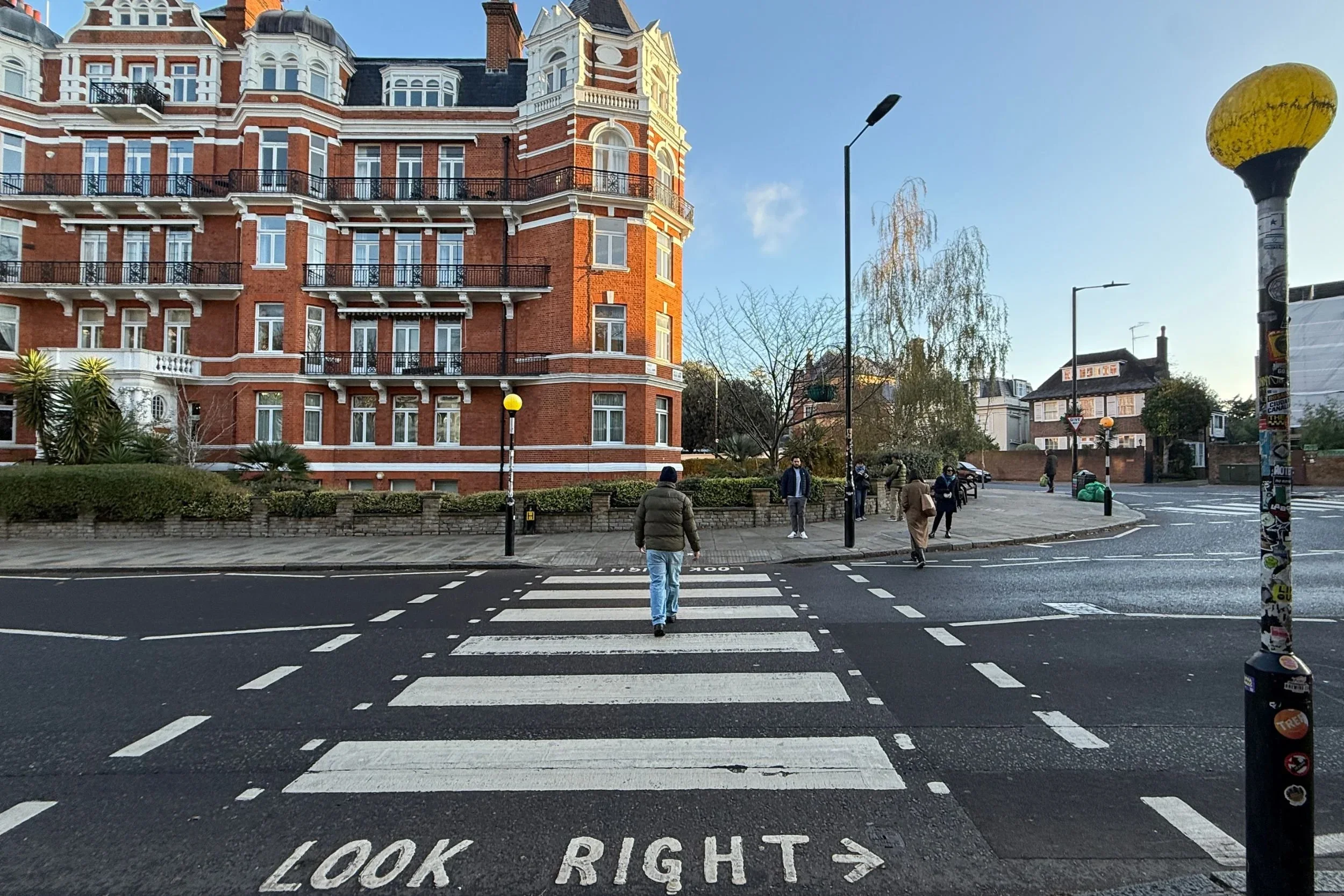
How to Find the Abbey Road crossing in London
A clear and practical guide to finding Abbey Road in London. Here is how to reach the famous Beatles zebra crossing, what to see when you arrive and how to make the most of your visit.
A simple, practical guide to finding Abbey Road in London. This is the exact crossing from the Beatles album cover, with clear directions, tips for visiting, and what to expect when you get there.
Finding the Abbey Road Crossing
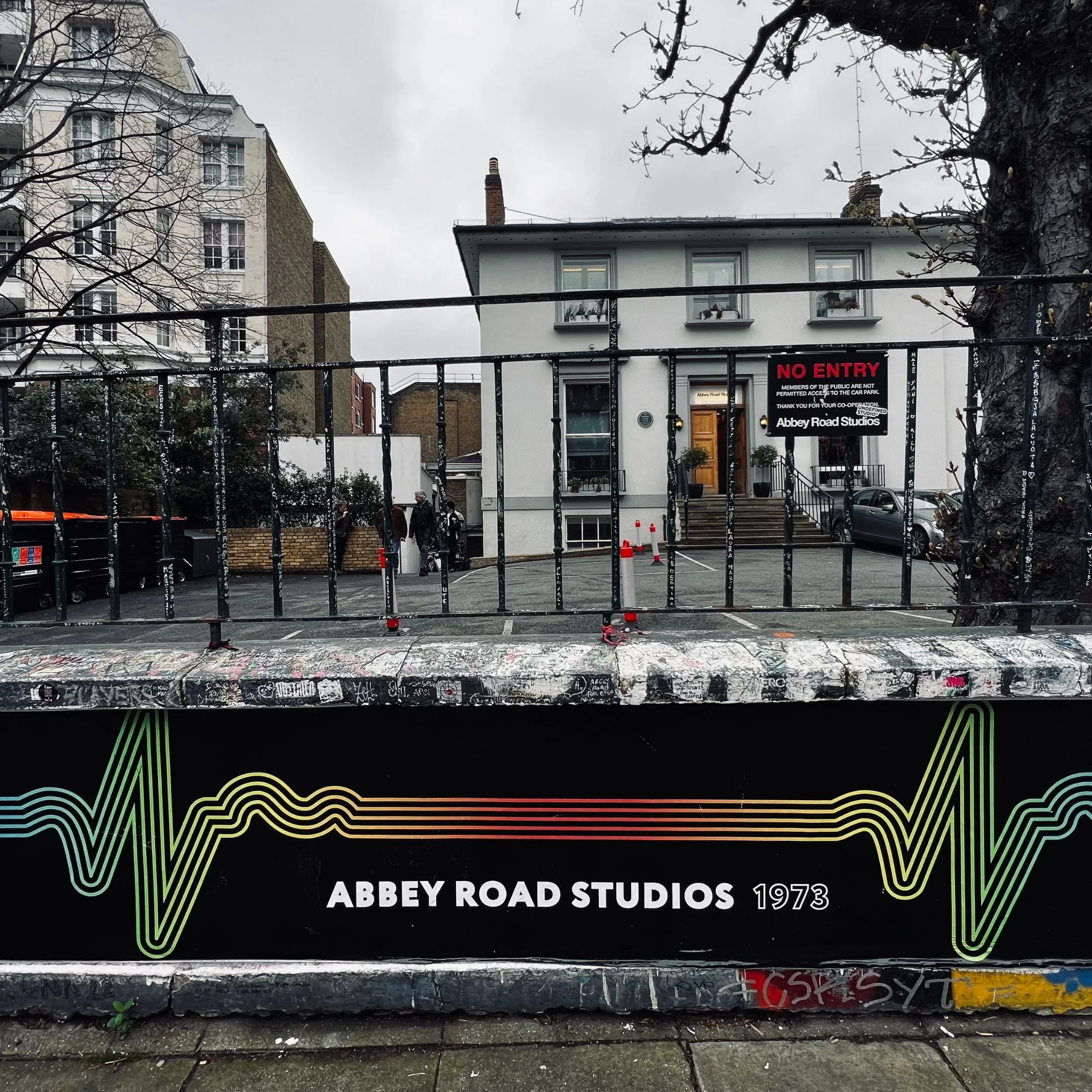
Abbey Road is in St John’s Wood in North West London. The famous zebra crossing sits directly outside Abbey Road Studios, a short walk from St John’s Wood Underground Station on the Jubilee line.
Beatles Abbey Road Address:
Abbey Road Studios
3 Abbey Road
St John’s Wood
London
NW8 9AY
This is the map location for Abbey Road.
Nearest Tube Station
St John’s Wood (Jubilee line) is the closest station.
Come out of the station and walk straight ahead across the main road. Keep going along Grove End Road for around six minutes until you reach the zebra crossing. You will then see the Studios ahead on the left.
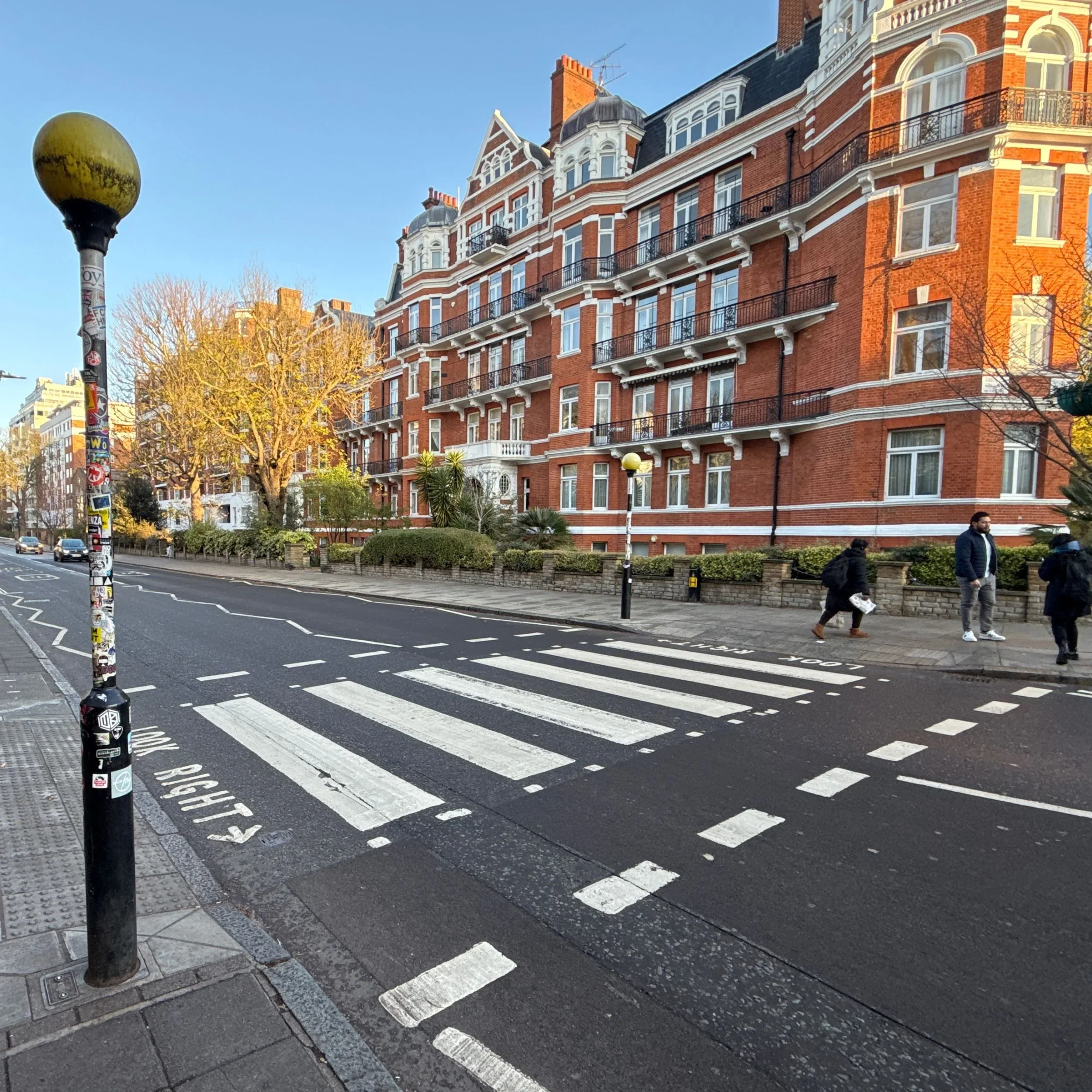
The iconic Abbey Road crossing in London
What to See When You Arrive
The crossing looks exactly as it does on the album cover. The traffic is constant and the road is narrow, so take care. Most visitors attempt the classic four-man walk, but be quick and considerate to drivers.
Across the street you will see the Abbey Road sign, now covered in handwritten messages from Beatles fans. The wall outside the studio also changes every day with new graffiti, poetry and signatures.
Abbey Road Studios
After the album was released, EMI renamed its building Abbey Road Studios. It remains an active and world-famous recording studio. You cannot tour the studios unless you are attending a private event, but you can stand outside, take photographs and explore the shop next door.
Abbey Road Shop
Next to the studio entrance is the Abbey Road shop. Inside you will find books, vinyl, clothing, prints and a rotating selection of memorabilia from artists who recorded at the studios. There are also archive photographs of the Beatles in session. https://shop.abbeyroad.com/
Abbey Road Webcam
A webcam points directly at the zebra crossing. It runs all day and is a fun way to capture your visit. You can share the link with friends so they can watch you walk across in real time.
Tips for Visiting the Abbey Road Crossing
• Arrive early morning if you want a quieter crossing.
• Avoid weekday rush hours as local commuters need the road clear.
• Bring someone to take your photos. Tripods are awkward on the pavement.
• Watch the traffic. Cars do not stop unless you have stepped onto the crossing.
• If you are adding your name to the wall, use a marker that washes off. The wall is repainted frequently.
Abbey Road Crossing FAQs
Is Abbey Road Crossing open to visitors?
Yes. Abbey Road Crossing is a public pedestrian crossing on a working road and is open to visitors at all times. There are no gates or restricted hours, but traffic does pass through, so visitors should cross with care.
Is it free to visit Abbey Road Crossing?
Yes. Visiting Abbey Road Crossing is completely free. It is part of the public road outside Abbey Road Studios, and there is no charge to view or walk across the crossing.
When is the best time of day to visit Abbey Road Crossing?
Early morning is generally the best time to visit Abbey Road Crossing, particularly if you want photographs with fewer people and lighter traffic. The best light tends to be when the sun is shining onto the crosswalk itself. Abbey Road runs broadly north to south, with the junction of Grove End Road and Abbey Road at the southern end. In winter, early mornings often provide the most favourable light, but conditions vary, so it is worth checking sunrise times and weather on the day of your visit.
The Abbey Road Crossing December 2025 - the morning sun is to the right of this picture
Is there a coffee shop at Abbey Road?
There is no dedicated coffee shop at Abbey Road Crossing itself, but there is a small coffee shop with Beatles gifts inside St Johns Wood Station, a short walk away. There are also cafes and coffee shops nearby in the St Johns Wood area.
Is there a gift shop at Abbey Road ?
Yes. There is an official Abbey Road gift shop located next to Abbey Road Studios, just up from the crossing. It sells Beatles memorabilia, Abbey Road branded items such as signs, badges, and clothing, as well as merchandise related to other artists including Pink Floyd. Opening times vary, so it is best to check the official Abbey Road website before visiting.
Make a Beatles Morning of It
From Abbey Road you can walk to Baker Street, Regent’s Park or take a short Tube to Marylebone, all within easy reach for breakfast or coffee. If you want to dive further into London’s musical history, you can explore more locations in my London Rock and Roll Landmarks guide.