Charting London’s Lost Recording Studios
At the height of the vinyl era, London's recording studios were some of the most sought-after acoustic spaces in the world. An ever-growing international roster of artists converged on the capital to track their definitive work. Yet, while iconic working landmarks like Abbey Road and Denmark Street's Regent Sound survive, a vast network of legendary facilities has been entirely lost to time, demolition, redevelopment, and the shifting economics of the music industry.
Through my extensive and ongoing research into London's lost recording studios, I have documented the unique character of these vanished sites.
What were the exact elements that contributed to the making of a great record?
The choice of a studio was never accidental. Sometimes it was dictated by strict record label direction, as was the case with the legendary Pye Studios near Marble Arch. Sometimes it was the pursuit of a specific sonic signature, a custom mixing desk, or an exceptional house engineer—a standard exemplified by Sound Techniques in Chelsea. Other times, artists simply sought the creative atmosphere of previous band successes.
To map London’s lost recording studios is to realise that these historic facilities ranged vastly in scale, structure, and operational philosophy.
As part of this ongoing archival survey, these closed and demolished facilities fall into three distinct historical categories:
Major Label & Corporate Recording Studios in London
These were the corporate powerhouses: purpose-built, high-budget complexes operated by major record labels that defined the commercial standard of the 1960s and 1970s. These studios included:
Pye Studios: Situated beneath ATV House at Great Cumberland Place near Marble Arch, Pye was a formidable commercial hit-making factory. Controlled under strict label discipline, it became legendary through producer Tony Hatch and seminal tracking sessions for The Kinks, Status Quo, and Petula Clark.
Decca Studios: Based at Broadhurst Gardens in West Hampstead, Decca's historic north-west London complex housed four separate studios. Famous as the site where The Beatles were auditioned and turned down on New Year's Day 1962, it was also the birthplace of landmark blues and rock recordings by John Mayall's Bluesbreakers, The Rolling Stones, and David Bowie. The facility shut in 1980; today the building houses the English National Opera rehearsal rooms.
Basing Street Studios: Converted from a 19th-century church on Basing Street in Notting Hill by Chris Blackwell for Island Records, Basing Street (later known as Sarm West) hosted Bob Marley & The Wailers, Led Zeppelin (who tracked sections of Led Zeppelin IV here), and Queen. The studio space has since been converted into residential apartments.
Historic Independent Studios: London’s Boutique Pioneers
Where major label facilities relied on corporate structure, London's independent recording studios merged cutting-edge bespoke audio electronics with nimble, creative freedom.
Sound Techniques: Operating from a former dairy tucked away at 46a Old Church Street in Chelsea, sound engineers Geoff Frost and John Wood lined the live room with slate to provide natural acoustic isolation. Active through the late 1960s and early 1970s, it produced the intimate acoustic textures of Nick Drake's Bryter Layter, early Pink Floyd singles (Arnold Layne), and Fairport Convention's Liege & Lief. For an extended profile of this address, read our dedicated history of the Sound Techniques Chelsea recording studio.
Olympic Studios: Relocated from central London to an old cinema on Church Road in Barnes in 1966, Keith Grant's Olympic facility was renowned for its vast acoustic volume and custom transistor consoles. It served as the creative crucible for The Rolling Stones (Beggars Banquet, Let It Bleed), The Jimi Hendrix Experience, and Led Zeppelin. The Eagles also tracked their first three albums within its walls. After closing as a commercial studio in 2009, the building was redeveloped into an independent cinema and dining club.
Trident Studios: Hidden in a Soho alleyway at 17 St Anne's Court, Trident was the state-of-the-art pioneer that introduced eight-track (and later sixteen-track) tape machines to Britain. Known worldwide for its distinctive C. Bechstein concert grand piano, Trident was the birthplace of David Bowie's The Rise and Fall of Ziggy Stardust, Lou Reed's Transformer, Queen's early catalogue, and Carly Simon's "You're So Vain". The commercial facility closed in the mid-1980s.
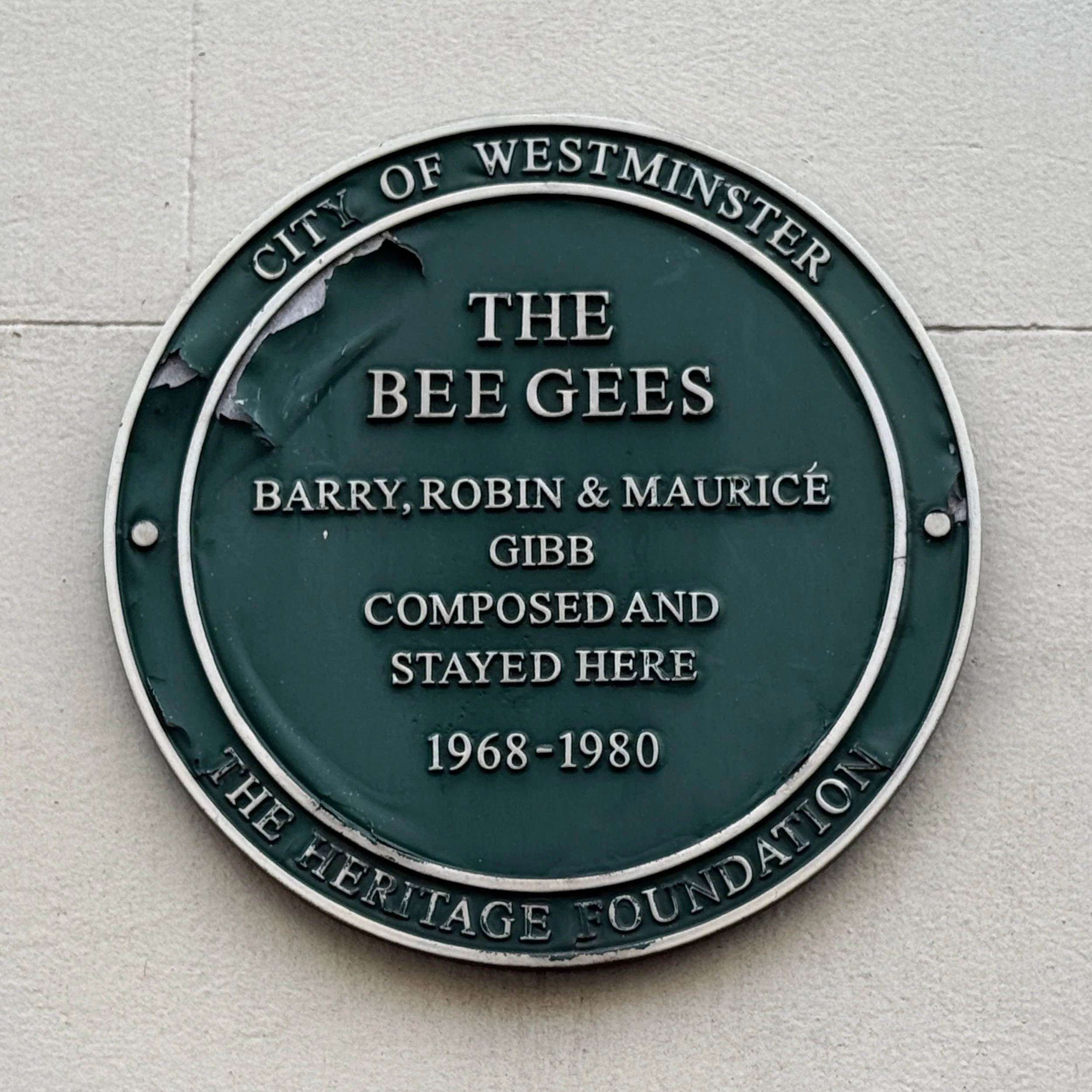
Mayfair Studios: Founded by John Hudson, the original central London Mayfair facility on South Molton Street saw Cream record their earliest tracks. A commemorative blue plaque on the street today marks where the Bee Gees recorded. The studio later relocated to Primrose Hill before shutting permanently in 2008.
Artist-Owned Sanctuaries: Autonomy in London Recording
By the mid-1970s, leading British rock artists began bypassing commercial day-rates by building their own private recording studios across London.
Britannia Row Studios: Built by Pink Floyd in 1975 inside a converted church hall and warehouse on Britannia Row in Islington, this north London facility was constructed specifically to give the band unlimited time to write and track Animals. The building has since been converted into modern offices and residential property.
Ramport Studios: Constructed by The Who inside an old commercial premises on Testers Place in Battersea, Ramport was built specifically to record Quadrophenia. It later opened its doors to outside acts, including Judas Priest and Supertramp (Crime of the Century), before being acquired by Virgin and eventually converted into housing.
Konk Studios: Established by The Kinks (Ray and Dave Davies) in 1973 at 84–86 Tottenham Lane in Hornsey, Konk served as both the band's private production headquarters and a creative home for outside indie acts from The Stone Roses to Blur.
Beyond the Commercial Live Room
Historic musical moments also unfolded far outside high-budget complexes. These ranged from makeshift spaces above pubs—such as the Hope and Anchor in Islington, where Elvis Costello cut his earliest demos—to fiercely independent analogue redoubts like Toe Rag Studios in East London, where Liam Watson forged a world-renowned vintage recording setup out of an old Shoreditch warehouse space.
Changes in Name, Location, and Building Heritage
Documenting London's lost recording studios presents an archival challenge: the fluid nature of commercial recording spaces. Over several decades, facilities frequently shifted addresses or changed identities entirely:
Relocations: George Martin’s AIR Studios famously originated at 214 Oxford Circus. While the AIR name continues at Lyndhurst Hall in Hampstead, North London, the original central London studio where Paul McCartney and Roxy Music recorded closed in 1991.
Successive Studio Identities: In other instances, a building remained a dedicated tracking facility while changing names across different ownership eras. The premises at 45–53 Stanhope Street operated as Philips Studios, transformed into Phonogram Studios, and were subsequently taken over by Paul Weller to house his private Solid Bond Studios.
Documenting London's lost recording studios remains an ongoing, expanding project at The Vinyl Historian. Every production note, oral history, conversation, and archival trade directory uncovers another former studio address. This index serves as the living archive for that historical research, cataloguing the closed rooms, the engineering craft, and the human stories behind the British vinyl era.
Do sign up to the newsletter if you’d like to be updated on my research for London studios, and wider stories from the Vinyl Historian.